Iran’s Strait Gambit: Attack Sparks Escalation, Fuels US Retaliation
Recent attacks on commercial shipping in the Strait of Hormuz have escalated tensions, prompting a forceful U.S. military response. Iran's gambit to disrupt global oil flow faces a technologically superior adversary determined to maintain maritime security.

Iran’s Strait Gambit: Attack Sparks Escalation, Fuels US Retaliation
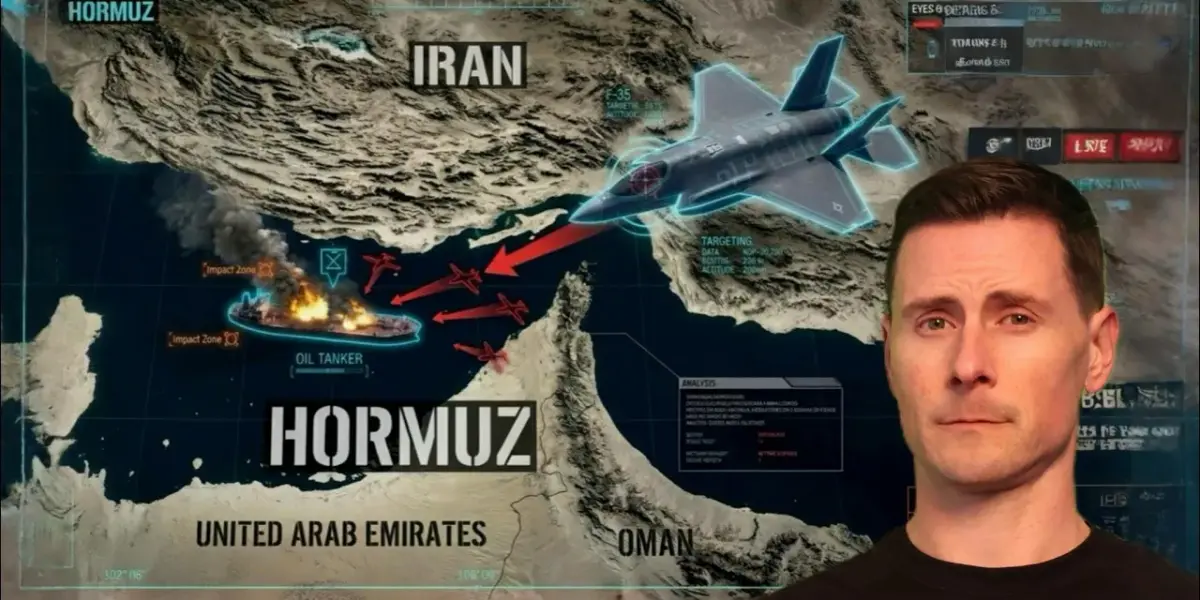
The waters of the Strait of Hormuz, a critical global energy artery, have become a volatile flashpoint. Recent attacks on three commercial vessels – a Thai bulk carrier, a Japanese container ship, and a Marshall Islands tanker – have reignited tensions, with the incident in the Strait of Hormuz itself serving as a stark declaration of intent. These strikes, widely attributed to Iran’s Islamic Revolutionary Guard Corps (IRGC), are seen as a direct response to sustained pressure from the United States military.
A Calculated Escalation
The attacks on commercial shipping represent a significant escalation in Iran’s asymmetric warfare strategy. By targeting vessels transiting the 21-nautical-mile waterway, Iran aims to choke global oil shipping, disrupt the world economy, and ultimately compel the U.S. to de-escalate its own actions. The IRGC has explicitly declared the strait closed, threatening to set ablaze any ship that attempts passage. This aggressive stance, while potentially a strategic gambit to exert leverage, carries immense risks.
The immediate aftermath saw a swift and forceful response from the U.S. administration. President Trump, via Truth Social, issued a stern warning: any mines discovered and not immediately removed would result in military consequences for Iran on an unprecedented scale. In a demonstration of this resolve, the U.S. military announced the destruction of ten inactive Iranian mine-laying boats and vowed further action. This suggests a clear red line has been drawn, with the U.S. prepared to meet any further aggression with overwhelming force.
The U.S. Military’s Decisive Response
The U.S. military has not been idle. Secretary of Defense Pete Hegth described March 10th as the “most intense day of strikes inside Iran,” involving a massive deployment of fighters, bombers, and precision intelligence assets. Over a ten-day period, the U.S. claims to have struck over 5,500 targets within Iran, including more than 60 ships. These strikes have systematically dismantled Iran’s naval capabilities, neutralizing an entire class of warships and decimating naval yards and industrial nodes.
Admiral Cooper of U.S. Central Command highlighted the dynamic and decisive nature of these operations, emphasizing the goal of eliminating Iran’s ability to project power. The campaign has targeted Iranian ballistic missile and drone infrastructure, including manufacturing facilities and mobile launchers. Images released by CENTCOM showcase precision strikes on warships, drone smuggling vessels, and fast attack craft, effectively crippling Iran’s naval assets. The U.S. strategy appears focused on a multi-axis approach, overwhelming air defenses before striking high-value targets, all while striving to minimize collateral damage despite the IRGC’s alleged use of civilian infrastructure for military purposes.
Historical Context and Asymmetric Warfare
Iran’s reliance on asymmetric warfare is a long-standing tactic, born out of necessity due to its conventional military limitations compared to global powers. The IRGC’s playbook typically involves fast attack boats laden with explosives, drones, ballistic missiles, and the use of proxy forces like the Houthis and Hezbollah. The recent attacks on shipping fit this pattern, aiming to create chaos and inflict economic pain.
Historically, the Strait of Hormuz has been a frequent site of maritime friction. Iran has previously threatened to close the strait, and incidents involving mines and attacks on shipping have occurred sporadically. However, the current scale and intensity of both Iranian actions and the U.S. response appear to be a significant escalation beyond previous confrontations.
Technological Superiority and Future Outlook
The U.S. military’s response underscores its technological superiority. The deployment of advanced fighter jets like the F-22, F-18, F-35, and F-16, alongside strategic bombers such as the B-1 and B-52, demonstrates a commitment to air power dominance. The ability to conduct precision strikes with JDAMs and standoff weapons, coupled with sophisticated intelligence, surveillance, and reconnaissance (ISR) assets like Global Hawks, allows for continuous monitoring and rapid response.
Looking ahead, the U.S. is exploring advanced technological solutions to ensure the navigability of the Strait of Hormuz. Concepts like a “blue dome” – a sophisticated air defense system utilizing directed energy weapons and laser technology – are being considered to create a protective shield over the waterway. Complementing this, the deployment of autonomous underwater vehicles like Lockheed’s Lamprey could neutralize Iranian mines and fast attack craft. These technological advancements aim to establish a robust defense, making the strait safe for commercial transit and neutralizing Iran’s asymmetric threats.
Implications and Potential Ramifications
The current situation points towards a potentially prolonged and intense campaign. Iran’s defiant rhetoric, with leaders characterizing the conflict as a fight for survival and calling the blockade “economic terrorism,” suggests a commitment to their current path, even in the face of overwhelming U.S. military might. This could lead to further escalation, potentially involving strikes on Iranian leadership and military infrastructure.
The economic consequences are also significant. The freezing of $2.5 billion in Iranian bank assets is a clear indicator of financial pressure. For global commerce, the threat to shipping in the Strait of Hormuz translates to potential increases in shipping costs and insurance premiums, impacting energy prices worldwide.
The possibility of internal pressure within Iran also looms. As the IRGC faces significant losses and the regime is hit harder, internal fractures could emerge. However, the deep ideological commitment of the top leadership may make such a scenario less likely in the short term.
Why This Matters
The events unfolding in the Strait of Hormuz are of critical global importance. This narrow waterway is essential for the transit of a significant portion of the world’s oil supply. Any disruption has immediate and far-reaching consequences for global energy markets, economic stability, and international relations. The current confrontation is not merely a regional skirmish; it is a test of global maritime security and a stark illustration of the complex geopolitical dynamics at play in the Middle East. The U.S. response, characterized by overwhelming technological and military might, signals a commitment to maintaining freedom of navigation, but the escalation also carries the inherent risk of wider conflict. The world watches to see if Iran’s gamble will lead to its isolation and military defeat, or if its asymmetric tactics can inflict enough pain to alter the strategic calculus.
Future Outlook
The immediate future likely involves a continued high-intensity U.S. military campaign targeting Iranian naval assets and missile infrastructure. Simultaneously, the U.S. will likely focus on implementing advanced defensive technologies to secure the Strait of Hormuz. Iran’s response is expected to remain within its asymmetric warfare framework, attempting to inflict maximum disruption and pain. The ultimate outcome will depend on the sustained application of U.S. military pressure, the effectiveness of its technological defenses, and the internal dynamics within Iran as the regime faces increasing consequences for its actions.
Source: Iran Strikes Ships In Straits of Hormuz Then THIS Happened (YouTube)

Related Articles


U.S. Iran Tensions Rise Amid Shifting Alliances
Rising tensions between the U.S. and Iran are creating a volatile geopolitical situation. With conflicting signals on de-escalation and potential shifts in alliances like NATO and U.S.-Israel relations, the path forward remains uncertain. The global economy and regional stability hang in the balance.


Iran Targets US With Cyberattacks, Escalating Digital Warfare
Iran is increasingly using cyberattacks to challenge the U.S., as seen in a recent hack of the FBI director's account. Experts say this is a strategic shift due to Iran's limitations in conventional warfare. The U.S. needs to strengthen its digital defenses, focusing on encryption and cloud computing, rather than solely relying on traditional security measures.


Iran Hacks FBI Chief, Exposing U.S. Cyber Vulnerabilities
A recent hack of FBI Director Kash Patel's personal email by an Iran-linked group highlights Iran's growing cyber threat to the U.S. Experts explain how simple security oversights are exploited, emphasizing the need for basic defenses like two-factor authentication to protect against propaganda and potential infrastructure attacks.