Iran’s Shocking Peace Deal Victory: US Concedes Major Demands
A supposed ceasefire between the US and Iran has plunged the Middle East into confusion, with both sides claiming victory but presenting contradictory terms. Israel feels blindsided, and Gulf nations are still facing Iranian attacks. The deal appears to concede major Iranian demands, including control over the Strait of Hormuz and uranium enrichment, raising serious questions about the US's objectives and the true outcome of the conflict.

Chaos Reigns as US Claims Victory Amidst Conflicting Reports
A supposed ceasefire in the Middle East, involving the United States and Iran, has thrown the region into confusion. Reports from both sides claim total victory, but the terms presented are wildly different. Israel feels blindsided, left out of talks that ended a war without their input. Meanwhile, Gulf countries are dealing with Iranian missile and drone attacks, even after the ceasefire supposedly began. It seems even the negotiators might not fully grasp what’s happening, creating a situation that is truly all over the map.
Conflicting Terms: A Summary of Confusion
The situation is so muddled that a report from The Economist captured the chaos perfectly. It stated that the ceasefire includes Hezbollah but also doesn’t include Lebanon. America, it seems, agreed to all of Iran’s demands, while Iran agreed to all of America’s. Key points of agreement are contradictory: the US will recognize Iran’s right to nuclear enrichment, yet also insists on zero enrichment. The Strait of Hormuz is described as completely open, but also subject to unclear limitations. This isn’t an exaggeration; it’s a summary of the baffling terms.
The Strait of Hormuz: A Key Bargaining Chip
The conflict escalated with President Trump threatening severe action if the Strait of Hormuz wasn’t opened. Just before a deadline, rumors of a deal emerged. President Trump then announced a conditional two-week suspension of attacks on Iran, contingent on Iran completely and safely opening the Strait of Hormuz. This condition is strange because opening the Strait wasn’t a primary US objective. It appears a ceasefire was secured in exchange for Iran opening a waterway that was already open before the war started.
US Claims Mission Accomplished, But Terms Raise Questions
President Trump stated that military objectives were met and a definitive peace agreement was close. At a Pentagon press conference, Secretary Hegsath declared Operation Epic Fury a success, framing it as a completed mission and a win for the US. This narrative suggests the war is over and won. However, President Trump also mentioned receiving a 10-point proposal from Iran, which he believed was a workable basis for negotiation. This plan, described by some as an “IRGC wish list,” seemed to be Iran’s maximalist demands, not a starting point for a US victory.
Shifting Demands and Doubts About Peace
Confusion mounted as the US position seemed to shift. Initially, Iran’s 10-point plan was the basis for talks. Then, President Trump clarified that there would be no uranium enrichment and that the US would work with Iran on nuclear issues. He also mentioned releasing tariffs and sanctions, and that many of the US’s own 15 points had been agreed upon. This rapid shift from Iran’s plan to the US plan within hours highlights the chaotic nature of the negotiations. Many doubt the sincerity of the deal, feeling the US wants out quickly, even if the terms are hard to spin as a victory.
Continued Attacks and Strained Alliances
Despite the announced ceasefire, Iranian attacks continued against the UAE, Kuwait, and Israel. Reports indicated an attack on a Kuwaiti desalination plant even after the truce. Furthermore, it seems the US did not consult with Israel before announcing the ceasefire. Israel was in the middle of its own bombing campaign against Iran, which it continued after the US announcement. This lack of coordination has likely strained relationships with key allies.
Iran’s Control Over Hormuz: A New Reality?
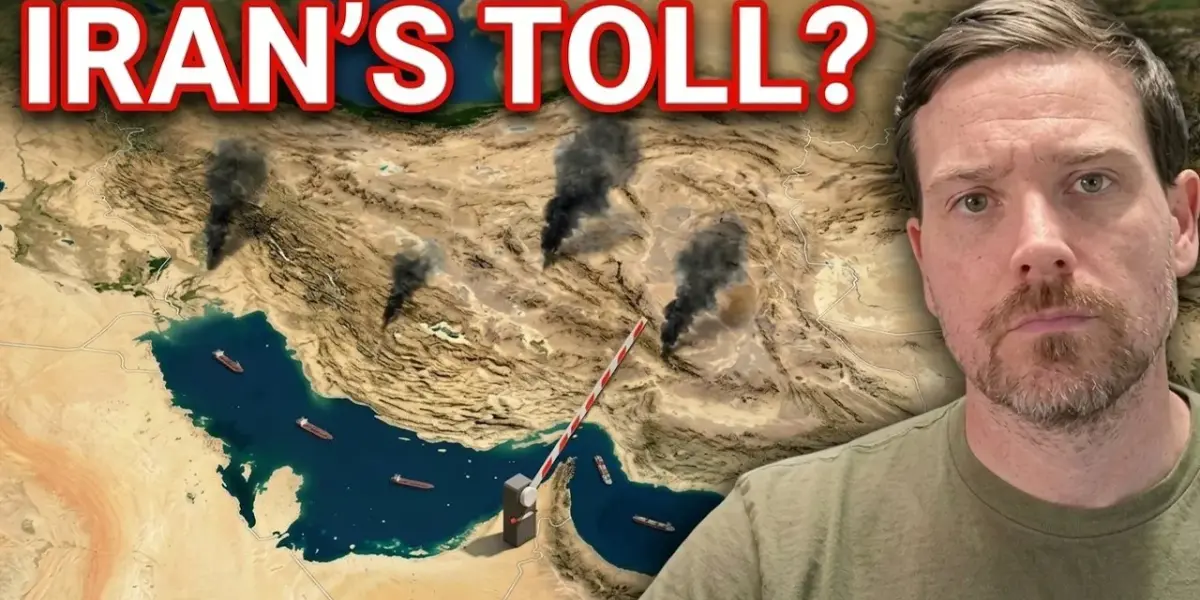
Both sides are claiming victory, but the situation at the Strait of Hormuz is particularly concerning. Iran’s Navy is now telling ships they need permission to pass through, threatening destruction for those who try without it. Reports suggest Iran plans to collect tolls, possibly in cryptocurrency, for passage. This control over the Strait, a crucial strategic point, is a significant gain for Iran that did not exist before the war. Secretary Hegsath avoided questions about Iran’s control, while President Trump suggested a joint US-Iran venture to manage tolls, calling it a “beautiful thing.” This implies that Iran, through the IRGC, could gain substantial revenue, estimated to be billions per year, from controlling this vital waterway.
Comparing Objectives: A Stark Contrast
The US objectives for the conflict were clear: destroy Iran’s missile arsenal, annihilate their navy, eliminate terrorist proxies, and prevent Iran from obtaining nuclear weapons. In stark contrast, Iran’s 10-point plan, as released by official channels, includes demands like a complete halt to aggression, continued Iranian control over the Strait of Hormuz, the ability for Iran to enrich uranium, the removal of all sanctions, annulment of UN and IAEA resolutions, compensation for Iran, and the withdrawal of US forces. This plan essentially seeks to reverse all the gains the US aimed for and more, including gaining financial compensation and control over key strategic points.
A “Disaster” of a Deal?
Critics have called Iran’s 10-point plan an “absolute disaster.” The fact that such demands are even being discussed signals a major shift from the pre-war stance. Before the conflict, the idea of Iran enriching uranium or controlling the Strait of Hormuz was unthinkable. The current situation suggests a potential capitulation by the US, with the deal heavily favoring Iran. The suddenness of this peace deal, coming seemingly out of nowhere, raises questions about whether mounting pressure on President Trump, not publicly known, led to this rapid pursuit of an agreement that benefits the Iranian regime at the expense of the US, Israel, and its Gulf allies.
Source: This New Peace Deal Favors Iran (YouTube)

Related Articles

US Considers Military Action in Iran for Nuclear Material
A top US official has not ruled out military action in Iran to secure nuclear materials, following a recent conflict where key objectives were not fully met. Concerns remain over Iran's enriched uranium and control of the Strait of Hormuz as diplomatic talks are set to resume.

Iran Dominates Hormuz: Trump’s Deal Fails to Reclaim Key Waterway
Iran has significantly strengthened its control over the vital Strait of Hormuz, challenging previous assumptions about its influence. Despite potential deals, ideological drivers and a sense of strategic advantage appear to empower Iran, impacting global oil security.


Oil Prices Stay High as Ceasefire Talks Crumble
The fragile ceasefire agreement is showing signs of collapse, with escalating tensions and disputed terms threatening renewed conflict. Disruptions in the Strait of Hormuz loom, potentially driving oil prices higher and impacting global markets. Investors are advised to brace for continued volatility and adopt a cautious investment strategy.