Iran’s Proxy Network Weakened Amid Regional Tensions
Iran's crucial 'Axis of Resistance' network, including Hezbollah and Hamas, faces significant strain due to weakened command structures and internal conflicts. Recent regional escalations have highlighted the proxies' cautious approach, raising questions about their reliability as Iran's strategic partners.


Iran’s Proxy Network Faces Strain Amid Regional Escalation
In the wake of recent attacks on Iran and subsequent rocket fire on northern Israel, a critical question emerges: Can Iran truly rely on its network of proxy forces? While rockets targeting Israel did not originate directly from Iran, they were launched by Hezbollah, a powerful Iran-backed militia based in Lebanon. These groups collectively form what is known as the “Axis of Resistance,” a decades-old strategy employed by Iran to project power and establish a forward line of defense against adversaries like Israel and the United States. However, recent events suggest this crucial network, comprising key players like Hezbollah in Lebanon, Hamas in the Palestinian territories, and the Houthis in Yemen, is facing significant challenges that are potentially weakening Iran’s influence.
The “Axis of Resistance”: A Strategic Pillar Under Pressure
The “Axis of Resistance” represents a complex web of Iran-aligned militias across the Middle East. For years, these groups have been instrumental in Iran’s regional strategy, acting as deniable assets and extending Tehran’s reach without direct military confrontation. The primary components of this axis include:
- Hezbollah (Lebanon): Often considered the crown jewel of Iran’s proxy network, Hezbollah has a long history of confronting Israel.
- Hamas (Palestinian Territories): This Palestinian militant group has been a key actor in the conflict with Israel.
- The Houthis (Yemen): The Houthi movement has leveraged its position in Yemen to exert influence in the Red Sea and beyond.
Despite their historical significance, these proxies have shown a degree of restraint in responding to recent escalations, prompting scrutiny into the effectiveness and reliability of Iran’s proxy strategy.
Weakened Command and Internal Struggles Hamper Proxy Actions
Several factors appear to be contributing to the diminished capacity and apparent caution of Iran’s proxy forces. A primary concern is the severe weakening of Iran’s ability to coordinate and control the Axis of Resistance. The Islamic Revolutionary Guard Corps (IRGC), responsible for managing this network, has reportedly suffered significant losses, with Israeli and American airstrikes targeting and killing numerous IRGC commanders. This disruption at the command level inevitably impacts the operational effectiveness and strategic decision-making of the affiliated militias.
Adding to these external pressures are the internal challenges faced by many of the proxy groups themselves. The ongoing war in Gaza has massively weakened Hamas, significantly impacting its capabilities and resources. Similarly, Hezbollah, despite its formidable reputation, has not been immune to Israeli actions. Conventional strikes and targeted special operations, including significant attacks in 2024, have degraded its assets and leadership. The recent killing of Hezbollah’s leader, Hassan Nasrallah, in an Israeli attack in Beirut represents a profound blow to the organization.
Hezbollah’s Calculated Restraint and Shifting Priorities
Even in the face of direct provocation and the killing of its leader, Hezbollah’s response has been measured. While the group did fire rockets at Israel following Iranian airstrikes, analysts suggest this was a preemptive move, anticipating inevitable Israeli retaliation rather than an initiation of full-scale conflict. Experts believe that engaging in a full-scale war with Israel would not serve Hezbollah’s interests at this juncture. Such a conflict would likely further erode its already declining support among the Lebanese population, many of whom are grappling with severe economic and political instability. This strategic calculation highlights a shift towards prioritizing internal stability and managing dwindling domestic support over direct, high-intensity confrontation.
Other Proxies: Iraq and Yemen’s Cautious Stance
The pattern of restraint extends to other Iran-backed militias. In Iraq, Iran-backed groups, many of which aspire to be seen as legitimate political opposition parties, are also exercising caution. Their primary focus appears to be on navigating domestic political landscapes rather than engaging in overt regional confrontations that could jeopardize their political standing.
The Houthi militia in Yemen presents another case of strategic ambiguity. While their leader has issued statements affirming readiness for any eventuality, the Houthis have not replicated their previous actions of launching rockets at Israel or attacking ships in the Red Sea in response to the recent escalation. This restraint could indicate a conscious decision to prioritize the ongoing civil war within Yemen, a conflict that demands significant resources and attention. Alternatively, it might signal a strategic buildup of forces, preparing for a more significant, yet-to-be-determined operation. The lack of clear action leaves their current strategic posture open to interpretation.
Conclusion: An Axis Under Strain
While Iran is not entirely isolated and can still count on a network of affiliated groups, the “Axis of Resistance” appears to be facing unprecedented strains. Weakened command structures due to targeted strikes, coupled with significant internal challenges and a calculated need to manage domestic support, are forcing many of these proxies to adopt a more cautious approach. The effectiveness and reliability of Iran’s long-standing proxy strategy are being tested as regional tensions continue to simmer.
What to Watch Next
The coming weeks and months will be crucial in determining the future trajectory of Iran’s proxy network. Key developments to monitor include any shifts in the operational tempo of Hezbollah, the potential for renewed Houthi actions in the Red Sea, and the broader impact of ongoing regional diplomatic efforts. The ability of Iran to maintain cohesion and influence within its proxy network, particularly in the face of continued Israeli and American pressure, will be a significant indicator of its regional standing.
Source: Can Iran rely on its proxy forces? | DW News (YouTube)

Related Articles


MAGA’s Shifting Sands: Trump Loses Grip on War Rhetoric
A podcast discussion reveals potential cracks in MAGA's narrative control, particularly concerning the shifting rationale for war with Iran. The analysis explores allied attitudes and State Department responses, suggesting a loss of grip on foreign policy messaging.


Germany Faces Iran Dilemma: Law vs. Security Needs
Germany is confronting the limitations of international law in addressing Iran's persistent nuclear ambitions and regional provocations. The nation faces a dilemma balancing security interests with adherence to global legal norms, as existing frameworks prove insufficient against a regime that consistently challenges international agreements.
Israel Hospitals Go Underground Amid Iran Tensions
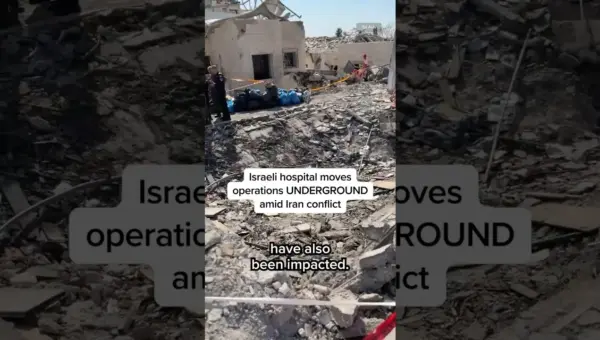
Amid escalating Iran conflict, Israeli hospitals like Sheba Medical Center are moving critical operations, including surgeries and ICUs, to secure underground facilities. This unprecedented move aims to ensure patient safety and maintain medical service continuity under potential aerial threats.