Iran’s Ominous Threats Expose Trump’s Shaky Stance
Iran's leadership has issued ominous warnings and displayed military readiness, directly challenging Donald Trump's claims of Iranian weakness. This escalation highlights geopolitical complexities, potential Russian influence, and concerns about U.S. foreign policy effectiveness amidst regional instability.

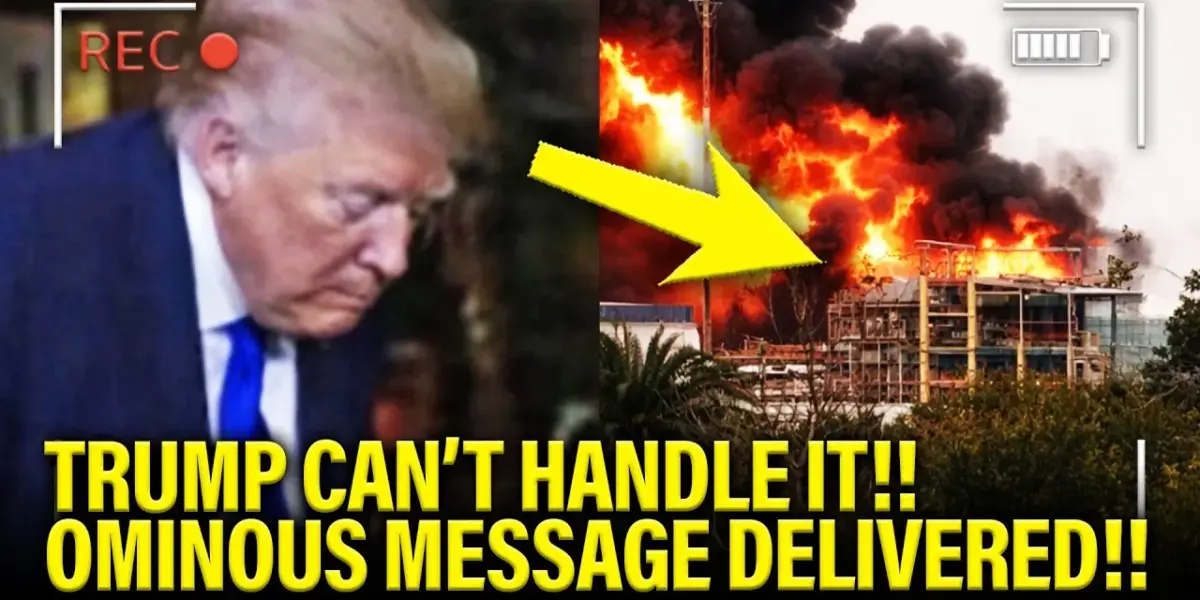
Iran Issues Stark Warnings Amidst Escalating Tensions
Iran’s leadership and state media have recently sent a clear and unsettling message to the United States, particularly targeting former President Donald Trump. The messages suggest a readiness for conflict and highlight perceived weaknesses in American resolve and military capabilities. This comes as Iran continues to conduct missile and drone strikes in the region, impacting areas including Israel, Kuwait, Saudi Arabia, and Bahrain.
Iran’s Rhetoric and Military Posturing
Reports indicate that Iran’s messaging has been direct and confrontational. The front page of the Thrron Times reportedly featured images of American troops with the headline, “Welcome to hell. US troops who step foot on Iran soil will leave only in coffins.” The speaker of Iran’s parliament, Mohammad Bagher Ghalibaf, was quoted as saying that while the U.S. seeks dialogue, it is covertly planning an invasion. He stated, “our men are waiting for American troops to enter on the ground so they can set them ablaze and punish them and their regional partners forever.”
Further fueling these tensions, Iran’s Islamic Revolutionary Guard Corps (IRGC) Aerospace Chief, General Majid Mousavi, claimed that Iran is disabling American radar networks and inflicting casualties in the region. He asserted that America has no choice but to withdraw from Iran’s borders, pointing to damaged American aircraft and hangers as evidence. He also warned that “other high value targets will be added to the list.”
Iran’s Navy commander, Rear Admiral Shaham Irani, specifically targeted the USS Abraham Lincoln aircraft carrier strike group, vowing to strike it with coastal missiles to avenge Iranian martyrs. This statement references a past incident where a ship off the coast of Sri Lanka was hit by a U.S. torpedo, resulting in over a hundred deaths.
Trump’s Response and Perceived Weakness
In contrast to Iran’s aggressive posture, Donald Trump’s public responses have been described as reactive and dismissive. He has characterized Iran as “feckless and weak” and claimed that the country is “begging like dogs” for a deal with the United States. He has also focused on domestic political issues, including criticism of California Governor Gavin Newsom and commentary on the Russia-Ukraine conflict.
The transcript suggests a disconnect between Iran’s actions and Trump’s rhetoric. While Iran claims significant damage to American military assets, including an E3 Sentry airborne early warning aircraft and KC-135 tankers at Prince Sultan Air Base, Trump’s administration had initially downplayed the damage. The visual evidence presented in the transcript contradicts this initial assessment, showing what appears to be serious damage.
Geopolitical Alliances and Russian Influence
The analysis also touches upon the complex geopolitical landscape, raising questions about Russia’s role in supporting Iran. Concerns are voiced that Russia, with Iran’s assistance, may be targeting American soldiers and military bases. The transcript notes that Trump has been criticized for lifting sanctions on Russian oil while Russia allegedly collaborates with Iran.
This alleged cooperation is presented as part of a broader pattern where Russian officials reportedly met with Republican members of Congress and the State Department, securing economic concessions. The narrative suggests that this is happening openly and with minimal scrutiny from mainstream corporate media.
Domestic Political Divisions and Media Coverage
The transcript highlights significant divisions within American politics and concerns about media bias. It criticizes Republican lawmakers for their handling of government shutdowns and border security, suggesting they intentionally created crises. The role of media in shaping public perception is also questioned, with a specific mention of the Ground News app as a tool for obtaining a more balanced view of news coverage, particularly regarding the Pope’s statements on war.
Pope Leo XIV issued strong remarks condemning leaders who wage war, stating that God rejects their prayers. This message, directed at leaders with “blood on their hands,” is presented as having received minimal coverage from right-wing media outlets, potentially shielding their audience from critical perspectives.
Economic Concerns and Debt
Beyond the immediate geopolitical tensions, the piece briefly touches on economic concerns. It notes rising Treasury yields, which could increase the cost of government debt. The transcript points out that the national debt has significantly increased, particularly during Trump’s previous term, and predicts it will continue to rise. This economic backdrop adds another layer of complexity to the current international situation.
Why This Matters
The escalating rhetoric from Iran, coupled with the visual evidence of military damage and the complex web of international alliances, presents a serious challenge to American foreign policy. The analysis suggests that a perceived weakness or inconsistent approach from U.S. leadership, particularly during a critical election cycle, could embolden adversaries and destabilize the region further. The report implies that the effectiveness of deterrence and diplomacy is being tested, with potentially grave consequences for regional and global security.
Implications, Trends, and Future Outlook
The current situation suggests a trend towards increased regional proxy conflicts and a hardening of stances by nations challenging U.S. influence. The reliance on drone swarms and ballistic missiles by Iran indicates a growing asymmetric warfare capability that is difficult for traditional military defenses to counter effectively. The future outlook points towards continued volatility in the Middle East, with potential for miscalculation leading to wider conflict. The effectiveness of sanctions, diplomatic engagement, and military posturing will be crucial in navigating these turbulent times.
Historical Context
The tensions between the U.S. and Iran have a long and complex history, dating back to the 1979 Iranian Revolution. U.S. foreign policy has often involved a mix of sanctions, diplomatic pressure, and military presence in the region. The current escalation can be seen as a continuation of this ongoing dynamic, influenced by regional power struggles, internal political developments in both countries, and broader global geopolitical shifts. Past U.S. military actions and Iran’s responses have shaped the current environment, creating a cycle of actions and reactions that contribute to the present-day standoff.
Source: Trump PANICS as Iran Gives OMINOUS WARNING!! (YouTube)

Related Articles

Objects in Orbit Hint at Pre-Human Intelligence
New scientific papers suggest artificial objects orbited Earth before human satellites, hinting at non-human intelligence. Declassified CIA documents also reveal serious investigation into psychic abilities via Project Stargate. These developments challenge our understanding of history and the universe.

US Escalates Iran Tensions: Troops Deploy, Markets Reel
The U.S. is increasing its military presence in the Middle East amid escalating tensions with Iran, leading to a surge in oil prices and market instability. President Trump is considering sending more troops as diplomatic talks remain uncertain. Meanwhile, a funding dispute over the Department of Homeland Security continues, impacting federal workers and airport security.
Marines Surge to Strait of Hormuz Amid Escalation
The 31st Marine Expeditionary Unit has arrived in the Middle East with F-35B stealth fighters, signaling a new phase in Operation Epic Fury. Their mission includes securing the Strait of Hormuz and deterring Iranian threats. The deployment emphasizes the critical need for air superiority before committing ground forces.