Iran’s Oil Infrastructure Burns: A Strategic Gamble Unfolds
Israel's strikes on Iran's oil infrastructure have plunged cities into darkness and environmental chaos. This analysis delves into the strategic, psychological, and geopolitical motivations behind these attacks, exploring their role in a broader escalation and their potential impact on global energy and security.

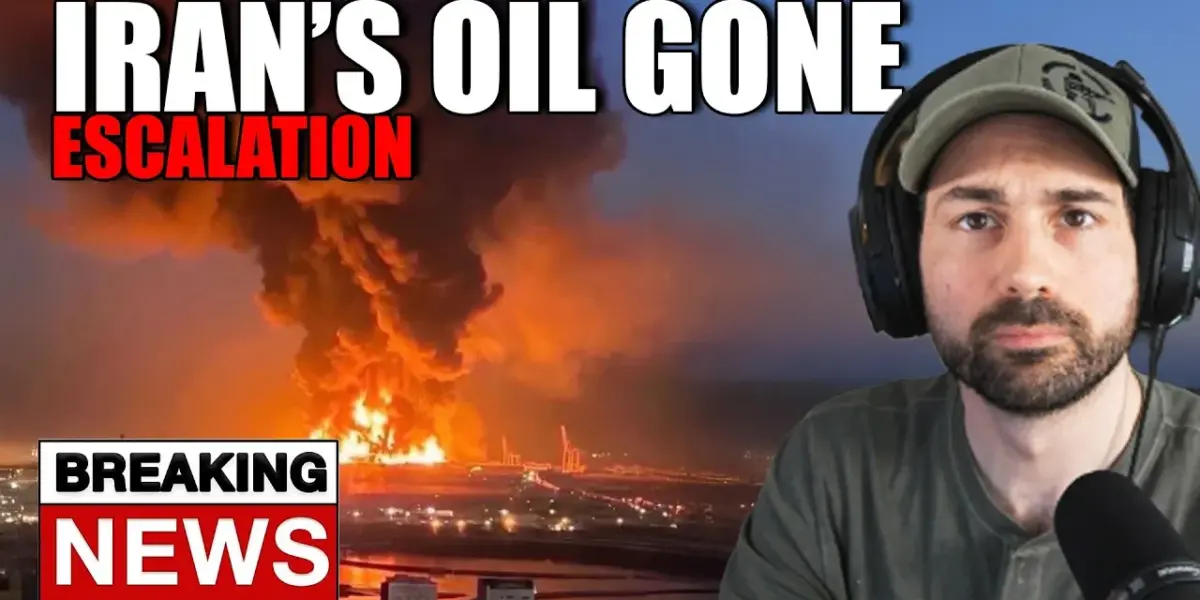
Iran’s Oil Infrastructure Burns: A Strategic Gamble Unfolds
Recent days have seen a dramatic escalation in the conflict involving Iran, with significant attacks targeting the nation’s vital oil infrastructure. These strikes, appearing to originate from Israel, have enveloped cities in thick, black smoke, with reports of oil even contaminating rainwater, creating an apocalyptic scene. The strategic rationale behind these attacks, and the potential wider implications, warrant a closer examination.
Targeting the Lifeline: Israel’s Stated Objective
The Israeli Defense Forces have claimed responsibility for striking Iran’s oil facilities, framing these actions as a deliberate effort to cripple the Iranian military’s operational capacity. According to their statements, these oil installations are crucial for funding and sustaining Iran’s military apparatus, thus rendering them legitimate military targets. The objective, as articulated, is to inflict damage on Iran’s military infrastructure, thereby weakening its ability to project power and pose threats to Israel’s security. This approach aligns with a broader strategy of applying forceful pressure to “harm the regime and remove threats.”
Beyond Military Necessity: Psychological Warfare and Regime Change
Beyond the stated military objectives, there’s a strong argument to be made that these attacks carry a significant psychological dimension. The sheer visual impact of billowing black smoke over major cities, and the contamination of urban environments with oil, serves to create an atmosphere of fear and instability among the civilian population. This, in turn, could exert pressure on the Iranian leadership. Some analysts suggest that a key, albeit perhaps secondary, goal might be to foment internal dissent and potentially trigger regime change, a hope that has persisted despite the apparent resilience of Iran’s command structures.
The dispersal of oil infrastructure across the country, with a significant portion located far from the immediate strike zones, further fuels the theory that these actions are intended to have a psychological impact. The visual spectacle of destruction and the pervasive environmental damage are designed to sow chaos and undermine public confidence in the regime’s ability to protect its citizens and its economy.
Escalation and Retaliation: A Dangerous Ladder
The attacks on Iran’s oil infrastructure represent a clear escalation of the ongoing conflict. This is not an isolated incident, but rather a new tactic introduced into the theater of operations. Historically, certain targets might have been deliberately left untouched to preserve future options for deterrence. By striking these facilities now, Iran’s adversaries are removing potential future threats and increasing the stakes. This move up the “escalation ladder,” as described, brings the conflict closer to a point of total war, where options for de-escalation become increasingly limited.
Furthermore, these strikes may also be interpreted as a retaliatory response. Iran had previously targeted oil infrastructure in the Middle East, including refineries in Bahrain and Saudi Arabia. The attacks on Iran’s own oil assets can therefore be seen as a direct tit-for-tat, signaling that Iran’s oil infrastructure is not immune to reciprocal action.
The Geopolitical Chessboard: Russia, China, and Strategic Alliances
The broader geopolitical context is crucial. The conflict is increasingly intertwined with the strategic competition between major global powers. Reports suggest that Russia is providing targeting data to Iran, a development that mirrors the United States’ support for Ukraine. This highlights a growing, overt alignment between Russia and Iran, and a deepening schism with the West.
The potential impact on China is also significant. China is a major importer of Iranian crude oil, and disrupting this supply could have a detrimental effect on its economy. Some analysts posit that weakening Iran could serve to deter China from potential actions against Taiwan, by removing an ally that could tie down US resources in the Middle East. However, this strategy carries the risk of backfiring, potentially strengthening Russia and China and emboldening other adversaries.
Naval Operations and the Strait of Hormuz: A High-Risk Maneuver
Amidst the aerial attacks, there is also discussion of increased naval activity. The US Navy is reportedly considering escorting commercial vessels through the Strait of Hormuz, a critical chokepoint for global oil transit. This would involve a complex logistical and tactical operation, requiring significant naval assets and careful coordination to defend against potential missile threats from the Iranian coast.
The risks associated with such escort missions are substantial. The Strait of Hormuz is a narrow passage, increasing the vulnerability of ships to missile attacks. The presence of liquefied natural gas (LNG) tankers, described as “gigantic bomb screws in the ocean” due to the volatile nature of their cargo, adds another layer of danger. Any breach of these vessels could result in catastrophic explosions, impacting not only the tanker itself but also surrounding vessels and port facilities. The logistical challenges of reloading expended munitions at sea further complicate sustained naval operations in the region.
The Human Cost and Strategic Uncertainty
The human cost of this escalating conflict is undeniable. Reports of US troops being killed and equipment being damaged underscore the real-world consequences. The incident involving a girl’s elementary school in southern Iran, which appears to have been hit during a US strike, highlights the tragic potential for civilian casualties, even if unintentional. While official statements may point fingers, the evidence suggests a complex and devastating reality on the ground.
The strategic objectives remain fluid and subject to interpretation. While some may see military gains, the question of whether these actions will lead to the desired political outcomes remains uncertain. The resilience of Iran’s command structures, its ability to adapt and continue operations despite significant pressure, suggests that the conflict may be far from over. The long-term consequences of these actions, the potential for blowback, and the unpredictable nature of geopolitical maneuvers, mean that the situation in Iran remains a critical and concerning flashpoint.
Why This Matters
The targeting of Iran’s oil infrastructure is a significant development with far-reaching implications. It signals a deliberate escalation designed to inflict maximum economic and psychological damage. This move has the potential to destabilize regional energy markets, impact global oil prices, and further inflame geopolitical tensions. The involvement of major global powers like Russia and China adds a complex layer to the conflict, suggesting it could become a proxy battleground for broader strategic competition. The potential for miscalculation, especially in a critical maritime chokepoint like the Strait of Hormuz, carries the risk of wider conflict. Understanding these dynamics is crucial for comprehending the current global security landscape and anticipating future developments.
Source: Why They Just Blew Up Iran's Oil (YouTube)

Related Articles

G7 Allies Clash Over Iran War Strategy, Urge Focus on Russia
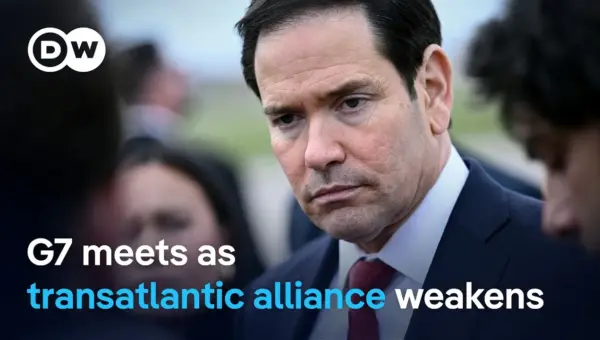
G7 foreign ministers met in Paris, revealing deep divisions over the U.S. war with Iran. European allies urged the U.S. to pressure Russia, linking its actions to the conflict and fearing support for Ukraine will wane.
Iran Blocks China Ships, Exposing Beijing’s Weak Grip
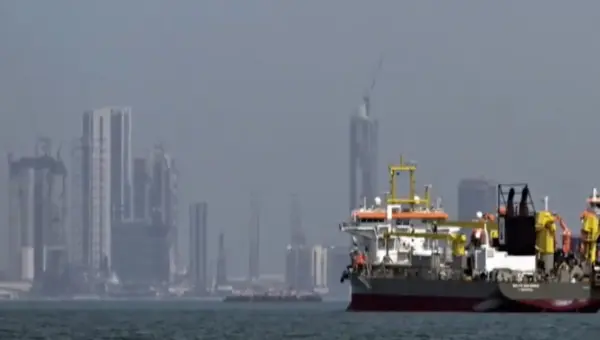
Iran's recent decision to block Chinese ships at the Strait of Hormuz is exposing the limits of Beijing's influence in the Middle East. This action is causing delays and cancellations for Chinese manufacturers, turning a perceived geopolitical win into an economic strain.
Trump’s “Walk Away” Tactic Signals Tougher Stance on China
Retired Air Force Brigadier General David Stillwell believes President Trump's strategy of being willing to walk away from negotiations puts pressure on China. This tactic, combined with US global actions and strengthened alliances, signals a more assertive American foreign policy.