Iran’s Nuclear Threat Hangs as Strait of Hormuz Remains Key
Retired Colonel Rob Mayus discusses Iran's aggressive actions and the geopolitical implications of their nuclear ambitions and actions concerning the Strait of Hormuz. He highlights the regime's true nature and the US's military leverage, while questioning the UN's effectiveness. The significance of any ceasefire hinges on Iran's cooperation regarding the Strait of Hormuz and nuclear materials.

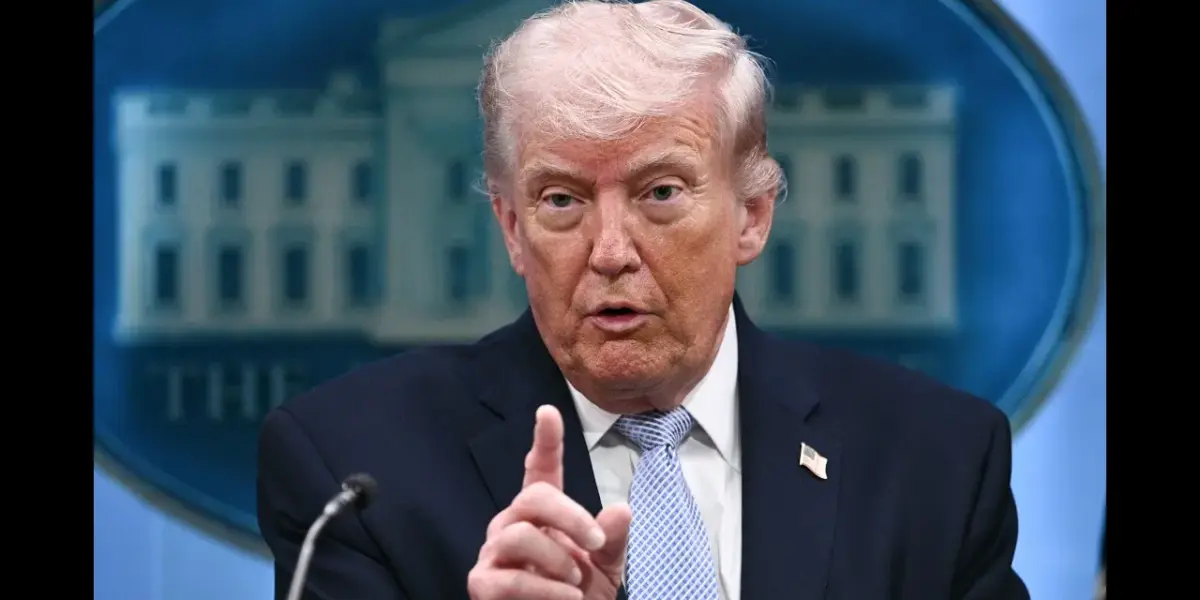
Iran’s Nuclear Threat Hangs as Strait of Hormuz Remains Key
The world watched closely as a critical deadline approached for Iran, with President Trump calling it a pivotal moment in history. The situation involved a potential military response if no agreement was reached, with threats of striking critical infrastructure. Retired US Air Force Colonel Rob Mayus offered his perspective, stating he wasn’t surprised by the Iranian government’s actions. He described the leaders as committed to self-destruction and harming their own people, calling their actions war crimes. Colonel Mayus explained that Iran intentionally targets civilians, making their actions a violation of international law.
Regime’s True Nature on Display
Colonel Mayus believes Iran will not back down unless faced with extreme force. He supported President Trump’s stance, suggesting continued action if necessary. Vice President Mike Pence, in Hungary, outlined why the President set this deadline. Pence noted that Iran, facing military defeat, is trying to cause global economic pain. The President, he added, understands leverage and can inflict much greater pain if needed, but prefers negotiation. The decision, Pence emphasized, rests with Iran.
“Fundamentally, what Iran is trying to do because they’ve been defeated militarily is they’re trying to extract as much economic pain on the world as possible.”
The Iranian regime’s tactics have included putting its own citizens at risk. After President Trump threatened infrastructure, the regime reportedly urged students to form human chains around power plants. Colonel Mayus stated this shows the regime’s true nature, pointing to the 1979 embassy seizure and hostage crisis as the beginning of their behavior. He believes this regime must eventually end, either by its own people or by coming to its senses.
US Military Strength and Nuclear Concerns
The Vice President also hinted at unused US weapons, a point Colonel Mayus confirmed. He clarified this doesn’t necessarily mean nuclear weapons, though rumors have circulated. Mayus believes Iran isn’t a significant enough threat to warrant nuclear use. However, the US possesses many other weapons that can increase pressure on the regime. The goal, he stressed, is to either remove leaders willing to cause destruction or reach a point where someone is ready to negotiate. A crucial part of any counter-plan must be the ability to peacefully confiscate all enriched uranium and other radioactive materials. The ultimate aim is to prevent Iran from obtaining nuclear weapons, as a regime that disregards its own children would not hesitate to use them against others.
Delayed Strikes and the Strait of Hormuz
Breaking news indicated that President Trump had delayed strikes by two weeks. Colonel Mayus reacted with cautious optimism, hoping this signals a move toward a reasonable position from Iran. He warned that any perceived leverage would likely be exploited by Iran, potentially leading back to the same situation. Another critical issue involves China and Russia vetoing a UN resolution that called for reopening the Strait of Hormuz. Ambassador Mike Waltz condemned this, stating that no one should tolerate Iran holding the global economy hostage. He criticized Russia and China for siding with a regime that brutalizes its own people and intimidates the region.
Geopolitical Maneuvers and UN Ineffectiveness
Colonel Mayus questioned what China and Russia gain by supporting Iran. He noted that both countries are economically affected by the situation, especially China’s oil imports from the Persian Gulf. This veto, he argued, proves the United Nations is not an effective institution for modern geopolitics. He suggested disbanding it and creating a new mechanism for arbitrating disputes between nations with persistent conflicts.
“No one should tolerate that they are holding the global economy at gunpoint. But today, Russia and China did tolerate it.”
China uses Iran for cheap oil and has supported its technology, which is then used against enemies and its own citizens. Some view Iran as a proxy for the Chinese Communist Party. If the Iranian regime were to change, Beijing might lose access to cheap oil, having to pay market prices instead. China has already begun buying oil from the US again due to shortages in the Pacific. This shows a rational response to market changes, unlike the Iranian regime, which Mayus described as irrational.
Military Capacity and Future Outlook
Militarily, many question Iran’s remaining capabilities after the US reportedly struck over 13,000 targets. Colonel Mayus believes Iran has little left beyond the ability to cause minor disturbances. Their targeting systems are weak, and they intentionally target civilian areas in places like Israel to create destruction and pressure opponents. He stated they cannot realistically threaten allies and can no longer close the Strait of Hormuz effectively, despite the lingering threat. He urged countries reliant on Persian Gulf goods to step up and reopen the strait, disregarding the UN’s stance.
A Conditional Ceasefire
President Trump announced a suspension of hostilities for two weeks, contingent on Iran agreeing to the immediate and safe reopening of the Strait of Hormuz. This would be a two-sided ceasefire. Colonel Mayus emphasized that this moment will only be significant if the strait is indeed opened and if the US gains control of Iran’s enriched uranium and radioactive materials. These conditions, he concluded, are what would make this a meaningful step forward.
Source: Trump’s 2 Week Ceasefire Only Significant If Iran Opens Hormuz Strait: Ret. US Colonel (YouTube)

Related Articles

Trump’s Iran Deal: Bold Tactics Yield Fragile Peace
A panel discusses President Trump's Iran ceasefire deal, a special election in Georgia, the DOJ's renewed fight against fraud, and Trump's relationship with Hungarian Prime Minister Viktor Orbán. Analysts debate Trump's negotiation tactics, the implications of the Georgia race, and the U.S.'s foreign policy stance.
Trump Halts Iran Attacks, Seeks Peace Deal
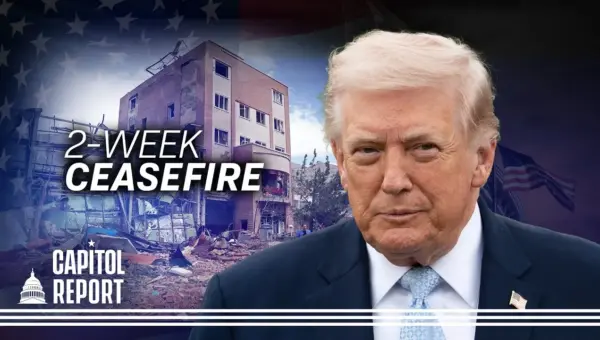
President Trump has agreed to a two-week suspension of attacks on Iran, contingent on Iran reopening the Strait of Hormuz. This move comes as the U.S. reports progress on a peace proposal and highlights the Iranian people's desire for freedom.

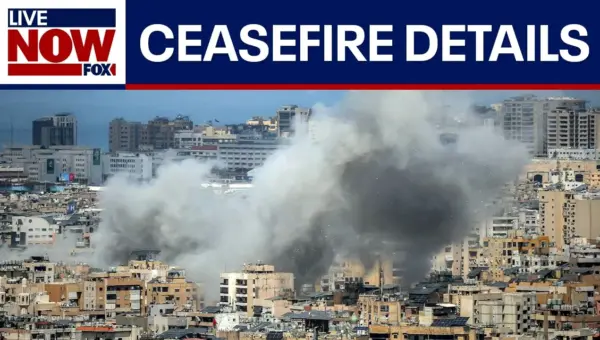
US-Iran Ceasefire Holds Amid Tensions, Strait of Hormuz Key
The US and Iran have agreed to a two-week ceasefire, brokered by Pakistan, with the crucial condition that Iran reopens the Strait of Hormuz. This development impacts global oil and gas supplies, as well as food security through fertilizer transport. However, concerns remain about potential Iranian mobilization and compliance, particularly following reports of post-ceasefire missile launches.