Iran’s New Leader Threatens Strait of Hormuz, U.S. Bases
Iran's new Supreme Leader, Mashtaba Hamini, has issued a defiant first statement, vowing to continue targeting the Strait of Hormuz and U.S. bases in the region. His hardline rhetoric and threats of escalating conflict raise concerns about regional stability and global oil markets.

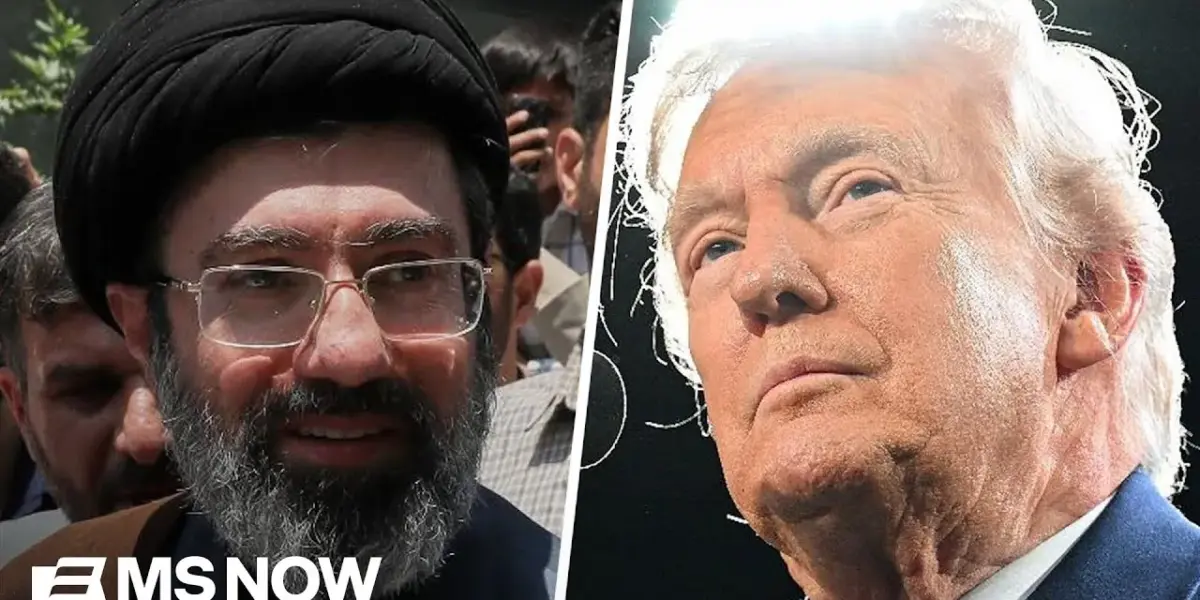
Iran’s New Supreme Leader Issues Defiant First Statement
Tehran, Iran – Iran’s new Supreme Leader, Mashtaba Hamini, has broken his silence since assuming the top leadership role, delivering a defiant statement read on state television that signals a hardline stance amidst ongoing regional conflict. This marks the first public address from Hamini, the second son of the late Ayatollah Ali Khamenei, since his appointment, addressing widespread speculation about his whereabouts and the regime’s intentions.
Strait of Hormuz and U.S. Bases as Key Leverage
In his statement, Hamini declared Iran’s intention to continue targeting the Strait of Hormuz, a critical chokepoint for global oil transport. He asserted that while Iran desires friendly relations with Gulf countries, it will persist in targeting U.S. bases located within those nations. Hamini urged Gulf states to close these U.S. military installations, framing them as a source of regional instability.
“Iran is going to continue targeting the Strait of Hormuz. He also talked about Gulf countries. He says that they want to maintain friendly relations with Gulf countries, but he says they’re going to keep targeting U.S. bases in those countries and he’s urging the Gulf countries to close U.S. bases.”
Threat of New Fronts and Retribution for Civilian Casualties
Adding to the escalating tensions, Hamini warned of the potential for new fronts to open in the ongoing conflict, though the specifics of this threat remain unclear. He also vowed retribution for civilian casualties, specifically referencing a strike on a girls’ school in the early days of the war that reportedly killed at least 168 people. The U.S. is currently investigating the incident, with questions lingering about responsibility.
Concerns Over Hamini’s Hardline Stance
Interviews with Iranians in exile and analysts reveal significant concerns regarding Mashtaba Hamini’s leadership. There are fears that he is more extreme in his views than his father and will prioritize projecting strength to maintain the regime’s standing. This hardline approach could lead to increased suffering for the Iranian population if the U.S. withdraws, potentially emboldening Iran’s aggressive posture.
Military and Economic Implications: Strait of Hormuz and Oil Markets
Retired General Clark commented on the hardline message, stating, “This is a hard line message and it’s exactly what we would expect. We’re two weeks into this. The Iranians have taken a lot of hits, but they are able to fight asymmetrically.” He highlighted the strategic choice facing the United States: either cease operations, which could embolden Iran to increase its demands, or take more dramatic action to secure the Strait of Hormuz, potentially involving ground troops.
The implications for global oil markets are substantial. The International Energy Agency, with support from 32 nations, has authorized the release of 400 million barrels of oil from strategic reserves, with the U.S. contributing 172 million barrels. This move aims to mitigate the impact of potential disruptions to the Strait of Hormuz, through which approximately 20 percent of the world’s oil passes.
President Trump has emphasized the U.S.’s position as the world’s largest oil producer, suggesting the nation can outlast any oil hold-up. However, the price of crude oil has surpassed $100 per barrel, and domestic gasoline prices have risen over 20 percent since late February, creating significant political pressure.
Continued Missile Strikes and Escalating Regional Conflict
Despite Pentagon reports of a declining rate of Iranian retaliatory strikes, Iran has continued to target oil tankers and infrastructure in the Gulf. On-the-ground reports from Israel show the destructive power of Iranian ballistic missiles, with fragments of a large missile displayed as evidence of ongoing attacks. While the U.S. and Israel claim to have degraded Iran’s ballistic missile launchers, these weapons continue to be fired into Israel.
The conflict has also intensified along the Lebanese border, with Hezbollah firing over a hundred rockets into Israel overnight. Israeli strikes on southern Lebanon and Beirut have resulted in a rising death toll and displaced over 700,000 people. This escalating regional conflict raises questions about whether Israel might continue fighting proxy wars independently if the U.S. scales back its involvement.
Strategic Concerns and the Need for a Coherent Strategy
General Clark expressed skepticism about President Trump’s narrative of imminent victory, particularly given Iran’s continued asymmetric attacks. “I DON’T THINK HE’S TRYING TO KEEP PUBLIC SUPPORT BEHIND HIM BECAUSE PUBLIC SUPPORT FOR THIS CAMPAIGN IS CRITICAL IF THE CAMPAIGN IS GOING TO CONTINUE,” he stated, noting the lack of a clear strategic case made before the war began.
The release of strategic petroleum reserves is seen as a temporary measure, buying time for the U.S. to decide on its next steps. Options range from further military action in the Strait of Hormuz to mediation efforts. The involvement of Russia and China, potentially supplying intelligence, hardware, and military advice to Iran, adds another layer of complexity and risk to the conflict.
Critiques of the Administration’s Approach
Democratic Senator Chris Van Hollen has criticized the administration’s handling of the war as “all tactics and zero strategy.” General Clark echoed this sentiment, suggesting that the initial focus on lethality may have overlooked the necessity of convincing the enemy of having no escape. Iran’s actions, such as widening the war and threatening the Strait of Hormuz, have created a ticking clock against air power.
As the campaign progresses, finding strategically valuable targets becomes more difficult. Potential future actions could include special forces operations against nuclear sites, more dramatic interventions in the Strait of Hormuz, or securing strategic high ground around the strait. However, the current approach may not be sufficient to achieve the administration’s stated objectives, necessitating difficult strategic and political decisions moving forward.
Source: Iran's new supreme leader speaks out for first time: Strait of Hormuz is leverage (YouTube)

Related Articles

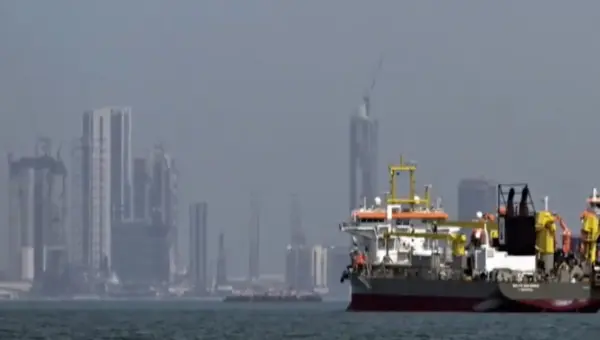
Iran Blocks China Ships, Exposing Beijing’s Weak Grip
Iran's recent decision to block Chinese ships at the Strait of Hormuz is exposing the limits of Beijing's influence in the Middle East. This action is causing delays and cancellations for Chinese manufacturers, turning a perceived geopolitical win into an economic strain.
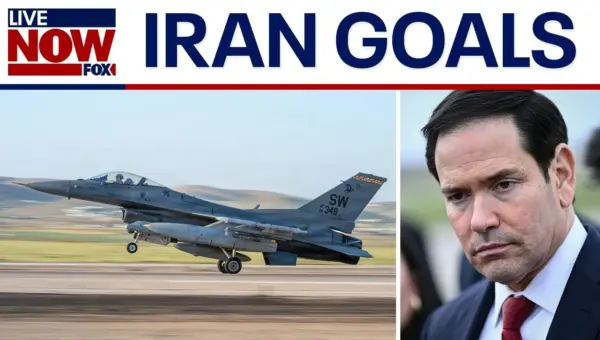
Rubio: US Can Achieve Iran War Goals Without Troops
Senator Marco Rubio outlined a strategy to counter Iran without deploying U.S. ground troops, focusing on weakening the regime and enhancing maritime security. He also criticized Cuba's economic system and expressed concerns about West Bank violence.


Israelis Forge Resilience Amidst Constant Bomb Shelter Drills
Life in Israel is a blend of resilience and constant vigilance, with many families adapting to frequent bomb shelter drills and even sleeping in makeshift shelters. Despite ongoing missile attacks, Israelis strive to maintain normalcy, though businesses face disruption and emotional fatigue is a growing concern.