Iran’s Missile Threat Evolves Amidst War, Raising Global Alarm
Iran's missile capabilities, though degraded by ongoing conflict, remain a significant threat. Despite facing immense pressure, the nation's command structures show resilience, and its strategic goal of prolonging the war appears unchanged. The situation remains volatile, with global anxiety rising as key shipping lanes become flashpoints.

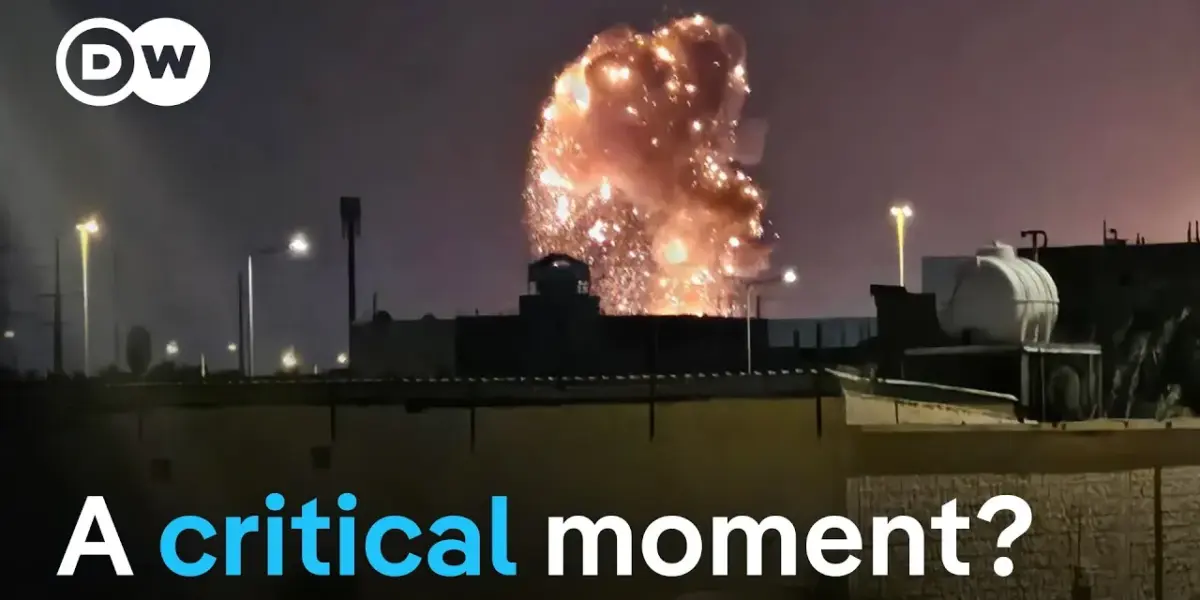
Iran’s Missile Power Degraded But Still Dangerous
As the conflict enters its fourth week, the situation involving Iran has become more complex than initially thought. While Iran’s military capabilities have been weakened, the nation is not collapsing. Its missile program, though damaged, remains a significant and potentially lethal threat. This evolving situation has heightened anxiety across the Gulf and globally, with the Strait of Hormuz emerging as a critical flashpoint.
Resilience in Iranian Command Structures
Despite intense military pressure, Iran’s command and control structures have shown remarkable resilience. Dr. BUI, who covers Middle East security at the Royal United Services Institute, notes that the system has held firm. While leadership decapitation strategies and aerial campaigns might not be enough for regime change, the loss of key figures does matter. Iran is a deeply institutionalized state with backup leaders ready to step in if positions are eliminated by strikes. However, the removal of influential figures like Ali Ajani, who possessed deep institutional knowledge, will inevitably impact future governance.
Degraded Missile Capabilities and Strategic Goals
The military pressure has significantly reduced Iran’s ability to launch drones and missiles daily. At the war’s outset, hundreds of launches occurred each day; this number has dropped considerably. While Iran’s missile launching capability is degraded, it is not exhausted. This allows the IRGC to continue launching attacks and effectively controlling the Strait of Hormuz, a key leverage point for the regime. Analysts believe that not all of Iran’s ballistic missile program will be eliminated by the US and Israel. The goal is to degrade Iran’s ability to recover and rebuild its missile program after the war ends, ensuring its war-fighting capacity is sufficiently diminished.
Iran’s Miscalculation in Striking Neighbors
Iran’s decision to strike its Gulf neighbors quickly and harshly appears to have backfired. Instead of pressuring Washington to step back, the attacks have fostered a stronger sense of unity among Gulf countries, with Oman being a notable exception. Many Gulf nations now feel a unified stance against Iran is necessary, believing they are being used as pawns in the conflict between Iran, the US, and Israel. This has led to widespread anger and resentment. While some hedging may occur, and Gulf nations might re-evaluate their security relationships post-war, a complete shift away from the US security partnership is unlikely. US air defense systems have proven effective in intercepting missiles from Iranian territory.
Ground Forces Option and Targeted Raids
The possibility of US and Israeli ground forces being deployed remains on the table, with capabilities being put in place. Signs suggest that special forces operations or targeted raids are still considered a viable option by the US. The deployment of additional forces, including marine expeditionary units and aircraft, indicates this. This could be a tactic to pressure Iran into making concessions. However, a full-scale ground invasion or occupying force is not anticipated. Instead, precise, targeted raids on strategic sites within Iran to reopen the Strait of Hormuz are more likely.
Extended Missile Reach and European Security
Iran has demonstrated the ability to strike targets far beyond its immediate region. While previously stating its missiles had a 2,000 km range limit, Iran recently fired missiles at the US/UK base on Diego Garcia, nearly 4,000 km away. One missile malfunctioned, and another was intercepted. This incident suggests that if fired in another direction, Iranian missiles could reach deep into central Europe. The stated range limit appears to have been a political decision rather than a technical one. While the precision of these long-range missiles is a concern, and Iran has not been fully transparent about its capabilities, it confirms the risk Iran’s ballistic missile program poses to regional and potentially wider security. However, Europe and the UK are not defenseless, with existing security shields to intercept incoming missiles. The threat to European security from this specific incident is not overstated, but it remains an area to monitor.
Israel’s Air Defense and Iranian Resilience
Recent strikes on Iraq and Deir ez-Zor, which caused civilian casualties, show that Iran can still exploit pressure points in Israel’s air defense network. While some missiles and drones may inevitably get through air defenses like the Iron Dome, resulting in tragic incidents, this does not indicate a systematic failure of Israel’s overall air defense capabilities. As the conflict continues, pressure mounts, and Israel remains vulnerable to Iranian attacks. Although the number of missiles launched by Iran has decreased compared to the early days of the war, the strikes have become more precise, targeting key infrastructure. This resilience and resolve demonstrate that Iran is surviving the ongoing conflict.
The Uncertain Future of the Iranian Regime
The question of how long the Iranian regime will survive remains uncertain. It is too early to definitively say whether the regime is surviving or collapsing; the reality likely lies somewhere in between. The leadership strikes have had an impact, degrading command and control. It is unclear how long the Iranian regime can continue to operate under such immense and mounting pressure. The situation remains highly volatile, with decisions made in the coming days carrying significant consequences far beyond the battlefield.
Source: Degraded but still dangerous: Iran’s evolving threat | DW News (YouTube)

Related Articles

Houthis Fire Missile at Israel, Iran’s Guard Takes Center Stage
Yemen's Houthi group has fired a missile at Israel, signaling a potential escalation of the regional conflict. Meanwhile, Iran's powerful Islamic Revolutionary Guard Corps (IRGC) appears to be consolidating its control over the country's leadership following reported strikes. This shift places hardline figures at the forefront of decision-making.


Stocks Ignore War Risks, Focus on “Taco Moments”
Stock markets appear to be overlooking the severe supply chain risks stemming from the Iran conflict, focusing instead on potential diplomatic de-escalations. While the S&P 500 shows resilience, bond and commodity markets signal deep concern over disruptions to critical resources like LNG, helium, and fertilizers.

US Strikes Cripple Iran’s Military Might, CENTCOM Reports
U.S. Central Command reports ongoing strikes inside Iran are significantly weakening its military power. This direct action aims to reshape regional security dynamics, but carries risks of escalation. The long-term impact depends on Iran's response and ability to adapt.