Iran’s Missile Reach: UK Faces Defense Gaps
Defense experts warn the UK lacks the capability to stop an Iranian missile attack. Current defenses rely on allies, but these nations have no formal agreements to intercept threats aimed at Britain. The situation highlights significant gaps in the UK's national security posture.

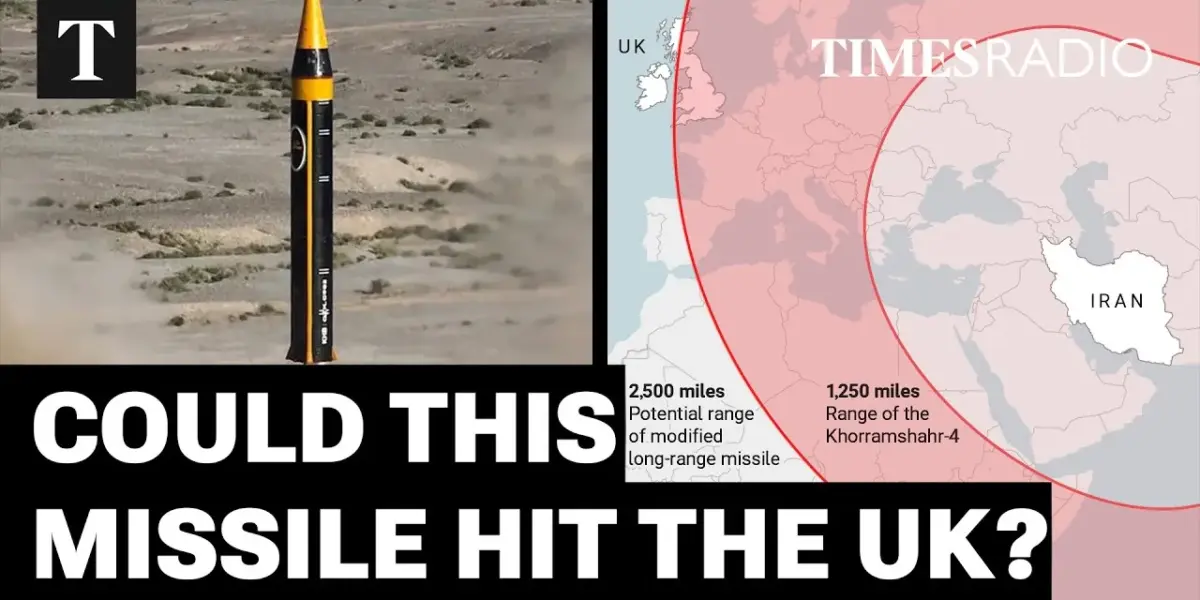
Iran’s Missile Reach Extends to UK, Experts Warn
Defense experts are raising serious concerns about the United Kingdom’s ability to defend itself against long-range missile attacks, particularly from Iran. A recent analysis suggests that Iran possesses weapons capable of reaching the UK, and current British defenses are inadequate to intercept such threats. This revelation comes amid heightened tensions in the Middle East and questions about the effectiveness of current defense strategies.
Assessing Iran’s Missile Capabilities
The discussion centers on Iran’s ballistic missile and drone technology. While Iran has fired numerous projectiles, the frequency has reportedly decreased, leading some to question if they are running out of supplies. However, defense analyst Francis Tuser points out that the nature of drone production is different. Drones can be built in small workshops across the country, making it difficult to eliminate Iran’s drone-making capability entirely, much like how Britain produced Spitfires during World War II.
Tuser highlights a key question regarding a recent Iranian missile launch. If the missile could not reach a distant target like Diego Garcia, why was it fired? The expert suggests the launch implies the weapon had the capability to reach such a location. If Iran can strike Diego Garcia, which is thousands of kilometers away, it means they can likely reach most European capitals, including London.
“If Iran did not have a weapon that could get Diego Garcia, why did they fire it? Because if the weapon was going to just splash into the middle of the Indian Ocean, that’d look stupid.”
UK’s Defense Vulnerability Exposed
The stark reality, according to Tuser, is that the UK currently has no effective defense against such an attack. He stated plainly, “by British sources no chance at all.” The current defense posture relies heavily on allies, with the assumption that other nations would intercept threats heading towards the UK. However, Tuser’s conversations with allies in countries like the Netherlands and Germany reveal no official policy or prior discussion about intercepting missiles aimed at the UK. These allies’ defense systems are programmed to prioritize their own territory, meaning they would likely not engage a missile not directly threatening them.
This reliance on allies is problematic, especially when those allies have not been formally engaged on the matter. The UK’s defense investment plan, which is expected to address such gaps, has been repeatedly discussed but not yet revealed, adding to the frustration among defense experts and politicians.
Broader Regional Threats and Defense Investment
The concerns extend beyond Iran. Experts mention that Russia could also pose a missile threat to the UK. While European nations are actively investing in surface-to-air missile systems, the UK appears to be lagging. Tuser criticizes this attitude, stating, “We’ve got to stop pretending we are immune from attack.”
The discussion also touches upon the broader regional conflict and the strain on defensive capabilities. Both Iran and its adversaries, like Saudi Arabia and the UAE, have expended significant resources. Saudi Arabia and the UAE have used many Patriot and other interceptor missiles to defend against Iranian attacks. This raises the question of whether they have enough defensive missiles left if Iran were to launch a large-scale, coordinated attack, or a “blitz,” on critical infrastructure like oil facilities, LNG plants, and water purification centers.
NATO’s Role and Future Preparedness
While the UK’s independent defense capabilities may be lacking, the country is a member of NATO. NATO has collective defense capabilities, including stations in Eastern Europe, designed to counter regional threats. Some argue that this NATO umbrella provides a level of security. However, the frustration remains that the UK seems to be relying on this collective defense rather than bolstering its own national defenses.
The sentiment among some defense figures is that the government is not taking the threat seriously enough. Relying on allies is seen as insufficient, especially in a world where geopolitical instability is rising and missile threats are becoming more common. The lack of a clear, timely defense investment plan exacerbates these worries. The core issue is the need for the UK to develop its own robust defenses rather than depending solely on others.
Looking Ahead
The coming months will be crucial as the UK government is expected to present its defense investment plan. The public and defense experts will be watching closely to see if this plan adequately addresses the newly highlighted vulnerabilities to long-range missile attacks. The effectiveness of this plan, and the UK’s willingness to invest in its own security, will be key to its future safety.
Source: Defence Expert Reveals What Would Happen If Iran Launched A Missile At The UK (YouTube)

Related Articles


U.S. Iran Tensions Rise Amid Shifting Alliances
Rising tensions between the U.S. and Iran are creating a volatile geopolitical situation. With conflicting signals on de-escalation and potential shifts in alliances like NATO and U.S.-Israel relations, the path forward remains uncertain. The global economy and regional stability hang in the balance.


Iran Targets US With Cyberattacks, Escalating Digital Warfare
Iran is increasingly using cyberattacks to challenge the U.S., as seen in a recent hack of the FBI director's account. Experts say this is a strategic shift due to Iran's limitations in conventional warfare. The U.S. needs to strengthen its digital defenses, focusing on encryption and cloud computing, rather than solely relying on traditional security measures.


Iran Hacks FBI Chief, Exposing U.S. Cyber Vulnerabilities
A recent hack of FBI Director Kash Patel's personal email by an Iran-linked group highlights Iran's growing cyber threat to the U.S. Experts explain how simple security oversights are exploited, emphasizing the need for basic defenses like two-factor authentication to protect against propaganda and potential infrastructure attacks.