Iran’s Missile Barrage Escalates: Are Air Defenses Crumbling?
As Iran and its proxies escalate missile and drone attacks on Israel and its allies, questions arise about the resilience of air defenses. Simultaneously, US strikes target Iranian military assets, while uncertainty looms over Iran's internal leadership.

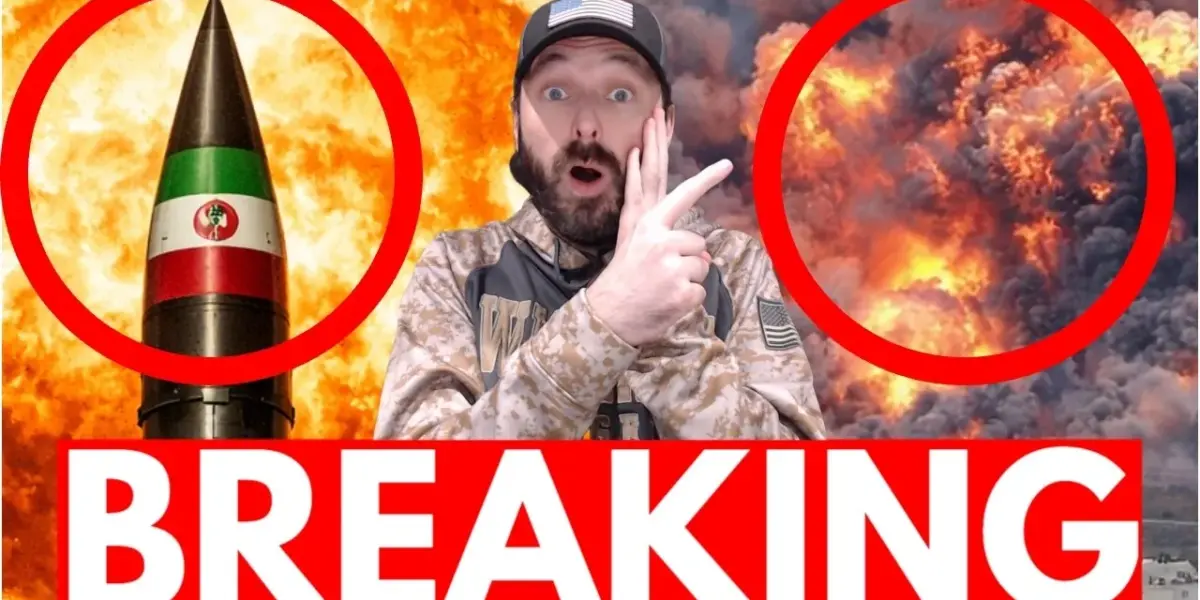
Iran’s Missile Barrage Escalates: Are Air Defenses Crumbling?
As the geopolitical landscape continues to shift with alarming speed, new waves of strikes are reportedly underway, originating not only from Iran but also from Lebanon, with Hezbollah intensifying its efforts to overwhelm Israeli air defenses. This escalating conflict is occurring against a backdrop of significant commentary from former President Donald Trump regarding the internal state and leadership of Iran. The situation demands a closer examination of the military actions, their strategic implications, and the broader regional dynamics at play.
Hezbollah’s Intensifying Attacks on Northern Israel
Recent footage depicts Hezbollah launching attacks on Nariah in northern Israel, with at least one home reportedly hit. The intensity of these strikes has led to speculation that Hezbollah might now pose a greater threat than the IRGC. The visual evidence shows a barrage of rockets and missiles, followed by explosions, suggesting a significant and sustained assault. The sound of these explosions is described as powerful enough to shake the ground, underscoring the ferocity of the engagement.
While it is acknowledged that the majority of incoming projectiles are still intercepted, there is a growing concern that an increasing number are penetrating Israeli air defenses. This trend, if it continues, could represent a critical shift in the conflict’s dynamics, potentially overwhelming a system that has, until now, largely proven effective.
Iran’s Strategic Targeting of Oil Infrastructure
Beyond the northern front, Iran has also been engaged in striking targets in Iraq, specifically focusing on oil infrastructure. This action is notable in light of past US strikes on Iranian oil export hubs, such as Kharg Island. Iran’s current strategy appears to be a direct response, aiming to inflict damage on the oil sector of its adversaries. This is further evidenced by Iran releasing footage of its Kir Shakan missile, described as one of the most powerful in its arsenal, being fired at targets.
The launches are reportedly originating from eastern Iran, an area that has not been as heavily targeted by coalition forces compared to western Iran. This suggests a strategic adaptation by Iran to diversify its launch locations and maintain offensive capabilities. Simultaneously, coalition forces have been intercepting Iranian drones, with one such interception occurring over West Baghdad, resulting in a large aerial explosion.
Wider Regional Impact: UAE and Saudi Arabia Under Fire
The conflict’s reach extends beyond Israel and Iraq. The United Arab Emirates (UAE) has also been subjected to missile and drone attacks, with reports of six ballistic missiles and 21 attack drones being intercepted. Dubai is identified as a major target for the Iranian regime, indicating a broader regional ambition. Saudi Arabia has also faced a significant drone assault, with 56 drones launched overnight, many of which targeted oil infrastructure. This concerted effort to damage oil facilities highlights a clear strategic objective by Iran to disrupt global energy supplies and exert economic pressure.
US Military Response and Strategic Objectives
In response to these escalations, the United States has intensified its bombing campaign, targeting what are described as IRGC headquarters and military sites. Footage shows missiles striking targets, leading to massive explosions and widespread destruction. These strikes are aimed at military and IRGC targets, including missile sites and launchers, with a particular focus on neutralizing Iran’s anti-ship missiles and air defense capabilities. A stated objective of these US operations is to secure the Strait of Hormuz and counter the Iranian threat to global maritime security.
Trump’s Commentary on Iran’s Leadership Vacuum
Amidst the military exchanges, former President Donald Trump has made several notable comments regarding the internal situation in Iran. He has cast doubt on the current leadership, suggesting that the new supreme leader, identified as the Ayatollah’s son, may be severely incapacitated or even deceased. Trump cited reports of disfigurement, loss of limbs, and a general lack of clarity regarding his health and ability to govern. He also pointed to the absence of the leader’s public pronouncements, contrasting it with the former Ayatollah’s frequent speeches.
This commentary raises questions about the stability and command structure within Iran, suggesting a potential leadership vacuum. Trump emphasized that it is unclear who is functionally in charge of the country, complicating diplomatic and strategic interactions. He also alluded to upcoming, massive strikes aimed at opening the Strait of Hormuz, indicating a coordinated effort involving other nations.
Why This Matters
The current wave of attacks signifies a dangerous escalation in regional tensions. The coordinated strikes from multiple fronts, coupled with Iran’s strategic targeting of oil infrastructure, point towards a determined effort to destabilize the region and challenge established powers. The increasing success of these attacks in penetrating air defenses, even if partial, is a critical development that warrants close monitoring. The US response, aiming to degrade Iran’s military capabilities and secure vital shipping lanes, indicates a willingness to engage directly and decisively.
Furthermore, the uncertainty surrounding Iran’s leadership, as highlighted by Trump’s remarks, adds another layer of complexity. A regime whose top leadership is unstable or unknown presents a more unpredictable and potentially volatile actor on the international stage. This situation could embolden Iran or, conversely, lead to internal fragmentation and a loss of centralized control, with unpredictable consequences.
Implications, Trends, and Future Outlook
The trend indicates a widening conflict, drawing in more actors and increasing the risk of miscalculation. The focus on oil infrastructure suggests a strategy aimed at inflicting maximum economic damage, potentially impacting global energy markets. The US commitment to securing the Strait of Hormuz implies a long-term strategic interest in maintaining freedom of navigation and countering Iranian influence.
The future outlook is uncertain, but the current trajectory suggests a continued period of high tension and potential for further military engagements. The effectiveness of air defense systems against increasingly sophisticated missile and drone technology will be a key factor in determining the course of the conflict. Diplomatic efforts to de-escalate appear strained, particularly given the questions surrounding Iran’s leadership stability.
Historical Context and Background
The current confrontation is rooted in decades of geopolitical rivalry between Iran and the United States, as well as Iran’s regional ambitions and its complex relationship with neighbors like Israel and Saudi Arabia. The establishment of the Islamic Republic in 1979 marked a significant shift, leading to ongoing tensions and proxy conflicts. The role of non-state actors like Hezbollah, supported by Iran, has been central to this dynamic, enabling Iran to project power and exert influence across the region.
Past events, such as US strikes on Iranian oil facilities and Iran’s retaliatory actions, have set precedents for the current strategic targeting of oil infrastructure. The ongoing efforts to control key maritime passages like the Strait of Hormuz are also a recurring theme in regional security discussions. Understanding this historical context is crucial for appreciating the current escalation and its potential long-term consequences.
Source: Iran LAUNCHES Terrifying Missile – Shocking Strikes Underway (YouTube)

Related Articles

US Strikes Cripple Iran’s Military Might, CENTCOM Reports
U.S. Central Command reports ongoing strikes inside Iran are significantly weakening its military power. This direct action aims to reshape regional security dynamics, but carries risks of escalation. The long-term impact depends on Iran's response and ability to adapt.


Iran Targets US With Cyberattacks, Escalating Digital Warfare
Iran is increasingly using cyberattacks to challenge the U.S., as seen in a recent hack of the FBI director's account. Experts say this is a strategic shift due to Iran's limitations in conventional warfare. The U.S. needs to strengthen its digital defenses, focusing on encryption and cloud computing, rather than solely relying on traditional security measures.


Iran Hacks FBI Chief, Exposing U.S. Cyber Vulnerabilities
A recent hack of FBI Director Kash Patel's personal email by an Iran-linked group highlights Iran's growing cyber threat to the U.S. Experts explain how simple security oversights are exploited, emphasizing the need for basic defenses like two-factor authentication to protect against propaganda and potential infrastructure attacks.