Iran’s Military Weakness Exposed Amidst Regional Strikes
Recent regional strikes reveal Iran's military may be less formidable than perceived, failing to inflict catastrophic damage. Experts suggest the U.S. is shifting its justification for action towards Iran's missile capabilities, while Israel plays a leading role. The potential for Iran to disrupt global trade through the Strait of Hormuz remains a concern, though its naval power has been significantly degraded.

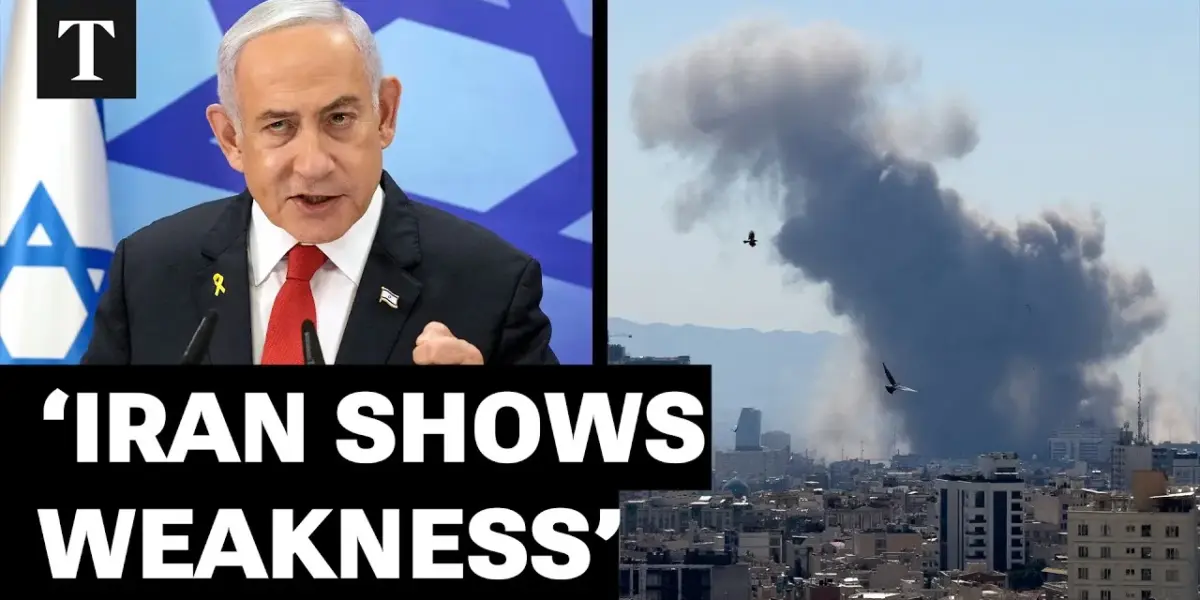
Iran’s Military Prowess Questioned After Regional Attacks
In the wake of recent regional strikes, Iran’s military capabilities have come under intense scrutiny. Experts suggest that despite its threats, Iran has demonstrated more weakness than strength, failing to inflict significant damage on its targets. This assessment comes as the United States and its allies reassess the geopolitical landscape and Iran’s strategic position.
US Shifting Justifications for Military Action
The justifications for military operations in the region, particularly those involving Iran, appear to be evolving. Initially, the focus was on regime change, but more recently, the emphasis has shifted to Iran’s ballistic missile program. U.S. Secretary of State Antony Blinken, in comments echoed by Senator Marco Rubio, stated the objectives of the mission are to “destroy their ballistic missile capability and make sure they can’t rebuild it and make sure that they can’t hide behind that to have a nuclear program.” While the U.S. leadership expressed a desire for an Iran not governed by radical Shia clerics, emphasizing that the current leadership does not reflect the will of the people, this was framed as a secondary objective, not the primary mission.
Israel’s Leading Role and Regional Dynamics
Senator Marco Rubio also highlighted Israel’s significant role in advocating for these actions in the United States, suggesting that the current operations are largely Israeli-led. This framing underscores the complex web of alliances and rivalries in the Middle East. Meanwhile, Iran has responded with threats, including targeting ships in the Strait of Hormuz, raising concerns about global economic stability.
Military Perspective: Intensity and Sustainment of Conflict
Francis Tusera, editor at Defense Analyst, provided insights into the military perspective. He noted that in the initial stages, U.S. aircraft were not based forward in Qatar due to the risk of Iranian ballistic missiles, with assets pulled back to bases in Cyprus and even Saudi Arabia for tankers. Tusera suggested that if Iranian defenses are successfully neutralized, U.S. forces would move forward, potentially to Qatar, eastern Saudi Arabia, or northern Iraq, leading to a massive increase in the intensity of attacks. He estimated that in the first 24 hours, the U.S. expended approximately 940 munitions, a significant figure.
Munitions and Defensive Capabilities
Regarding the sustainment of such conflict, Tusera discussed munition stocks. He indicated that the U.S. and Israel possess ample supplies of certain munitions like the Joint Direct Attack Munition (JDAM), given annual production rates of 8,000-10,000 kits. However, he pointed to a potential vulnerability in the stocks of Patriot surface-to-air missiles, a key defensive weapon for Gulf states. With U.S. production rates of only 500-600 Patriot missiles per year, and recent attacks involving 80-90 ballistic missiles against the UAE, Tusera warned that regional stocks could be depleted quickly if attacks continue at a high rate.
Iran’s Perceived Weakness vs. Actual Threat
Tusera expressed his view that Iran has shown more weakness than military might in recent actions. “Have they caused any specific catastrophic uh hits on any of the countries they’ve targeted? No, absolutely not,” he stated. “You know Israel is more or less invulnerable. You know one or two missiles may get through, but that’s it. Um, so yeah, they are not showing that they are uh a power to be feared.” He added that U.S. and Israeli aircraft have been operating with relative impunity within Iranian airspace.
Strait of Hormuz: A Lingering Threat
The potential for Iran to close the Strait of Hormuz remains a significant concern for the global economy. Tusera recalled discussions from 1988 about similar threats and the ongoing need for alternative routes, like pipelines to the Red Sea. While Iran possesses anti-ship missiles, Tusera noted that significant U.S. attacks on Iranian naval assets and missile sites, particularly at Bandar Abbas, are likely aimed at ensuring the unimpeded passage of tankers.
The Shia-Sunni Divide and Regional Alignments
Professor Ali Ansari of St. Andrews University offered historical and political context, explaining the significance of the Shia-Sunni divide in understanding Middle Eastern politics. Iran, a Shia Islamic Republic, has historically sought to draw support from Shia communities across the region. Ansari suggested that attacks on eastern Saudi Arabia, which has a large Shia population, and Bahrain, a majority-Shia country ruled by a Sunni minority, were intended to disrupt oil infrastructure and galvanize support. However, he argued that these actions have largely backfired, uniting the Sunni Arab world against Iran in a way that may not have been anticipated.
Ethnic Contempt and Miscalculation
Ansari posited that Iran’s actions stem not just from sectarian ideology but also from what he described as an “ethnic contempt” of Persians for Arabs, a belief that Arabs lack the capability to effectively counter their actions. He suggested this perception could lead to a significant miscalculation on Iran’s part.
Internal Dynamics: Protests and Regime Legitimacy
The discussion also touched upon the internal situation within Iran, including widespread protests against the ruling theocracy. Ansari noted that recent surveys suggest a growing secularization, with only about 30% of the population self-identifying as Shia Muslim. He argued that the Islamic Republic has, ironically, diminished the influence of organized religion while spirituality and other beliefs, including Christianity and Zoroastrianism, are seeing a resurgence. The balance of power within Iran, currently favoring the regime’s 400,000 armed supporters over an unarmed population, could shift if the capabilities of the IRGC and paramilitary forces are degraded by external actions. Ansari recalled the regime’s own admission of facing an existential threat in early January, leading to a violent crackdown on protesters.
Regime Change from the Air?
Addressing the possibility of regime change, Ansari suggested that while some analysts, like Karma, argue against achieving regime change from the air, a strategy involving the degradation of military capabilities coupled with a potentially restive population could create a different dynamic. He cautioned against drawing direct parallels with Iraq, Syria, or Libya, emphasizing Iran’s unique history of democratic activism and political dissent. The economic situation in Iran is dire, and the government’s legitimacy is eroded. Ansari also urged caution regarding images of large crowds broadcast by state television, noting the lack of independent verification due to internet restrictions and the potential for state-controlled narratives.
Looking Ahead
The coming weeks will be critical in assessing whether Iran’s military capacity can be significantly degraded and how this might influence internal dynamics and regional stability. The effectiveness of defensive systems, the sustainment of offensive operations, and the broader geopolitical response will shape the future trajectory of the conflict.
Source: Israel ‘More Or Less Invulnerable’ In Face Of Iranian Strikes (YouTube)

Related Articles


US Borrows Billions From China for Defense Against China
The United States is reportedly borrowing billions from China to fund defense initiatives aimed at countering Chinese influence. This complex financial strategy fuels market uncertainty and raises concerns about geopolitical vulnerabilities and supply chain security.

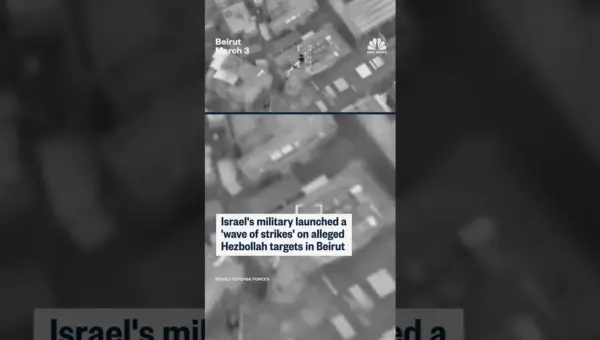
Israel Strikes Hezbollah Targets in Beirut Amid Escalating Tensions
Israel's military launched a significant wave of strikes targeting alleged Hezbollah infrastructure in Beirut, Lebanon, escalating cross-border hostilities. The airstrikes represent a substantial intensification of the conflict, raising concerns about potential civilian impact and broader regional instability.
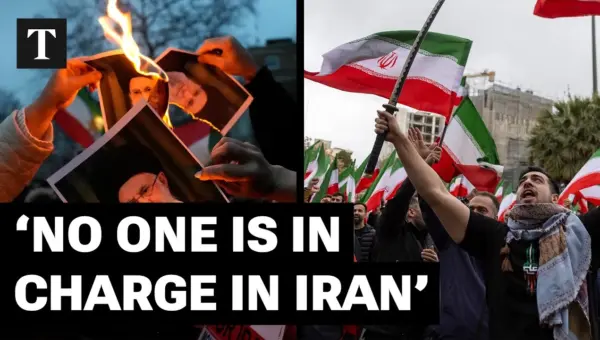
Iran’s Regime Loses Grip Amidst Escalating Gulf Attacks
Iran's regime is reportedly losing centralized control, with individual military units acting autonomously amidst escalating attacks across the Gulf. This breakdown in command, coupled with internal power struggles, fuels regional instability and disrupts vital shipping lanes, posing significant economic and security challenges.