Iran’s ‘Messianic Mission’ Fuels West’s Cold War
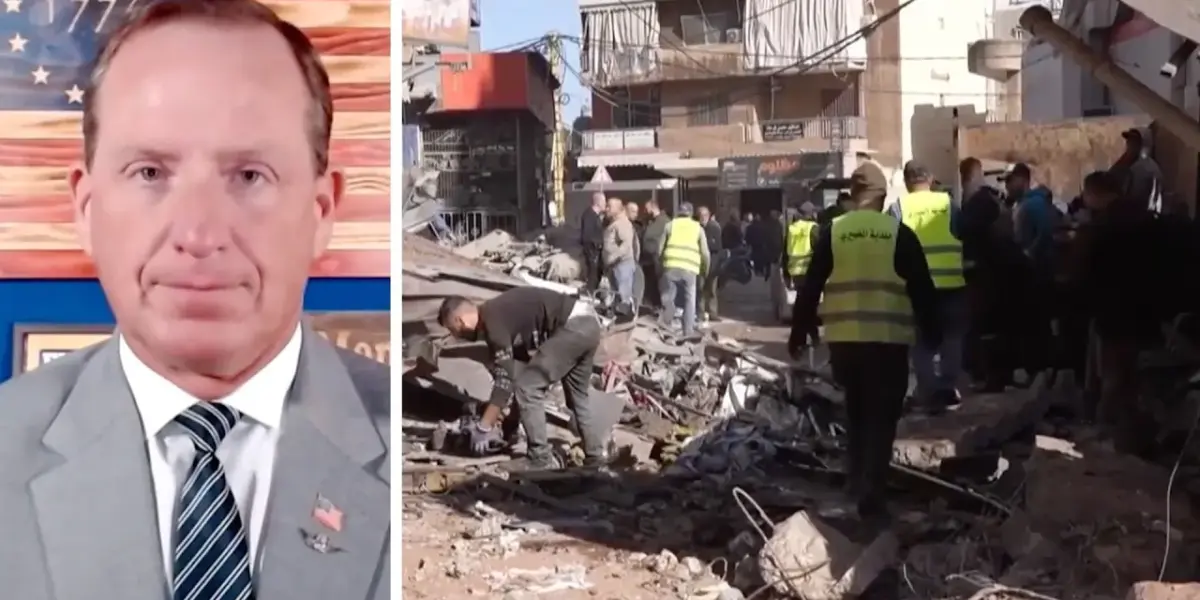
Geopolitical strategist Lt. Col. Darren Gobb explains that Iran views its conflict with the West as a 'messianic mission.' This ideology drives its proxy warfare and makes lasting peace a significant challenge. Direct diplomacy and long-term durability are key to any potential ceasefire holding.

Iran’s ‘Messianic Mission’ Fuels West’s Cold War
The ongoing conflict between Iran and the West, particularly the United States and Israel, is more than just a dispute over borders or resources. Geopolitical strategist and retired Lieutenant Colonel Darren Gobb suggests Iran views its struggle as a ‘messianic mission.’ This deep-seated ideology, he argues, drives a continuous warfare against Western powers, making lasting peace a significant challenge.
A Ceasefire Built on Shifting Sands
The recent focus on a potential ceasefire highlights the complexities of the situation. Iran has accused the U.S. and Israel of violating the terms by targeting Hezbollah in Lebanon. However, the U.S. perspective, as voiced by Vice President JD Vance, is that Lebanon was not part of the agreed-upon deal. Colonel Gobb explains this disconnect: ‘Iran may think it’s part of the deal based on the plan they submitted, but America can easily say that it wasn’t part of the plan based on what we submitted.’
This disagreement isn’t necessarily about who is right or wrong. Both sides can hold their own valid interpretations because neither has fully accepted the other’s proposed plan. Until a unified agreement is reached, Israel is likely to continue targeting Hezbollah. Gobb identifies Hezbollah as the most significant remaining threat among Iran’s proxies, constantly attacking northern Israel with missiles and drones. ‘They are constantly hitting northern Israel with missiles and drone attacks and they just they’re not going to stop,’ he states.
While Israel addresses the Hezbollah threat, Iran will likely use these actions as justification for its own stance, claiming the ceasefire is not being upheld. Gobb suggests that eventually, Israel may pause its operations against Hezbollah to allow peace negotiations a chance to progress. The crucial question remains whether these talks will yield any meaningful results.
The Path Forward: Direct Diplomacy
To move past the current impasse, Colonel Gobb stresses the need for direct, face-to-face negotiations. ‘The only way to proceed is that Vice President Vance continues on to Islamabad, sits across the table from the representatives as necessary, who can actually answer for what Iran is thinking face to face and sort it out in person,’ he advises. He believes that such complex geopolitical issues cannot be resolved through public opinion or media discussions.
The current approach involves continuing with the negotiations in Islamabad, with the hope of a swift resolution. Gobb also touches upon the U.S. role in managing its allies. He suggests that clear communication with Israel about its plans in Lebanon is essential. While Israel might have strategic reasons for its actions, a pause could be beneficial for the peace process. ‘It is very much possible that Israel could stop bombing positions within within Lebanon… and say that they wanted to do that. They had it planned,’ Gobb notes, but adds that they might not have been able to pause until their ‘targeting cycle was accomplished.’
Genuine Intentions or Strategic Play?
The sincerity of both sides in upholding the ceasefire is a key question. Gobb believes there’s an appearance of genuine effort. However, he points out Iran’s strategic use of messaging, particularly concerning the Strait of Hormuz. Iran can easily create uncertainty by suggesting mines in the water, even if only one is present. This ambiguity poses a risk for shipping companies and their insurers, potentially causing them to delay transit until they are absolutely certain the strait is safe. ‘It’s easy for them to threaten and close the street. It’s a lot harder to prove that they’re open and free of risk,’ Gobb explains, indicating Iran will continue to exploit this leverage.
Hezbollah: A Proxy’s Power
Hezbollah’s role as an Iranian proxy is central to the ongoing tensions. Gobb emphasizes that Iran will continue to treat Hezbollah as its own, using its actions to maintain leverage. While Hamas is largely neutralized and the Houthi rebels pose a low risk to Israel, Hezbollah remains a significant threat, described as ’10 times or more bigger than the threat of Hamas.’ Iran’s defense of Hezbollah is therefore expected.
The Ideological Core
Colonel Gobb identifies the driving force behind Iran’s actions as an ideological commitment. ‘This is a messianic mission when it comes to the dictators of Iran,’ he asserts. This belief system compels them to engage in constant warfare against the West, America, and Israel, viewing it as their fundamental purpose. He questions the notion of a true ‘regime change’ in Iran, arguing that simply replacing leaders does not erase the underlying ideology that has been entrenched for decades. ‘Just because you get rid of the people doesn’t mean you get rid of the ideology that those who come behind follow,’ he states.
The idea of the U.S. aiming to eradicate this ideology is seen as an impossible objective. Gobb compares it to a global war on terrorism – one can impact it but never fully eliminate it. If the new leadership in Iran is indeed more moderate, as suggested by some, then maximizing benefits from this situation is the most realistic approach. However, expecting a fundamental ideological shift in a short period is unrealistic given the deep roots of the current mindset.
The Challenge of Durability
Regarding the prospect of a lasting peace, Gobb remains cautiously optimistic about the possibility of a deal. ‘I think there could be a deal,’ he admits. The real challenge, however, lies in the durability of that agreement. Will it hold for more than a few years, or will Iran revert to its current stance?
The focus should be on the terms of any potential deal and its long-term viability. Gobb advises signing an agreement if it offers tangible benefits, but stresses the need for constant monitoring and verification. ‘Keep an eye to the fact that Iran could turn back and be deceiving or be deceitful and continue being like that for the year years ahead,’ he warns. For Gobb, true durability means lasting for a generation, a benchmark that current circumstances make difficult to achieve.
Why This Matters
The analysis by Colonel Gobb provides critical insight into the motivations behind Iran’s foreign policy. Understanding the ‘messianic mission’ aspect is key to grasping why diplomatic solutions are so challenging. It suggests that Iran’s actions are not solely driven by pragmatic geopolitical interests but by a deeply ingrained ideological conviction. This perspective is crucial for the U.S. and its allies in formulating effective strategies that go beyond short-term ceasefires.
The reliance on proxies like Hezbollah, and the complex web of control and independent action, further complicate de-escalation efforts. The potential for Iran to exploit any perceived weakness or ambiguity, particularly in critical shipping lanes like the Strait of Hormuz, underscores the ongoing strategic risks. The discussion also highlights the limitations of conventional diplomacy when dealing with ideologies that are resistant to external influence.
The core issue of ideology versus pragmatic leadership in Iran remains a significant unknown. The U.S. faces the difficult task of negotiating with a regime whose fundamental beliefs may be immutable, even if individual leaders change. The emphasis on the *durability* of any agreement, rather than just its existence, is a vital point. It means that any peace deal must be structured with mechanisms for long-term verification and enforcement, anticipating the possibility of future deception.
Historical Context and Future Outlook
Iran’s current foreign policy can be traced back to the 1979 revolution, which established an Islamic Republic with a strong anti-Western and anti-Israeli stance. This ideology has shaped its approach to regional conflicts, leading to the development of a network of proxy groups. These proxies, such as Hezbollah in Lebanon, Hamas in Palestine, and the Houthi rebels in Yemen, serve as extensions of Iran’s influence and tools for challenging its adversaries.
Throughout the decades, Iran has employed various strategies, including asymmetric warfare and the use of these proxies, to counter perceived threats and project power. The current situation, with tensions escalating and a fragile ceasefire in place, is a continuation of this long-standing pattern. The geopolitical strategist’s assessment suggests that this pattern is driven by an ideological imperative, viewing conflict as a fundamental duty.
The future outlook remains uncertain. While a deal might be struck, its longevity is questionable. The U.S. and its allies will likely need to maintain a state of constant vigilance, monitoring Iran’s actions closely and being prepared for potential shifts in strategy or renewed aggression. The possibility of a more moderate leadership in Iran, as suggested, could offer a window for progress, but the deep-seated ideology presents a formidable obstacle to achieving lasting peace. The challenge is to find ways to manage this conflict and prevent it from escalating into wider regional wars, while acknowledging the profound ideological underpinnings that make traditional diplomatic solutions so difficult to sustain.
Source: Iran Is on a ‘Messianic Mission’ of Warfare Against the West: Geopolitical Strategist (YouTube)

Related Articles
Trump Faces Backlash as Allies Criticize His War Strategy
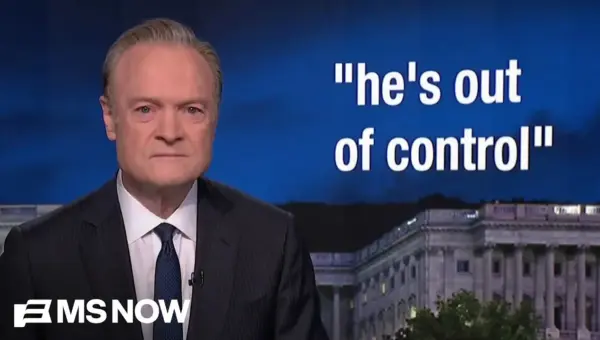
Donald Trump is facing increasing criticism from allies and political figures over his handling of a foreign conflict, with concerns mounting about his mental stability and decision-making. His wife, Melania Trump, has entered the discourse, calling for testimony from Epstein survivors, while figures like Marjorie Taylor Greene question his fitness for office. Reports also highlight issues with military preparedness and Trump's unique approach to international negotiations.
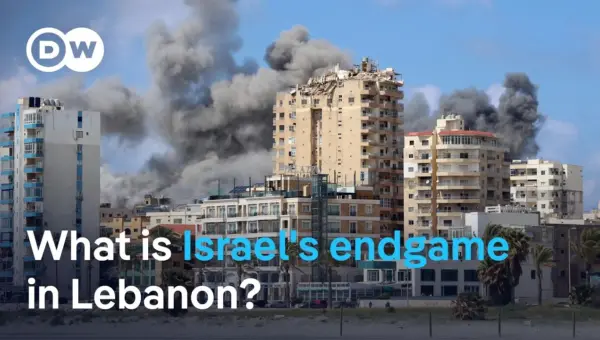
Israel Bombs Beirut, Netanyahu Approves Talks Amid Ceasefire Confusion
Israel has bombed Beirut and approved talks with Lebanon amid confusion over a US-Iran ceasefire deal. Analyst Shakria Brados explains the differing goals of the US and Israel, and how a shift in Lebanese government policy may enable cooperation against Hezbollah.
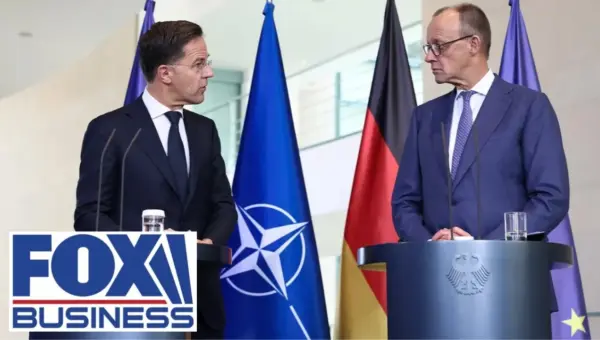
Rutte Faces Backlash: Trump Allies Criticize NATO Chief
NATO Secretary General Jens Stoltenberg's remarks on global safety and Iran's nuclear program have drawn fire from Trump allies. Former State Department official Christian Whiton called Stoltenberg the "odd man out" in Europe, questioning the substance behind his supportive words for U.S. policy. The debate also raises questions about potential U.S. troop realignments within the NATO alliance.