Iran’s Lost Mines Create Naval Nightmare
Iran's panicked attempt to mine the Strait of Hormuz has backfired, creating a dangerous, uncontrolled minefield. Unable to track or remove its own explosives, Iran now faces a critical naval blunder. The U.S. has responded with precision strikes against Iran's naval assets, aiming to secure this vital global oil chokepoint.

Iran’s Lost Mines Create Naval Nightmare
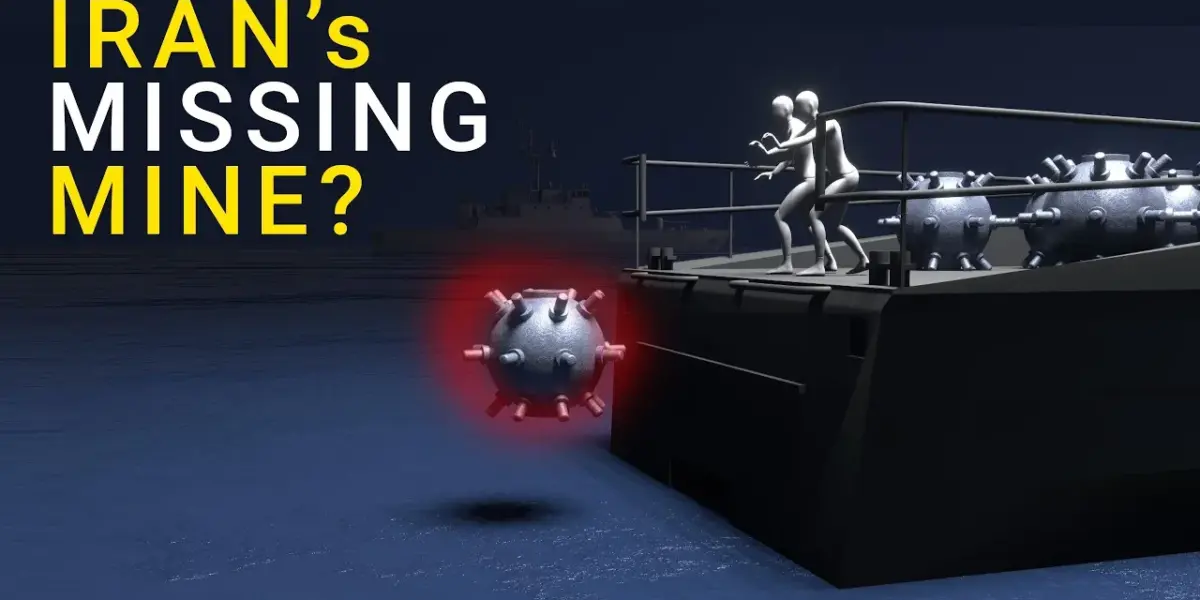
The Strait of Hormuz, a vital waterway for global oil, has become a dangerous trap due to Iran’s own actions. In early 2026, Iran’s Revolutionary Guard desperately tried to turn this narrow passage into a minefield. However, this effort was born from panic, not careful planning. Reports suggest that teams were simply throwing explosives into the water without marking their locations.
This lack of precise mapping means Iran has created a minefield it can no longer control. The strong currents in the Strait can move these mines unpredictably. This turns the area into a deadly game of chance for passing oil tankers. About 20% of the world’s oil supply is now stuck behind this self-made barrier. Iran built a wall but cannot dismantle it, leaving a critical global choke point under constant threat.
Iran’s New Tactics: The Mosquito Fleet
Facing a weakened navy and unable to clear its own mines, Iran has turned to older, unconventional tactics. Instead of large, easily targeted warships, the Iranian Navy now relies on a “Mosquito Fleet.” This involves hundreds of small, fast attack boats. These boats, like the Ashura and Turk, are quick and armed with machine guns, rockets, and missiles.
The strategy is to overwhelm larger ships like U.S. destroyers. By attacking from all directions at once, these small boats aim to confuse and overload a warship’s defenses. They present too many targets for the ship to handle. Iran also uses disguised “dual-use” craft that look like fishing boats or commercial vessels but are secretly equipped for military operations.
Low-Tech Mining, High-Tech Danger
Deploying naval mines with these small boats is a low-tech operation. They don’t use advanced automated systems. Instead, mines are often strapped to the back of a boat. When they reach their target area, the crew simply pushes or rolls the explosives into the water. Some larger boats may have simple rails to help slide them off.
This simple setup is perfect for quick, surprise attacks. A speedboat can quickly enter busy shipping lanes, drop a few mines, and speed back to shore. They can do this before larger U.S. warships can react. Iran has a large stockpile of these mines, ranging from simple contact mines that explode on impact to advanced bottom mines that detect passing ships.
U.S. Response: Preemptive Strikes and Precision
The United States has responded with a multi-pronged strategy to neutralize this threat. Instead of waiting for mines to be deployed, the U.S. strikes the mine-laying vessels before they can act. This is a preemptive denial strategy, destroying the means of attack before it can be used.
This action is guided by precise intelligence. U.S. forces gather information from various sources, including signals intelligence and human intelligence. This allows them to pinpoint the exact mine-laying ships, their locations, and the best time to strike. Many of these vessels were attacked while docked, making the operation safer and more accurate.
A Coordinated Blow to Iran’s Naval Power
The U.S. employs a dual-target doctrine, striking both the mine-laying vessels and associated storage facilities simultaneously. This ensures that even if Iran has replacement boats, they would have no mines to load onto them. This coordinated approach aims to maximize the impact of the operation.
The U.S. used a variety of weapons. Drones armed with Hellfire missiles targeted small boats. Long-range cruise missiles from Navy destroyers were also employed. Heavy bombers dropped large, GPS-guided bombs to destroy boats in their storage areas. Footage shows these precision strikes effectively eliminating Iran’s mining capabilities.
Understanding the Technology: Hellfire Missiles
The effectiveness of these strikes highlights the power of modern precision weaponry. For example, the Hellfire missile, often launched from MQ-9 Reaper drones, is a key tool. A drone operator can use a joystick to zoom in on a target, lock onto it, and launch the missile with a trigger. The missile then guides itself to the target.
The Hellfire missile is a precision weapon guided by lasers or radar. It can accurately track and hit fast-moving targets like speedboats. The drone’s sensors provide real-time information, allowing the missile to predict the target’s movement. Traveling at speeds over 760 mph, the Hellfire missile can quickly intercept even evasive targets.
Devastating Losses for Iran’s Navy
In a short period, the U.S. has inflicted significant damage on Iran’s navy. Over 60 warships and submarines have been taken out in about ten days. Early encounters involved missile duels and swift responses to threats.
For instance, the Iranian ship Joshin fired a Harpoon missile at a U.S. group but was sunk by U.S. countermeasures and return fire. The Sahand frigate was destroyed by attack jets and missiles. Another frigate, the Savin, was crippled when a U.S. jet dropped a bomb directly down its exhaust stack. These actions aim to secure the Strait of Hormuz, a critical point for global oil transport.
Why This Matters
The situation in the Strait of Hormuz is a stark reminder of how geopolitical tensions can directly impact global economies. Iran’s inability to control its own minefield creates a constant risk for international shipping. This disruption not only affects oil prices but also global trade routes. The U.S. response demonstrates the effectiveness of modern military technology and intelligence in managing such threats.
Implications and Future Outlook
This incident highlights the evolving nature of naval warfare, with small, fast attack craft posing a significant challenge. It also shows how advanced intelligence and precision strikes can counter such threats. The future may see continued reliance on drone technology and specialized missiles for naval engagements. For Iran, the loss of so many vessels and the inability to secure its own waters represent a major setback. The long-term stability of the Strait of Hormuz remains a concern, dependent on de-escalation and effective maritime security.
Source: How Iran Can’t Find Their Mines in the Strait of Hormuz? (YouTube)

Related Articles


US Minesweepers Clear Strait of Hormuz Amid Peace Talks
U.S. forces have commenced mine-clearing operations in the Strait of Hormuz, a critical waterway, amid high-level peace talks with Iran in Pakistan. The operation, seen as a positive sign, occurs while diplomats discuss Iran's nuclear program and regional stability. Experts weigh the risks, Iran's strategic leverage, and the complex interplay of international relations, including Israel's ongoing military actions.


US, Iran Hold Landmark Peace Talks in Pakistan
Top U.S. and Iranian delegations are holding landmark peace talks in Islamabad, Pakistan, mediated by the Pakistani government. This marks the first direct meeting between the two nations in nearly 50 years, with Vice President J.D. Vance leading the U.S. side.


Iran Talks Stall: US ‘Arrogance’ Fuels Mideast Stalemate
Peace talks between Iran and the U.S. in Pakistan have stalled due to what Iran calls "excessive demands" and a U.S. attempt to alter a pre-agreed 10-point framework. Tensions are high, with both sides expressing deep mistrust and a readiness for conflict.