Iran’s IRGC Unlikely to Disarm Amidst Trump Threats
President Trump's demand for Iran's Revolutionary Guard Corps (IRGC) to disarm is unlikely to be met, according to Middle East historian Dr. Sio Ranchar Daimi. The IRGC is deeply entrenched in Iran's economy and security, acting as the regime's primary tool for control and external operations. Despite recent losses, the Guard remains ideologically committed to resistance.

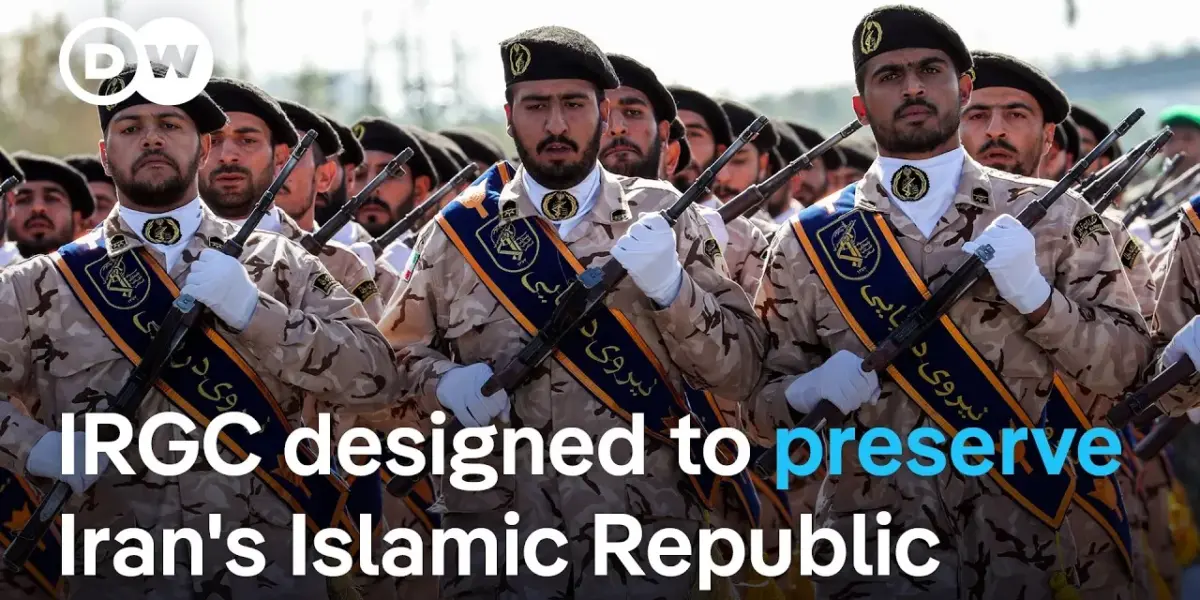
Iran’s Powerful IRGC: A Force Beyond Control?
In a dramatic escalation of rhetoric, U.S. President Donald Trump has issued a call for Iran’s Islamic Revolutionary Guard Corps (IRGC) to lay down its arms. However, experts suggest that such a demand is highly unlikely to be heeded by the deeply entrenched and powerful paramilitary organization. The IRGC, a cornerstone of Iran’s theocratic regime, answers directly to the Supreme Leader and commands significant control over the nation’s ballistic missile program, as well as orchestrating overseas operations.
The Genesis and Evolution of the IRGC
Born from the ashes of Iran’s 1979 Islamic Revolution, the IRGC was initially conceived as a force to safeguard the nascent government. Its role has since expanded dramatically, becoming enshrined in the constitution and operating in parallel to the regular armed forces. Over decades, it has evolved into an all-encompassing entity, deeply integrated into the fabric of Iranian society and governance.
“It has grown. It is one of the big legacies I would say of Supreme Leader Khamenei, the way he basically converted the IRGC into basically a veteran force which took part in the Iran Iraq conflict into an all-encompassing organization which does everything from civil engineering through to controlling broad swaths of the economy… and of course handling the Iranian missile capabilities and drones.”
Dr. Sio Ranchar Daimi, University of St. Andrews
A Deeply Entrenched Power Structure
Dr. Sio Ranchar Daimi, a lecturer in Middle Eastern history at the University of St. Andrews, emphasizes the IRGC’s pervasive influence. “It is hard really to overstate how deeply enmeshed the IRGC is into pretty much all aspects of Iran,” she stated in a recent interview. The Guard’s responsibilities now span civil engineering, significant economic interests, telecommunications, and the management of Iran’s missile and drone capabilities. It boasts its own intelligence, naval, land, and air forces, functioning as a state within a state.
The IRGC as the Regime’s “Big Stick”
The IRGC’s loyalty is primarily to the Supreme Leader, a crucial factor in maintaining regime stability. This ideological and operational alignment ensures its readiness to suppress dissent. “They were the ones who weren’t blinking when it came to, for example, repressing street demonstrations,” Dr. Daimi noted, referencing the use of the Basij militia, an auxiliary force under IRGC command, to control protests.
The organization is often described as the Praetorian Guard of the Islamic Republic. Any future leader, Dr. Daimi explained, will need to cultivate a similarly close bond with the IRGC to maintain control, particularly in a nation where the government’s legitimacy is often contested.
Responding to External Threats
The current geopolitical climate, marked by significant Israeli and U.S. military actions, has placed the IRGC at the forefront of Iran’s response. The Guard is believed to be behind the ongoing missile launches targeting Persian Gulf states and Israel. In recent years, the IRGC has repeatedly warned of striking American interests across the Middle East if its leadership, or Iran itself, were directly targeted.
Despite recent significant blows, including the assassination of two consecutive IRGC commanders by Israel within eight months, the organization does not appear to be wavering. “The IRGC doesn’t see itself as backtracking… It sees itself as a body that’s ready to have a long list of martyrs who died in combat and is carrying on according to the sort of indoctrination it received,” Dr. Daimi observed. This unwavering stance, fueled by its ideological indoctrination, suggests a commitment to continued resistance.
Navigating Uncharted Political Territory
The recent events have plunged Iran into a period of profound political uncertainty, particularly following the removal of much of its senior leadership. This transition away from the era of Supreme Leader Ali Khamenei, who had meticulously shaped the office around his persona, presents immense challenges.
Dr. Daimi described the current moment as one of “very sharp transition.” She indicated that while there might be preferred successors, they will inevitably need to reconfigure the role of the Supreme Leader. This situation is not unprecedented; the constitution was significantly reformed in 1989 to accommodate Khamenei’s ascension. “So we are really in uncharted territories politically,” she stated, adding that the immediate focus is on “survival” and assessing losses in the ongoing conflict.
The Future Outlook
As Iran grapples with internal power transitions and external pressures, the IRGC remains a central, unyielding force. The likelihood of it complying with demands to disarm appears negligible, given its historical role, deep integration into the state apparatus, and its perceived function as the ultimate guarantor of the Islamic Republic. The coming months will likely reveal how the new leadership, assuming a new Supreme Leader emerges, will navigate their relationship with this formidable military and economic entity, and whether Iran’s strategic calculus will shift in response to the ongoing conflict and the legacy of its fallen leaders.
Source: Why it's unlikely that Iran's Revolutionary Guard Corps will obey Trump's call to disarm | DW News (YouTube)

Related Articles
Ex-CIA Director Slams Trump’s Iran Conflict as ‘Senseless Loss of Life’
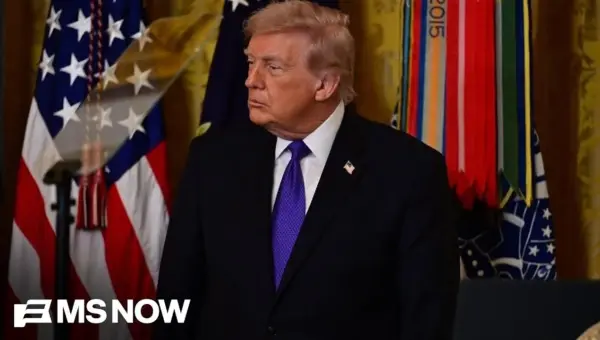
Former CIA Director John Brennan has strongly condemned the Trump administration's military actions against Iran, calling the conflict a "tragic, senseless, and needless loss of life." He warns of a repeat of the Iraq War's chaos and criticizes the administration's justifications and perceived Israeli influence.

Scholz Faces Uphill Battle in Washington on Ukraine, Trade
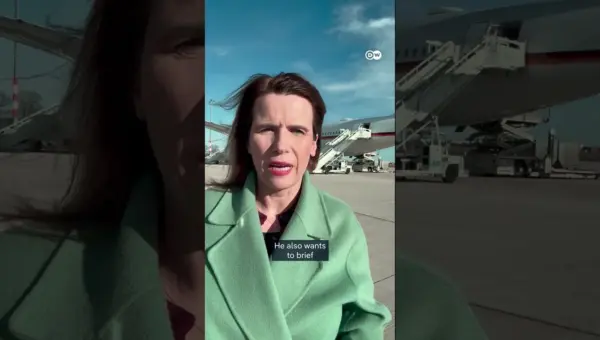
German Chancellor Olaf Scholz faces a challenging diplomatic mission in Washington, aiming to discuss Ukraine, European security, and trade with President Donald Trump. His agenda also includes briefing Trump on recent talks with China's Xi Jinping.

Trump’s Health Decline Fuels War Concerns Amidst Incoherence
Concerns over Donald Trump's health and cognitive state have intensified amid the escalating war with Iran. His recent public appearances, marked by observed physical ailments and incoherent discourse, have drawn criticism for their perceived disconnect from the gravity of the international conflict. The lack of clear justifications for the war further fuels public anxiety and demands for transparency.