Iran’s IRGC Faces Growing Internal Pressure
Iran's ruling elite is reportedly under increasing pressure, with the powerful IRGC seemingly consolidating control amidst the declining health of its top leader. This internal shift, coupled with external military actions, could lead to significant geopolitical and economic instability in the Middle East.

Iran’s IRGC Faces Growing Internal Pressure
Recent reports suggest a significant shift in power within Iran, with the Islamic Revolutionary Guard Corps (IRGC) now appearing to hold the reins of the regime. This comes as the ailing Ayatollah Khomeini, the nation’s longest-serving dictator, has been battling cancer. While his son, Mojtaba Khamenei, was expected to take over, sources indicate he lacks true control.
The IRGC, a powerful military and ideological force, has been steadily increasing its influence over state affairs for some time. This growing dominance is evident in the regime’s public statements and actions. The IRGC provides the clerical leadership with the projection of power, while the clerics grant the IRGC legitimacy in return, creating a symbiotic relationship.
Key Figures Targeted
A stark reality for leaders within the IRGC is that many now have a “target on their back.” This suggests an increased risk of internal dissent or external threats leading to their removal. The focus appears to be on identifying and potentially recruiting Iranian military leaders who are ready to abandon the current regime.
The ideal candidate sought is a nationalist who prioritizes the welfare of the Iranian people over the strict ideology of Islam. Iran is described as a fundamentally nationalist country, and nationalism is seen as the most enduring belief system there. The goal is to find individuals who wish to lead Iran through a transition, potentially paving the way for a new era.
“Every leader who has been important in cracking down on the citizens and external threats to the Western world has a target on their back.”
Nationalist Aspirations and a Potential Leader
The search is on for a nationalist leader who can guide Iran’s transition. While many nationalists may wish to lead, the transcript mentions a Crown Prince who has already expressed his readiness to lead the country during this transition. He aims to distance himself from any negative perceptions some may have of him. Importantly, he reportedly has the support of many Iranians on the streets, whose chants often carry his name.
Military Objectives and Economic Strain
Separately, reports from military analysts indicate that significant strike packages against Iran are ongoing and increasing. These actions are designed to degrade Iran’s capabilities while building the offensive power of the attacking forces. The stated objective is to ensure security and achieve specific military goals.
From a perspective within Iran, military objectives have reportedly been met and even surpassed. The ultimate goal, according to some observers, is to cripple the Iranian economy. This could involve targeting oil fields to stop production and encouraging oil workers to strike. Such actions could bring the regime to a standstill and halt its ability to function.
Market Impact
The ongoing internal power struggle within Iran and the increasing military pressure have significant implications. For investors, this points to heightened geopolitical risk in the Middle East. Disruptions to oil production due to strikes or conflict could lead to volatility in global energy markets, impacting oil prices and related stocks.
Companies with significant operations or investments in the region may face increased uncertainty. The potential for regime change or significant internal upheaval could also affect trade relationships and supply chains. Investors should monitor developments closely, particularly any news related to oil supply and regional stability.
What Investors Should Know
The situation in Iran highlights the complex interplay between internal politics, military actions, and economic stability. The IRGC’s grip on power suggests a continuation of current policies, while the search for a nationalist leader hints at potential future shifts. The economic pressure through oil production disruptions could have far-reaching consequences for global energy markets.
Investors should consider the geopolitical risks associated with the Middle East and their potential impact on energy prices and broader market sentiment. Understanding the dynamics of internal power struggles within nations like Iran is crucial for assessing long-term investment strategies in affected regions or industries.
Source: 'TARGET ON THEIR BACK': The DEADLY reality closing in on IRGC leaders (YouTube)

Related Articles


Trump’s Iran Claims: Shocked or Deluded by War Games?
Donald Trump claimed surprise over Iran's actions in the Strait of Hormuz, but experts suggest retaliation was inevitable. Military war games likely predicted such a scenario, raising questions about the advice given to the President.

Israel’s Strategy Against Iran Revealed
Israel's strategy to counter Iran's nuclear ambitions and regional influence centers on containment, utilizing a mix of covert military actions, intelligence operations, and diplomatic pressure. Analysts highlight the growing urgency due to Iran's nuclear advancements, while also noting the persistent risk of escalation in the volatile Middle East.

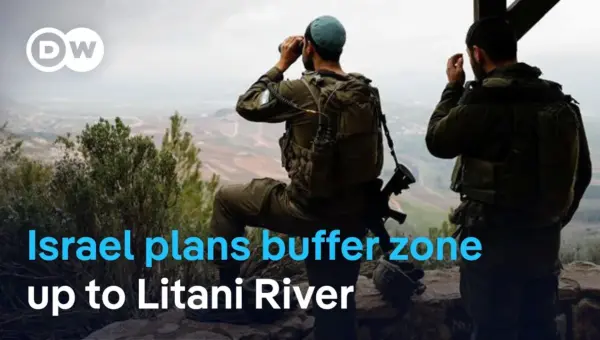
Israel Eyes Lebanon Buffer Zone: A Political Ploy?
Israel's military operations in southern Lebanon aim to create a buffer zone and pressure Hezbollah, according to expert Yazid Sayigh. He argues the strategy is more political than military, echoing historical tactics. The ongoing conflict could destabilize Lebanon further, while Hezbollah fights for survival.