Iran’s IRGC Faces Economic Ruin, Sparking Internal Revolt
Iran's powerful Islamic Revolutionary Guard Corps (IRGC) faces a potential internal crisis as its economic foundations are targeted. Analysts believe crippling the IRGC's finances could spark an uprising from within, offering a path to regime change without a full military invasion. This strategy could reshape regional power and global economics.

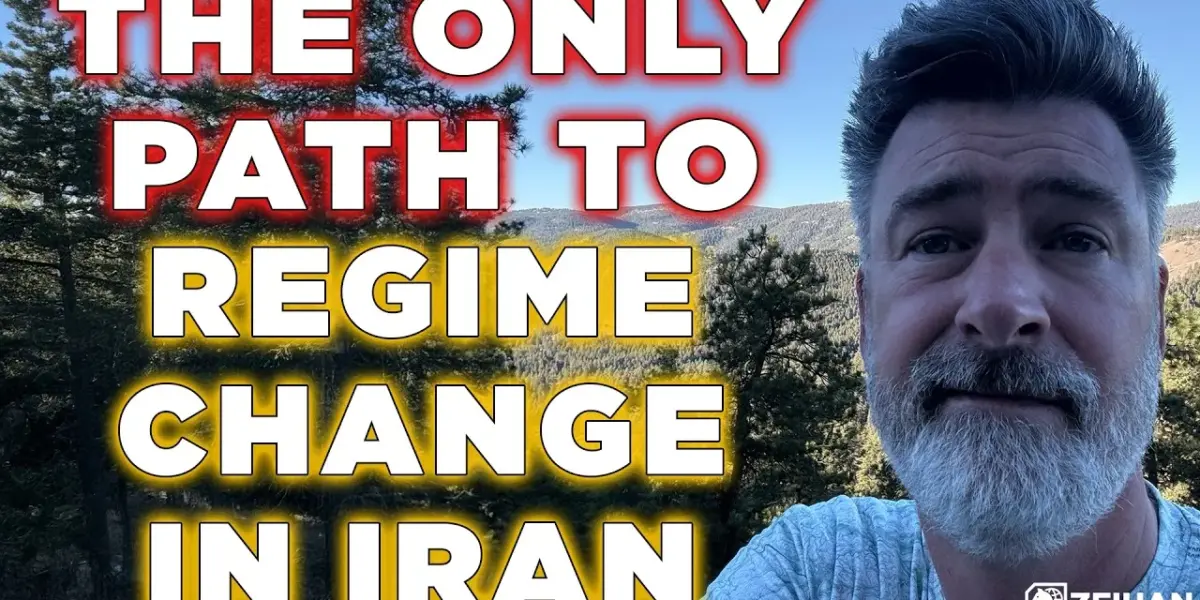
Iran’s IRGC Faces Economic Ruin, Sparking Internal Revolt
The ongoing conflict in the Middle East is pushing Iran towards a potential internal crisis, not from external invasion, but from the crippling of its powerful Islamic Revolutionary Guard Corps (IRGC). The IRGC, which controls much of Iran’s economy and military might, is increasingly becoming the face of the regime. However, its self-funding model, built on vast economic assets, is now its main vulnerability. Analysts suggest that targeting these economic interests could lead to an internal uprising within the IRGC itself, offering a path to regime change that avoids a full-scale military occupation.
Understanding Iran’s Power Structure
Iran’s government can be understood as having three main parts. First, there is the Supreme Leader and his inner circle, who oversee the country’s overall strategy and control its armed forces. This group includes leaders of the intelligence and defense ministries, as well as the IRGC. Many of these top figures have recently been killed or weakened, leading to a transfer of power to the IRGC. The second group consists of the political and economic managers who handle the day-to-day running of the country, like the president and ministers. These individuals have largely been left alone because they are not seen as directly responsible for the actions that trouble the United States and Israel.
The IRGC: A State Within a State
The third and most crucial group is the IRGC. This is not a typical military force; it is a vast organization that controls significant parts of Iran’s economy. This includes energy projects, the electricity system, and all smuggled goods. Because Iran is heavily sanctioned, much of its trade involves smuggling, which provides the IRGC with billions of dollars in income each year. This money is a key reason why people join the IRGC. The IRGC also plays a vital role in keeping the country’s non-Persian ethnic groups under control, as these groups make up about 49% of the population. The IRGC’s military strength, including its missile and nuclear programs, means that when its economic interests are threatened, it responds with attacks across the region, as seen after Israel’s strike on the South Pars natural gas field.
Economic Warfare as a Strategy
Destroying the entire Iranian government by targeting its leaders would require immense military force, potentially millions of troops. This is seen as not practical for a country twice the size of Texas with a large population. The IRGC, with a quarter to half a million members, also cannot be easily rooted out by a ground invasion. Therefore, the focus shifts to attacking the IRGC’s financial foundation. By disrupting its income streams from smuggling, energy, and other sectors, the IRGC’s ability to operate and reward its members could be severely weakened. This economic pressure is seen as the most viable way to force internal change.
Demographic Pressures and Internal Division
Iran’s population has also aged since the 1979 revolution, with fewer young people compared to older generations. This demographic trend is creating internal tensions within the IRGC. Younger members, in their 20s and 30s, have not yet experienced significant power or wealth. They see older leaders benefiting most from the IRGC’s economic activities. If the IRGC’s financial resources are significantly damaged by war and sanctions, these younger members might begin to question the current leadership and their own prospects. This could lead to internal conflict, a sort of civil war within the IRGC itself, pitting the younger generation against the established elite.
Future Scenarios and Global Impact
The current conflict is expected to last at least several more weeks. During this time, the Persian Gulf region’s role in global economics could be permanently altered. The key question is whether the United States and its allies will use this period to systematically dismantle the IRGC’s economic power. This strategy, though harsh, is viewed as the only current weakness in Iran’s structure that can be exploited for regime change. The potential consequence is not just a change in Iranian leadership but a significant reshaping of regional power dynamics and global trade routes, especially concerning energy supplies.
Historical Context
Iran’s current situation is rooted in its complex history. The Persian Empire historically expanded by conquering neighboring valleys and integrating their populations. This has resulted in a multi-ethnic society where Persians are now only about 51% of the population. The state’s primary military objective has long been to maintain control over these diverse groups, preventing uprisings. The IRGC, formed after the 1979 revolution, has become the enforcer of this control, both domestically and internationally. Its deep ties with groups like Hezbollah and its cooperation with Russia in surveillance technology highlight its role as a key instrument of Iranian foreign policy and internal security, a role that is now being challenged through economic pressure.
Source: How to Break Iran || Peter Zeihan (YouTube)

Related Articles
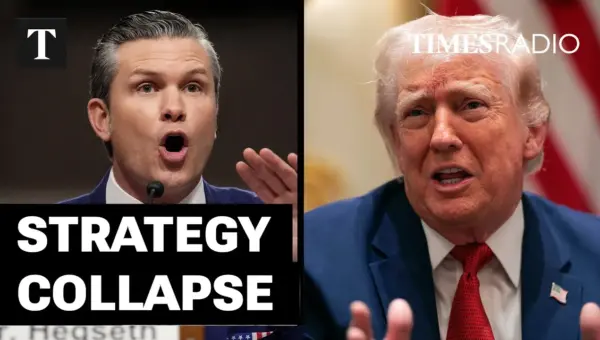
US Iran War Plans Decades Old, Expert Says Unprepared
A leading diplomacy expert warns that the U.S. is heading into a potential conflict with Iran with inadequate preparation, despite decades of planning. Professor Dan Plesh highlights critical logistical issues and a lack of immediate readiness, comparing the situation to entering a major war "half-cocked."

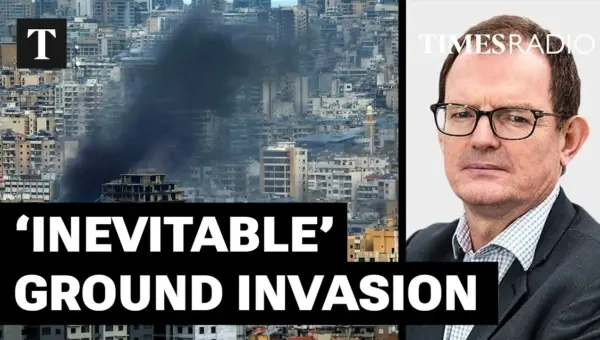
Trump Eyes Iran’s Oil Hub as Conflict Escalates
As tensions with Iran escalate, President Trump is reportedly considering seizing Kharg Island, a vital oil hub. The U.S. military presence in the region has grown, with the primary objective of reopening the Strait of Hormuz. However, experts warn of significant challenges in occupying territory and potential disruptions from Iranian proxies like the Houthis, impacting global energy markets.


Fear Grips Markets: Experts Urge Buying as Indexes Plunge
Major stock indexes have plunged this week, with the Nasdaq entering correction territory amid rising geopolitical fears and consumer anxiety. Despite the sell-off, investment experts are advising investors to adopt a contrarian approach, citing historical trends where markets recover after periods of intense fear.