Iran’s Future Uncertain After Leader’s Death, Analysts Say
Following the death of Iran's Supreme Leader Ayatollah Khamenei, analysts John Brennan and Arash Azizi discuss the uncertain future of the nation. They highlight the deeply embedded nature of the regime and the lack of organized opposition, suggesting a long and complex road ahead for Iran.

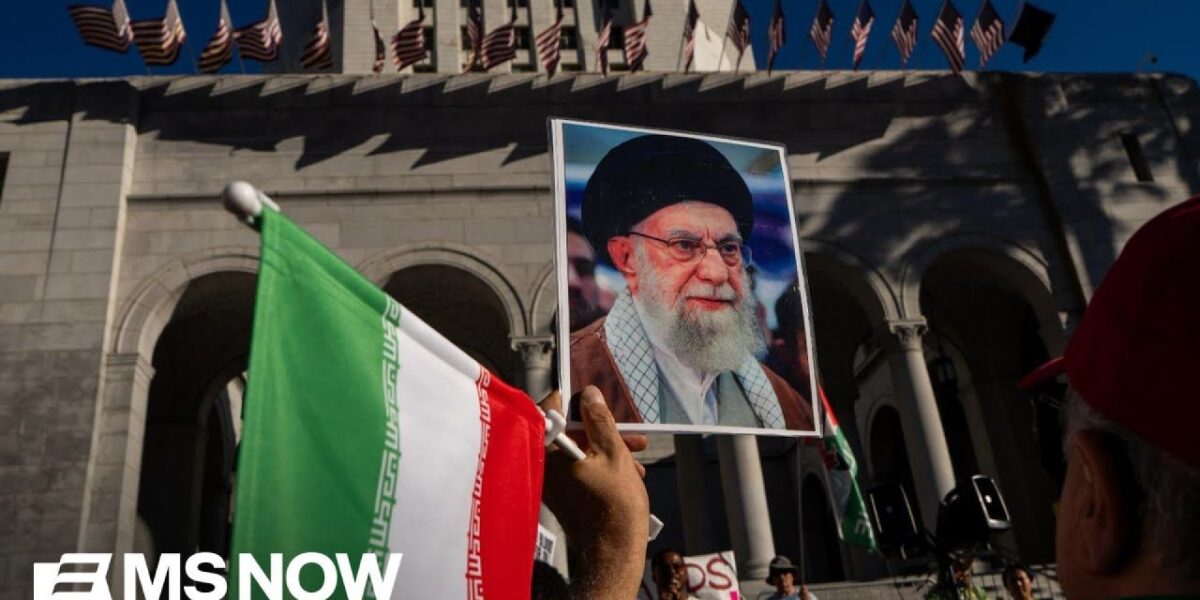
Iran Faces Uncertain Future Following Supreme Leader’s Death
Tehran, Iran – Following the confirmed death of Iranian Supreme Leader Ayatollah Khamenei, a figure who ruled Iran with an iron fist for nearly four decades, a complex mix of emotions has swept across the Middle East and the United States. In Iran, celebrations were reportedly heard in several cities, while in the U.S., Iranian Americans took to the streets in cities like Los Angeles and Washington D.C. to mark the significant blow to the ruling Islamic regime. Conversely, scenes of mourning emerged from Khamenei’s loyal base, with thousands of pro-government supporters gathering in Tehran to memorialize their leader.
A Power Vacuum and an Embedded Regime
The sudden demise of Ayatollah Khamenei has created a significant leadership vacuum, raising critical questions about the future power structure in Iran. As former CIA Director John Brennan explained, the regime is deeply embedded within the fabric of Iranian society, economy, and infrastructure. “This regime has been in place for over 45 years. And as you point out, it’s deeply embedded in the life of Iran society, as well as the economy. The IRGC is so closely tied to all of the economic centers of power in Iran,” Brennan stated.
He further elaborated on the challenges of dismantling such a deeply entrenched system. “The IRGC is so closely tied to all of the economic centers of power in Iran. There have been a number of leaders that have been killed. You know, the head of the IRGC, the head of intelligence and others, along with Khamenei. So I think the folks in Iran are still trying to figure out what’s going to happen.” Brennan noted that while Khamenei was reviled by many, he also held a revered status as the religious leader for Shia faithful.
Calls for Uprising and the Reality of Organization
In the wake of the operation, President Trump issued a message to the Iranian people, framing the moment as an opportunity to reclaim their government. However, contributing writer at The Atlantic, Arash Azizi, expressed skepticism about the feasibility of a spontaneous uprising leading to regime change.
“It’s a very tall order. I mean, for people to rise up and seize the government, you know, it’s for people to rise up and protest, to declare that they don’t like the government is one thing. But to replace it, to seize power, to organize an alternative to it, this is only possible if you have a political leadership, if you have organized networks, if you basically have an alternative that is ready to take charge. But unfortunately, we don’t have that alternative.”
Azizi lamented the lack of preparedness among democratic movements within Iran. “People like myself have said for a long time that unfortunately, we don’t have that alternative. So this kind of wishful thinking that somehow if you hit the regime, a new power will emerge spontaneously from the people has always been on pretty shaky grounds, unfortunately. I wish we had done the preparatory work as Iranian democratic movements to be able to seize an opportunity like that. But we basically haven’t, unfortunately.”
Questions Surrounding U.S. Justifications for Strikes
The justifications for the recent U.S. and Israeli military operations against Iran have come under scrutiny. Citing a New York Times report, the discussion highlighted intelligence suggesting that President Trump may have exaggerated the immediacy of threats posed by Iran’s missile program and its nuclear ambitions.
John Brennan voiced his belief that the administration had not been truthful regarding the threat. “Well, I certainly believe that he hasn’t told the truth. As you point out, there was no evidence of any type of imminent Iranian threat, either to the United States or even to Israel,” he stated. Brennan suggested that the Trump administration, in close coordination with the Netanyahu government, had been intent on this course of action for some time, irrespective of serious nuclear negotiations.
He drew parallels to the lead-up to the Iraq War under the Bush administration, suggesting a predetermined path towards conflict. “So again, I think the Trump administration was determined to carry out these strikes. It’s very similar to what I think was happening back in the Bush administration. I think there were some members of the Bush team that were determined to attack Iraq, irrespective of the intelligence. And I think the same thing was true here. The Trump administration was determined to carry out these strikes against Iran, again in concert with Israel.”
Complex Emotions and a Long Road Ahead
Arash Azizi shared his personal and complex feelings about the death of the Supreme Leader, whom he has known for much of his life. “To be honest with you, all my life, like millions of Iranians, I had dreamed of seeing the end of this man, not just as a sort of petty thing with. This is the man who ruled Iran since I was one year old, you know, in 1989. And someone who I really do believe his demise is positive is, you know, it’s going to, you know, it’s going to lead to good changes.”
However, he expressed reservations about joining the widespread celebrations. “But despite all of that I didn’t really join the celebrations yesterday that many of my compatriots had i mean in my heart as i had complicated feelings precisely because of these fears we’re in the midst of a terrible war and i think ultimately khamenei not being there will be positive for the next sort of developments i think iranian democracy movements will need to find their feet again and um but i’m certainly very void there are many worst case scenarios positive civil war a state collapse and um i think a lot of people unfortunately one has to be honest a lot of uh a lot of people have a more simplistic view of of things and don’t just you know don’t don’t look at very boring possibilities that also do exist.”
The Road Forward
Both Brennan and Azizi agreed that the path forward for Iran is fraught with challenges and uncertainty. Brennan emphasized that the recent events are merely the “opening chapter” in a much longer narrative of implications stemming from the U.S. and Israeli strikes. The potential for fracturing within the military and security services remains a key indicator to watch. Azizi highlighted the critical need for organized political leadership and established networks to facilitate any transition, a requirement that currently appears unmet. The coming weeks and months will be crucial in determining whether a stable, democratic alternative can emerge from the current upheaval, or if more volatile scenarios will unfold.
Source: ‘Long road ahead’: Fmr. CIA Director on the Trump admin.'s plans for regime change in Iran (YouTube)

Related Articles

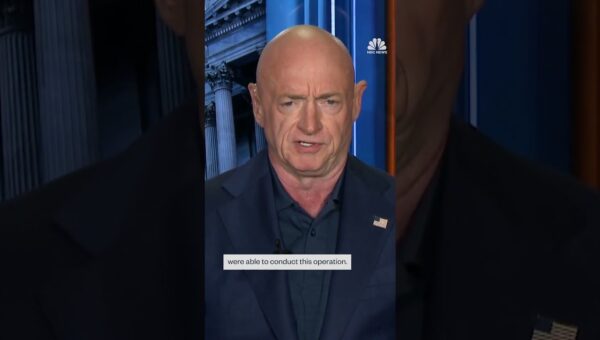
Senator Kelly: Khamenei’s Death is Positive, But Lacks a US Strategy
Senator Mark Kelly welcomed the death of Iranian Supreme Leader Ali Khamenei, calling it a "good thing." However, he sharply criticized the current U.S. administration for lacking a coherent strategy to manage the significant geopolitical shift. Kelly emphasized that "hope is not a strategy" and called for clear objectives and actionable plans to ensure American security.


US Service Members Killed in Strikes Against Iran
Three U.S. service members were killed and five wounded in "Operation Epic Fury" airstrikes targeting Iran. The incident, which involved shrapnel injuries and concussions, underscores the ongoing risks in the volatile Middle East. U.S. Central Command is investigating the exact location and circumstances of the casualties.
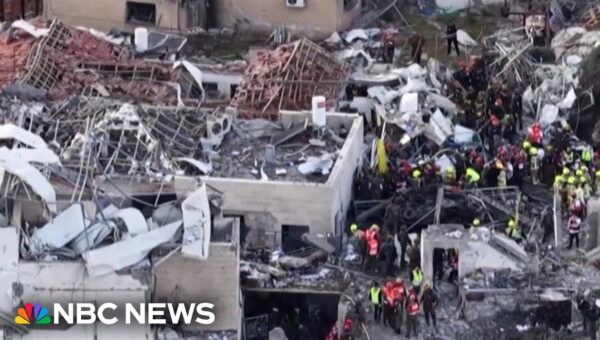
Missile Strike Near Jerusalem Kills 9 in Bomb Shelter
A devastating missile strike outside Jerusalem has killed nine people, including children and the elderly, who were taking shelter in a Mamad (bomb shelter). The attack, attributed to Iran, bypassed air defenses and struck a synagogue's safe room, raising serious questions about the efficacy of Israel's civil defense measures.