Iran’s F-18 Claim: Truth or Propaganda Tactic?
Iran claims it shot down a U.S. F-18 fighter jet, releasing video footage as proof. However, U.S. Central Command denies any U.S. fighter jets have been shot down, though the wording leaves open the possibility of engagement. This incident highlights the ongoing information war and regional tensions.

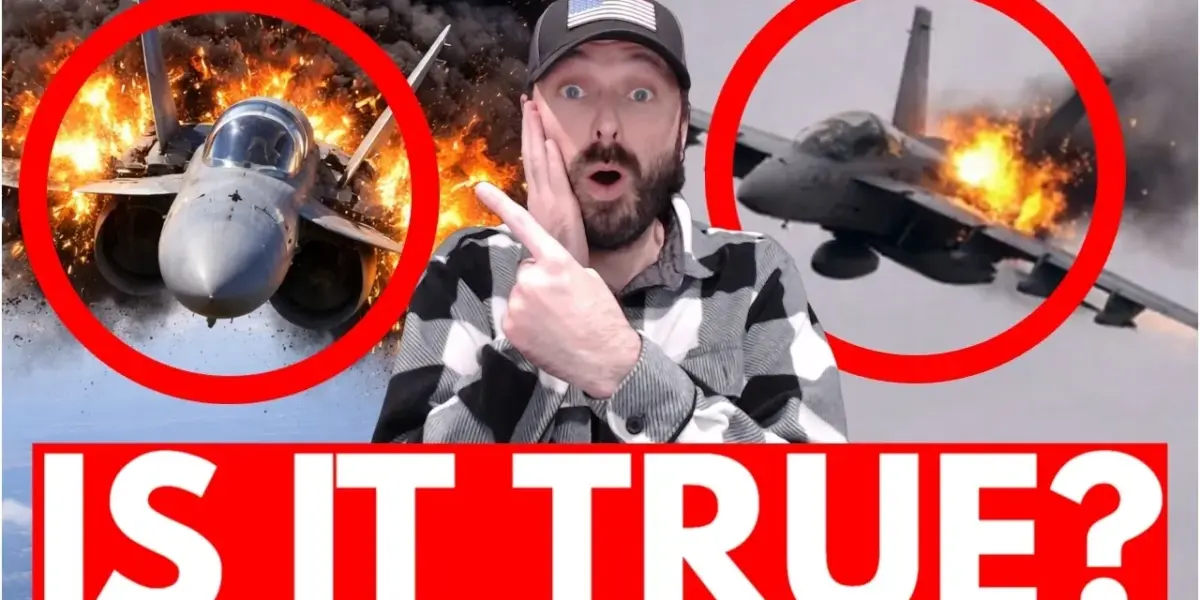
Iran’s F-18 Claim: Truth or Propaganda Tactic?
On March 25th, a developing story emerged regarding claims from Iran that an American F-18 fighter jet had been shot down. This situation highlights the constant flow of information and counter-information during times of international tension. We need to look closely at what is being said, what evidence is presented, and what official statements are made to understand the reality of such events.
The Iranian Account and Video Evidence
An official Iranian government account released footage alleging to show an F-18 fighter jet being shot down. The video, which appears genuine and not AI-generated, shows what looks like an F-18 turning, followed by a white object approaching and then impacting the aircraft. A second angle of the alleged incident also shows a similar sequence, with people celebrating in the background.
The Iranian government claims the fighter jet was shot cleanly out of the sky and that the pilot ejected. However, the source of this claim is a government known for its own agenda, making independent verification crucial.
U.S. Central Command’s Response
U.S. Central Command (Centcom) issued a statement directly addressing the Iranian claim. Centcom stated, “False. The Islamic Revolutionary Guard Corps announced a US F-18 was struck over Shabbar using new advanced air defense systems. True. No US fighter jets have been shot down.”
This statement is carefully worded. While it firmly denies that any US fighter jet was shot down, it does not explicitly state that no aircraft was fired upon or engaged. This leaves room for interpretation. The wording suggests that while a plane might not have been destroyed, it could have been targeted, hit, or damaged, forcing it to evade and return to safety.
Analyzing the Discrepancy
The core of the issue lies in the difference between being “shot down” and being “engaged” or “damaged.” Iran claims a complete destruction of the aircraft, while the U.S. denies this outcome. The U.S. statement’s focus on “shot down” implies that other forms of engagement might have occurred.
Historically, Iran has a track record of making exaggerated claims. For instance, they previously released a video claiming to shoot down an F-15, but the aircraft shown was a MiG. They also claimed to have downed an F-35 stealth fighter, which later reports indicated was only clipped and managed to return to friendly territory.
Given this history, the Iranian claim of a clean F-18 shootdown should be viewed with significant skepticism. While the released video shows an impact, its authenticity and the actual outcome of the event remain unconfirmed by independent sources. The U.S. government’s denial of the jet being “shot down” is the most direct and authoritative statement available.
Broader Geopolitical Context
This incident occurs against a backdrop of ongoing military operations and regional tensions. U.S. fighter jets have been operating over Iran, conducting airstrikes as part of broader war efforts. The U.S. aims to counter Iranian influence and operations in the region.
Furthermore, there are reports that Houthi rebels in Yemen, backed by Iran, may be preparing to enter the conflict. Iranian officials have threatened to open new fronts, potentially impacting shipping lanes like the Strait of Hormuz and the Red Sea. The Houthis have previously attempted to disrupt Red Sea shipping, and their involvement could escalate the conflict significantly, posing risks to maritime trade and regional stability.
Adding to the complex situation, reports from Israeli media suggest that Iran’s Supreme Leader, Moshaba Hmeni, who was reportedly injured, is alive and actively involved in decision-making. This information, if true, counters speculation about his health and any potential power vacuum.
Meanwhile, in Iran itself, the government is reportedly using trucks with mounted machine guns and setting up checkpoints to control its own population and suppress any potential protests. This indicates a high level of internal security measures being employed by the regime.
The United States has also reportedly mobilized a significant troop presence, with reports of up to 50,000 troops involved in operations, including potential ground invasions. Footage has also emerged of B-2 stealth bombers preparing for raids in Iran, showcasing the U.S. military’s readiness and capabilities.
Why This Matters
The conflicting narratives surrounding the alleged F-18 incident are a critical example of information warfare. Both sides use such events to shape public perception, project strength, and potentially sow doubt or fear. For the public, it’s essential to critically evaluate claims, look for independent verification, and understand the motivations behind official statements.
The potential escalation involving the Houthis underscores the interconnectedness of regional conflicts. Actions in one area can have ripple effects across the Middle East, impacting global trade and security. The U.S. military’s posture, including troop movements and bomber deployments, signals its commitment to maintaining stability and deterring aggression.
Future Outlook
The situation remains fluid. The accuracy of Iran’s claim about the F-18 will likely remain debated, with the U.S. stance being the more credible one. However, the mere fact that an engagement may have occurred, even if the jet was not destroyed, indicates the ongoing risks faced by military personnel in the region.
The potential for the Houthis to join the conflict could significantly alter the dynamics of shipping and security in vital waterways. This, combined with the internal pressures within Iran and the U.S. military presence, points towards a continued period of high tension and potential for further incidents. Monitoring these developments closely, with a critical eye toward the information presented, is key to understanding the evolving geopolitical landscape.
Source: Iran Claims U.S. F-18 SHOT DOWN – Bizarre Video Released (YouTube)

Related Articles


Stocks Ignore War Risks, Focus on “Taco Moments”
Stock markets appear to be overlooking the severe supply chain risks stemming from the Iran conflict, focusing instead on potential diplomatic de-escalations. While the S&P 500 shows resilience, bond and commodity markets signal deep concern over disruptions to critical resources like LNG, helium, and fertilizers.

US Strikes Cripple Iran’s Military Might, CENTCOM Reports
U.S. Central Command reports ongoing strikes inside Iran are significantly weakening its military power. This direct action aims to reshape regional security dynamics, but carries risks of escalation. The long-term impact depends on Iran's response and ability to adapt.

U.S. Iran Tensions Rise Amid Shifting Alliances
Rising tensions between the U.S. and Iran are creating a volatile geopolitical situation. With conflicting signals on de-escalation and potential shifts in alliances like NATO and U.S.-Israel relations, the path forward remains uncertain. The global economy and regional stability hang in the balance.