Iran’s Drones Challenge US, Israel in Mideast Conflict
Iran's strategic use of cost-effective Shahed drones is challenging US and Israeli air defenses in the Mideast, marking a shift towards drone-centric warfare. This attrition strategy aims to erode political will and economic resources, while Ukraine offers its counter-drone expertise to regional allies.

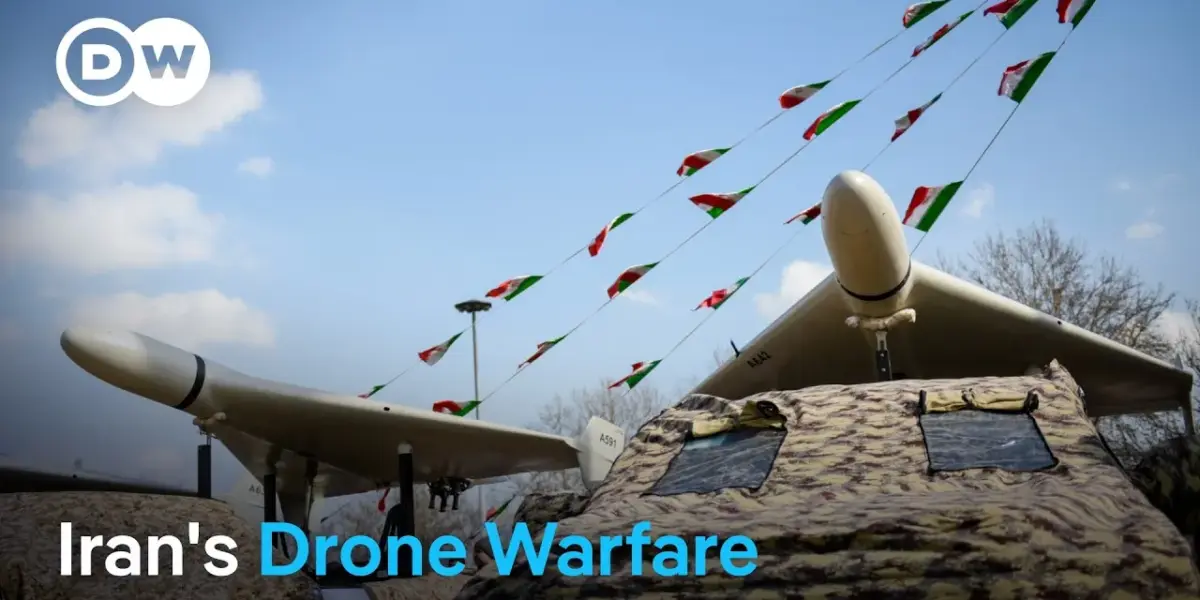
Iran’s Drone Strategy Alters Mideast Warfare Dynamics
In a region marked by escalating tensions, Iran has emerged as a significant player in the ongoing conflict with the United States and Israel, largely due to its strategic deployment of drones. The relatively low cost and surprising effectiveness of Iranian-made Shahed drones have posed a considerable challenge to sophisticated air defense systems, enabling strikes across the Gulf States and beyond. This evolving battlefield dynamic, where unmanned aerial vehicles (UAVs) play a pivotal role, is reshaping the counter-offensive capabilities of Iran and presents a complex geopolitical landscape.
The Economics and Attrition of Drone Warfare
Military analyst and strategist Marina Moran from King’s College, London, suggests that Iran has been strategically preparing for a protracted conflict. “What they are doing now, they are realizing that this war might go on for a long time,” Moran stated. “And the drones are very cheap and they help erode the political will. They help in terms of economics as well the economics of war because the US and Israel have already spent quite a lot on interceptors.” This approach is characterized as a strategy of attrition, where the persistent use of cost-effective drones aims to deplete enemy resources and undermine resolve.
Moran further elaborated on the strategic rationale behind Iran’s drone focus: “At this stage it wouldn’t make sense for Iran to use anything let’s say much more technologically advanced for now because from Iranian perspective they have experienced a 12-day war and the Iranian position is that it’s even if it stops now this will resume at some point and for them it would make sense to lay an end to this once and for all and that is why they are using the drones because they are very cost effective. They are much easier to make than interceptor missiles.”
Shahed Drones: Technology and Cost-Effectiveness
The Shahed drones, manufactured in Iran, are believed to be produced within an extensive underground infrastructure, designed for both storage and production of drones and missiles. While precise cost figures are difficult to ascertain, Russian variants are estimated to range from $20,000 to $100,000, depending on their integrated electronics, which can include advanced components like mesh modems and even Starlink systems. It is plausible that similar Chinese components are also utilized in Iran’s drone production, mirroring practices observed in Russia.
The operational deployment of these drones is described as relatively straightforward, with some variants capable of being launched from the back of trucks. However, the sophistication of their control systems and potential modifications, such as electronic warfare devices to spoof radar signals, can increase their complexity and cost. Moran noted, “Some of the parts might exceed the cost of a drone and we have to also think about the fact that this is a one-way drone. It’s a loitering munition.”
International Support and Information Warfare
There are ongoing claims regarding external support for Iran’s drone program, with speculation about Russia and China providing targeting data to the Iranian Revolutionary Guard Corps. Moran acknowledged the plausibility of such collaborations, citing existing treaties between these nations. “From the Russian perspective, the United States is providing satellite data to Ukraine. So Russia is providing satellite data to Iran but not overtly and not to the extent maybe that is being discussed in the media,” she explained.
Moran also highlighted the role of information warfare in these dynamics: “A lot of this is also an information war and by saying that Russia is providing Iran with whatever they’re providing it with and certainly a part of that might be true, but this is maybe an attempt also to play on the role of the United States because Iran is an enemy of the United States.” This narrative could potentially influence relations between the US and Russia, particularly in the context of past US administrations’ approaches to the conflict in Ukraine.
Ukraine’s Drone Expertise and Shifting Alliances
In a significant development, Ukraine has begun offering its expertise in countering Iranian drones to nations targeted by these UAVs. While Ukraine has reportedly discussed sharing its knowledge with Saudi Arabia, concrete evidence of Ukrainian teams being deployed to assist in counter-drone operations remains limited. Moran pointed out the complexities involved: “The means that these countries have are different. And so you have to take into account what they have on the ground, what capabilities they have on the ground, what capabilities need to be added. Then you have to teach personnel and also you have to keep in mind that Iran might be also looking at innovating and learning from the Russians.”
For Ukraine, this outreach serves as a crucial political move to build bilateral relations and potentially secure future economic opportunities. “When the war in Ukraine ends, Ukrainian economy will need rebuilding. And now Ukraine has all these companies which are specializing in developing UAVs and also other types of unmanned systems as well as counter measures and that’s a huge technological leap,” Moran observed.
The Future of Drone Warfare
The rapid advancement of drone technology positions it as a critical factor in modern warfare. Nations that can adapt and innovate in this domain are likely to gain a significant advantage. Knowledge and expertise in UAV development and countermeasures are becoming invaluable resources, fundamentally altering the nature of global military capabilities. As Iran continues to leverage its drone technology and other nations seek to counter it, the Mideast conflict is poised to remain a dynamic and closely watched arena for technological and strategic innovation.
Source: How are Iran's drones shaping the war with the US and Israel? │DW News (YouTube)

Related Articles


Iran’s New Missile Range Strains US, Israel in Costly War
A retired general warns that Iran's growing missile range, capable of reaching parts of Europe, poses a significant challenge to the U.S. and Israel. The escalating costs of defending against Iranian attacks, coupled with divided public opinion, highlight the unsustainable nature of a prolonged conflict.


Apache Helicopters Secure Strait of Hormuz
U.S. AH-64 Apache attack helicopters are actively securing the Strait of Hormuz on Day 22 of 'Operation Epic Fury.' They are intercepting Iranian drones and boats to ensure safe passage through the vital shipping lane.
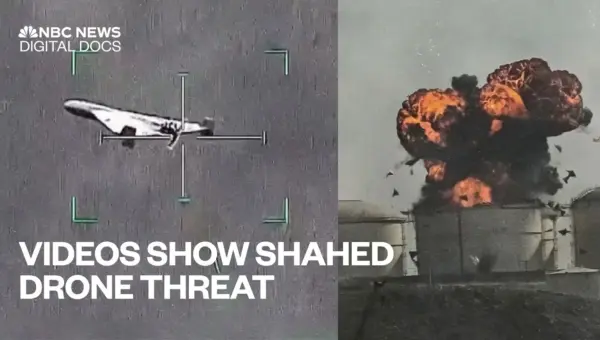
Iran’s Cheap Drones Exploit U.S. Defenses: Analysis
Iran's relatively inexpensive Shahed drones are proving effective against U.S. and allied defenses, hitting strategic targets like military bases and energy infrastructure. Analysis reveals a coherent strategy behind the attacks, often using short flights over water to evade detection. The high cost of intercepting these drones poses a significant challenge.