Iran’s Drone Strikes: A Strategic Blunder Pushing Allies Closer to Conflict
Iran's recent drone strikes on civilian targets in the UAE have been deemed a strategic error, pushing reluctant allies closer to direct military engagement. Former U.S. official Mick Mulroy explains how these actions have shifted regional dynamics, while journalist Suzanne Kample discusses the complex situation and mixed reactions within Iran.

Iran’s Drone Strikes: A Strategic Blunder Pushing Allies Closer to Conflict
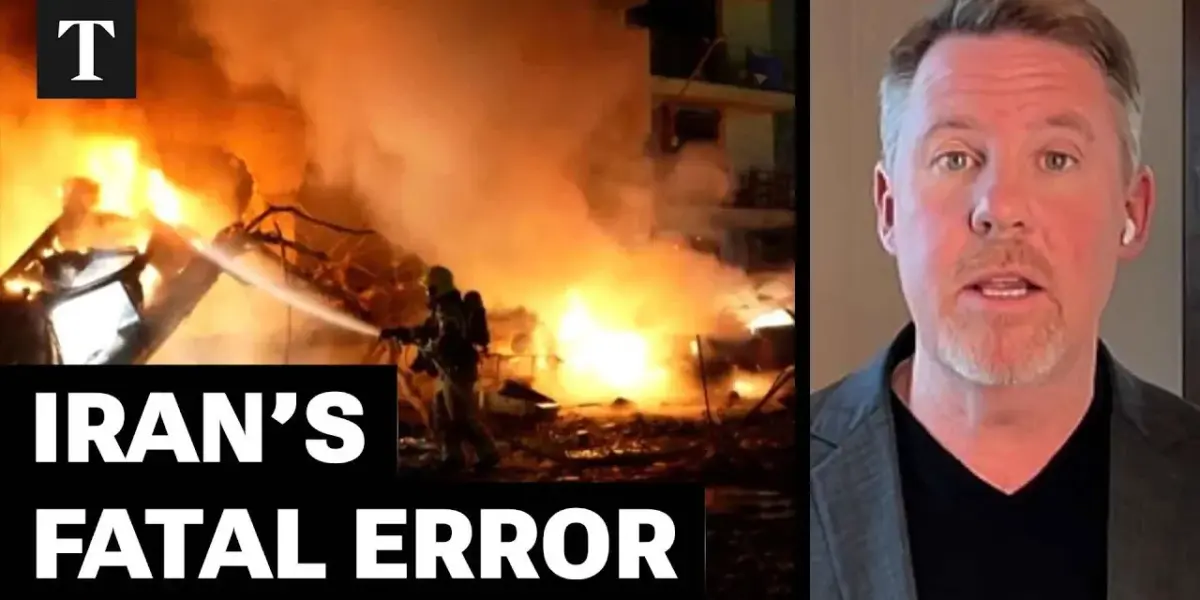
Washington D.C. – Iran’s recent deployment of Shahed drones targeting civilian infrastructure in the United Arab Emirates (UAE) and other Gulf Cooperation Council (GCC) states has been characterized as a significant strategic miscalculation, potentially drawing reluctant allies into direct military confrontation with Tehran. The strikes, which hit hotels and apartment buildings in cities like Doha and Dubai, have shifted regional dynamics, moving key partners from the sidelines to a more engaged, and potentially combative, stance against Iran.
Mick Mulroy, former U.S. Assistant Secretary of Defense for the Middle East, articulated this view, stating, “I don’t think we necessarily thought that they were going to go after the civilian targets in all these GCC states… to fly Shahid drones directly into uh hotels and apartment buildings in Doha and Dubai uh I think was a strategic mistake quite frankly because most of our partners were on the sidelines.” Mulroy elaborated that these nations were initially hoping for diplomatic solutions and sought to avoid involvement, but Iran’s actions have now “firmly” placed them in a position where they are “actively involved.”
Shifting Alliances and the Abraham Accords
The UAE, a signatory to the Abraham Accords and thus already a partner to Israel, found itself directly targeted despite its previous position on the periphery of the escalating tensions. “They had already joined the Abraham Accords; they had already uh you know essentially became a partner to Israel but they were essentially on the sidelines and now they’re firmly not,” Mulroy explained. The sheer volume of drones and missiles aimed at the UAE, with only a fraction successfully penetrating defenses, served as a stark warning. This level of aggression has left these nations with little choice but to consider direct military engagement against Iran, a stark departure from their previous preference for diplomacy.
Mulroy suggested that Iran may have been compelled to act due to the significant impact of a prior “decapitation strike” that eliminated numerous senior leaders. “I don’t think they could necessarily undo it because the decapitation strike was so significant that there wasn’t much uh left of the chain of command uh to change courses etc. I think they went on commander intent and then most of those commanders were killed.” This lack of clear command and control post-strike may have led to a reactive, rather than a strategically calculated, response.
The Imminent Threat and U.S. Justification for Action
The discussion also delved into the justification for U.S. military actions against Iran, particularly the concept of an “imminent threat.” Mulroy highlighted that such a designation is crucial for the President to authorize military action without immediate congressional approval under the War Powers Act. Initial intelligence assessments regarding Iran building an intercontinental ballistic missile (ICBM) were found to be inaccurate, with estimates suggesting such a development was nine years away. Similarly, intelligence briefings to Congress indicated that claims of imminent attacks on U.S. positions in the Middle East were not accurate.
The current justification appears to be the anticipated Iranian response to Israel’s actions. “So now we’re at the point where because we knew Israel was going to attack Iran, that’s their choice, they’re a sovereign nation. Uh then Iran would likely respond not just to Israel but also to the United States. So we’re using that as the imminent threat that uh required us, if you will, to do preemptive strikes,” Mulroy stated. He acknowledged that this justification would likely face challenges in Congress.
Internal Dynamics in Iran and the Call for Uprising
Suzanne Kample, an Iranian-American journalist and co-host of the Global Power Shifts podcast, offered insights into the situation on the ground in Iran. She noted that while the U.S. administration is “trying to sell the war,” there is a lack of clarity regarding civilian casualties, including reports of a strike hitting a school in Minab, which the Iranian Red Crescent claims killed 115 people, part of a total of 555 Iranian fatalities from airstrikes. Conversely, 11 Israelis have been reported killed in retaliatory strikes.
Kample described mixed feelings within Iran regarding responsibility for recent events, with some attributing actions to the IRGC and others to the U.S. and Israel. While there is no widespread support for the current regime, the question remains when, or if, the population will take to the streets. Kample cautioned against calls for an immediate uprising, referencing former President Trump’s statement urging the Iranian people to seize the opportunity. “The idea of the population rising up against the regime is a hard one to see happening,” Mulroy added. “It there is no second amendment if you will like there is in the United States meaning that the population is completely unarmed. So they would have to go up against uh both the Iranian military and the IRGC which has all the power… to severely as we’ve already seen uh quell a protest.” Mulroy warned that such calls could lead to a drastic increase in fatalities, potentially from 30,000 to 300,000.
Media Narrative and Shifting Justifications
Kample also commented on the evolving media narrative and the shifting justifications for military action. She observed that the Trump administration’s communication strategy has been unusual, with a lack of direct presidential addresses and a press conference held at the Pentagon with Secretary of War Pete Buttigieg, rather than President Trump himself. Furthermore, the press corps prioritized for these briefings appeared to be “sympathetic influencers” rather than experienced national security correspondents.
The differing messages from President Trump, who initially stated his goal was regime change and called for the people to rise up, contrasted with statements from Secretary Buttigieg and Senator Marco Rubio, who appeared to be walking back or clarifying these motivations. Kample speculated, “Are they trying to convince President Trump otherwise because they don’t necessarily feel confident that, you know, regime change will happen?” This internal messaging divergence, coupled with difficulties in obtaining on-the-ground information from Iran, highlights the complex and often opaque nature of the current geopolitical situation.
Looking Ahead
As the situation unfolds, the international community will be closely watching to see if Iran’s perceived strategic miscalculation in targeting civilian areas will indeed lead to broader military involvement from its neighbors and if the justifications for U.S. actions will hold under scrutiny. The internal dynamics within Iran and the potential for popular unrest remain critical factors, albeit ones fraught with significant risks for the civilian population.
Source: Iran’s Deployment Of Shahed Drones Into UAE Was A Strategic Mistake | Mick Mulroy (YouTube)

Related Articles


Germany’s Pension Pains and Political Pinocchios Revealed
Germans grapple with an aging pension system, test the limits of free speech with political nicknames, and navigate the complex world of AI ethics and surveillance. Meanwhile, everyday innovations and culinary delights offer a glimpse into the nation's unique culture.


Trump’s Iran Policy: A Rash Approach Lacks Strategic Depth
Richard Spencer of The Times criticizes former President Trump's Iran policy as rushed and lacking a strategic plan beyond weakening the regime. The approach, influenced by allies, prioritized immediate action over long-term consequences, according to a Times Radio discussion.

Zelensky Addresses Global Conflicts, Weapon Exchange, and Russia’s Plans
President Zelensky discussed Ukraine's potential air defense cooperation with the Middle East and addressed global unpreparedness for modern warfare. He also outlined Russia's strategic objectives and provided an update on mobilization.