Iran’s Cluster Bombs: A Calculated Gamble to Overwhelm Defenses
Iran's use of cluster bombs against Israel was a deliberate tactic to overwhelm advanced missile defenses. These weapons scatter numerous smaller explosives, making interception difficult. While tactically advantageous, they raise serious humanitarian concerns due to their indiscriminate nature and unexploded ordnance.

Iran’s Cluster Bombs: A Calculated Gamble to Overwhelm Defenses
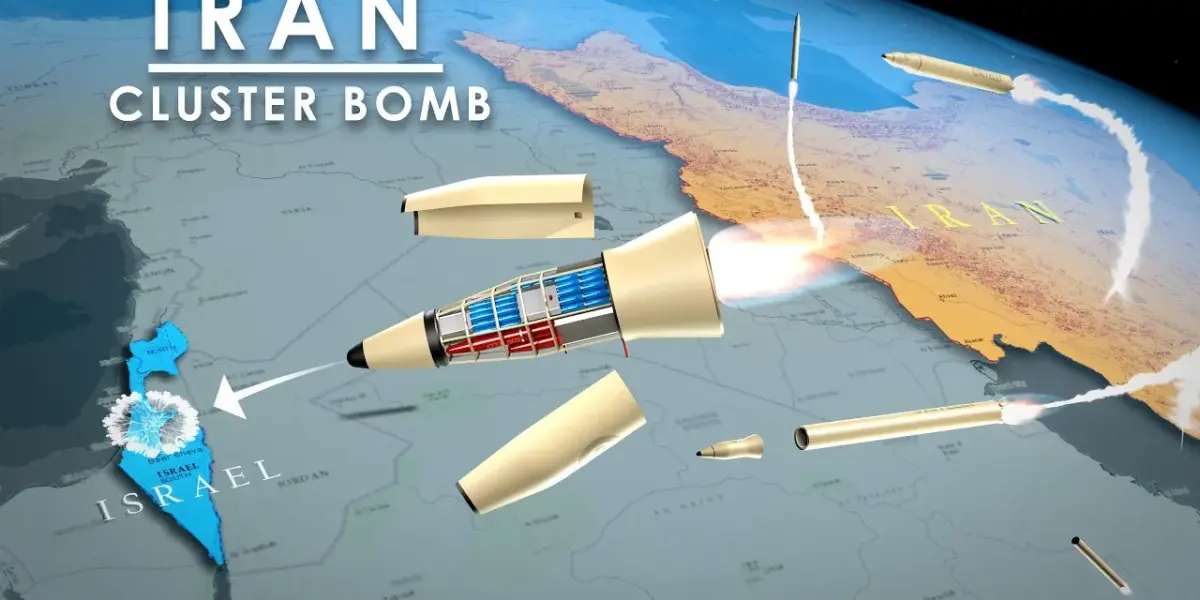
Iran’s recent use of cluster bombs against Israel wasn’t a random act. It was a deliberate strategy aimed at overwhelming Israel’s advanced missile defense systems. Israel relies on systems like the Arrow missile, which is designed to intercept large, single warheads. Iran understood this. They responded by deploying cluster weapons, which are designed to release a wide spread of smaller explosives, known as bomblets, in the air. This tactic makes it incredibly difficult for defenses to target and destroy every single projectile.
The Mechanics of Cluster Munitions
A cluster bomb works by dispensing numerous smaller explosives over a target area. These bomblets are typically unguided and scatter due to the momentum of the main container and wind. In the case of the Iranian missiles, the warhead separates at a high altitude, around 23,000 feet. This releases dozens of submunitions that fall freely, relying on gravity and aerodynamics. Each bomblet, weighing about 2.5 kg (5.5 lbs), is packed with high explosives and designed for area denial, capable of covering a significant radius.
The flight path of these missiles is carefully calculated to evade interception. After launch, they ascend rapidly into the upper atmosphere. This mid-course phase is critical for defense systems like Israel’s Arrow 3. If the missile isn’t destroyed while intact, it proceeds to its terminal descent. As the warhead bursts, the submunitions scatter, creating a dense field of potential targets. When these bomblets impact, they detonate instantly, causing multiple shockwaves.
Why Use Cluster Bombs? The Military Advantage
The primary military advantage of using cluster bombs lies in their ability to overwhelm enemy radar and air defense systems. Sophisticated networks like Iron Dome or David’s Sling are excellent at tracking and neutralizing single, large threats. However, when a single warhead breaks apart into dozens of smaller, fast-moving bomblets, it forces these systems to track and prioritize multiple targets simultaneously. This dramatically increases the chance that some projectiles will slip through, achieving the attacker’s objective.
This tactic is about creating chaos and overwhelming the enemy’s ability to respond effectively. Instead of facing one large threat, defenders must contend with a wide scattering of smaller ones, stretching their resources and potentially leading to successful strikes.
Historical Context and International Concerns
Cluster munitions have a long history of use in warfare. However, their use also carries significant moral and humanitarian concerns. Over 100 countries have banned these weapons due to the heavy implications of leaving behind unexploded ordnance. These unexploded bomblets can remain dangerous for years, posing a threat to civilians, especially children, long after a conflict has ended. They also hinder recovery efforts and agricultural activities.
Interestingly, the United States has not banned cluster bombs. American versions can be fired from howitzers, and their design allows for penetration of fortified structures. The potential for indiscriminate impact, the risk to civilians, and the long-term hazard of unexploded bomblets are the main reasons for international bans.
Comparing American and Iranian Cluster Munitions
While both the US and Iran utilize cluster munitions, there are differences in their application and design. The American M42 and M46 grenades, for example, can be stacked within a 155 mm howitzer shell. These grenades are designed with a hollow bottom to accommodate a shaped charge, allowing them to penetrate hardened targets. When fired from a self-propelled Paladin gun, these shells can reach targets up to 24-30 km away.
The detonation process for these grenades is intricate. A fuse activates an explosive charge, which ejects the grenades. A ribbon stabilizer helps position them for impact. Through a combination of rotational forces and a spring-loaded slide assembly, the grenade becomes semi-armed. Upon impact, an inertia weight drives a firing pin into a detonator, triggering the shaped charge for penetration and fragmenting the grenade body to create an anti-personnel effect.
The Downsides: Indiscriminate Nature and Unintended Consequences
Despite their tactical advantages, cluster bombs like the M42 face severe criticism. Their indiscriminate nature is a major concern. Releasing submunitions over a wide area, including populated zones, poses a significant risk to civilians. The presence of unexploded ordnance is a persistent danger, causing casualties and complicating post-conflict reconstruction.
Furthermore, the wide area of impact can lead to unintended consequences. Friendly forces could be harmed, critical infrastructure damaged, or civilians displaced. These potential negative outcomes highlight the controversial nature of cluster munitions on the modern battlefield.
Why This Matters
The deployment of cluster bombs by Iran against Israel is a stark reminder of how military strategies adapt to counter advanced defenses. It highlights the ongoing arms race between offensive capabilities and defensive technologies. Understanding the mechanics and tactical rationale behind such weapons is crucial for assessing the nature of modern conflict and the evolving methods of warfare. The international debate surrounding cluster munitions also underscores the tension between military necessity and humanitarian concerns, a conflict that continues to shape global policy and international law.
Future Outlook
The use of cluster bombs, even in a strategic attempt to overcome defenses, raises questions about their future role in warfare. As defense systems continue to evolve, so too will offensive tactics. However, the strong international condemnation and existing bans on these weapons suggest a trend towards their further restriction. Nations may continue to develop and deploy them, but the ethical and legal scrutiny will likely intensify. The long-term consequences of unexploded ordnance will remain a significant challenge, pushing for greater accountability and potentially driving innovation in demining and clearance technologies.
Source: Why Iran Use Cluster Bombs Missiles to Strike Israel (YouTube)

Related Articles


US Air Power Strikes Iran, Warns on Strait of Hormuz
The U.S. military has conducted air strikes on Kharg Island, Iran, targeting military assets. This action follows President Trump's ultimatum for Iran to reopen the Strait of Hormuz. The U.S. warns of further infrastructure action if Iran fails to comply.


Trump’s Iran Ultimatum: Civilization on the Brink?
President Trump issued a dire warning to Iran with a Tuesday deadline for a deal, fearing "a whole civilization will die." U.S. strikes on Kharg Island occurred, but officials state U.S. strategy remains unchanged. This escalation highlights ongoing tensions and their global implications.

Iran and US Trade Blows as Tensions Spike
The U.S. and Iran are engaged in a dangerous exchange of strikes, with a critical deadline set by President Trump looming over the Strait of Hormuz. Both nations, along with Israel, are escalating military actions, while diplomatic channels remain open but strained.