Iran War’s True End: A Complex Endgame Beyond Fighting
The complex conflict involving Iran, Israel, and the US may not end with a clear military victory. Experts suggest each side could declare their own version of success, leading to a prolonged stalemate or shifting tactics rather than a definitive cessation of hostilities. Key economic and political indicators, alongside historical precedents, will be crucial in understanding the conflict's true endgame.

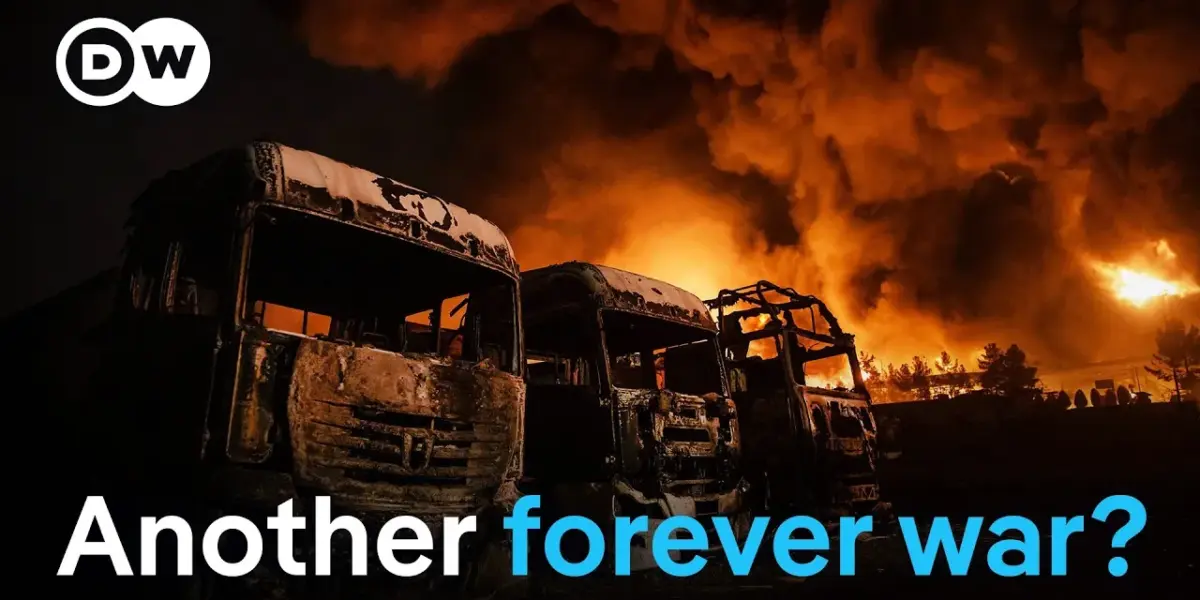
US, Israel, Iran Scramble for Victory as Conflict Grinds On
The ongoing conflict involving Iran, its proxies, and regional rivals like Israel is far from a simple military engagement. It spans missile attacks, drone strikes, disruptions to global shipping, and a significant surge in energy costs, leaving many questioning how this complex war might truly end. While some leaders, like former US President Donald Trump, have suggested the conflict could conclude when they ‘feel it,’ experts believe the reality is far more intricate.
Defining Victory: A Muddled Endgame
Military analyst Marina Miron from King’s College London explains that declaring an end to the war isn’t as straightforward as one side winning. For the United States, a potential exit strategy might involve announcing the destruction of Iran’s military capabilities and withdrawing, allowing Israel to continue operations and potentially purchase US weapons. This would present a ‘win-win’ scenario for the US, especially if Iran is pursuing a strategy of attrition, known as a ‘war of exhaustion.’
However, exiting without losing political standing, both domestically and internationally, presents a significant challenge. Miron suggests that the US might aim to project an image of control, even if the ground reality differs. This careful balancing act is crucial to avoid domestic backlash and maintain international influence.
Israel’s Long Game and Shifting Tactics
Israel, heavily reliant on US military support and engaged in other conflicts like the one with Hezbollah in Lebanon, may be positioned to endure a protracted conflict. Miron believes Israel could opt for a long war with reduced intensity, a strategy that avoids the immediate risks associated with Iran’s missile capabilities. Such a scenario would also help prevent Israel from depleting its missile interceptors, which are vital for defense against potential Iranian strikes.
Ideally, Israel would seek to eliminate Iran’s military capabilities and leadership, replacing it with a more manageable regime. If this is not achievable, Israel might shift its tactics. This could involve a greater reliance on covert operations by intelligence agencies like the Mossad, potentially aiming to incite internal dissent within Iran to achieve a more favorable outcome. This marks a potential move away from direct military confrontation towards more subtle, intelligence-driven actions.
Iran’s Survival Strategy: Wearing Down Adversaries
From the Iranian leadership’s perspective, the primary objective is the survival of the Islamic Republic. Their strategy appears to be focused on outlasting and imposing costs on their adversaries. History offers numerous examples, from ancient Afghanistan to Alexander the Great’s campaigns, where militarily weaker forces have successfully worn down technologically superior opponents through prolonged resistance and by uniting against external threats.
Iran’s approach involves imposing economic and military costs on its rivals. This strategy also aims to disrupt the alliances between the United States, Israel, and the Gulf monarchies. By striking Gulf states and citing their hosting of US bases, Iran seeks to make these alliances less appealing and riskier for the monarchies involved. This could lead them to question the benefits of their partnership with the US, as seen in concerns raised by events in the UAE. Iran’s long-term goal appears to be regime survival, even at a significant economic and military cost, which can then be framed as a victory.
A Stalemate Declared as Victory?
The current situation suggests a scenario where each party—the US, Israel, and Iran—could declare their own version of victory, even without a definitive end to the fighting. On the ground, this might manifest as a negotiated settlement, a ceasefire, or a prolonged stalemate. However, in the political and diplomatic arena, each side could claim success based on their own metrics.
Iran might assert that neither the US nor Israel could destroy it, a powerful narrative of resilience. Israel could claim it has significantly degraded Iran’s military capabilities, rendering it no longer a direct threat and unable to sustain its regional proxy networks. However, experts caution that such declarations of victory may only be temporary. If the underlying causes of the conflict remain unresolved, the war could easily resume once the involved actors regroup and recover, potentially in a decade or sooner.
What to Watch For: Economic and Political Signals
Predicting the end of this complex conflict requires looking beyond military actions. Key indicators will likely emerge in the economic and political spheres. The ability of each side to continue justifying the conflict financially and politically will be crucial. In the US, upcoming elections could influence the administration’s approach, potentially pushing for a resolution to save political capital.
For Israel, a perceived imminent military vulnerability, particularly concerning its air defenses, might lead to a reduction in the tempo of operations and a shift towards intelligence-based tactics. Determining Iran’s breaking point is far more challenging due to the opacity of its leadership and its hidden military capabilities, such as subterranean structures and missile factories. External influences from neighboring Arab states, Pakistan, Afghanistan, Russia, and China could also play a significant role in Iran’s strategic calculations.
Ultimately, forecasting the end requires critical thinking and an understanding of historical patterns in warfare. The current conflict is marked by a ‘fog of war,’ where incomplete information can lead to flawed conclusions. The most probable outcome appears to be a blend of stalemate, military exhaustion, and evolving tactics, with each side framing its achievements as a win. Yet, this endgame might only represent a pause, as the fundamental drivers of the conflict remain unresolved.
Source: Why the Iran war might not end when the fighting stops | DW News (YouTube)

Related Articles


Stocks Ignore War Risks, Focus on “Taco Moments”
Stock markets appear to be overlooking the severe supply chain risks stemming from the Iran conflict, focusing instead on potential diplomatic de-escalations. While the S&P 500 shows resilience, bond and commodity markets signal deep concern over disruptions to critical resources like LNG, helium, and fertilizers.

U.S. Iran Tensions Rise Amid Shifting Alliances
Rising tensions between the U.S. and Iran are creating a volatile geopolitical situation. With conflicting signals on de-escalation and potential shifts in alliances like NATO and U.S.-Israel relations, the path forward remains uncertain. The global economy and regional stability hang in the balance.


Iran Targets US With Cyberattacks, Escalating Digital Warfare
Iran is increasingly using cyberattacks to challenge the U.S., as seen in a recent hack of the FBI director's account. Experts say this is a strategic shift due to Iran's limitations in conventional warfare. The U.S. needs to strengthen its digital defenses, focusing on encryption and cloud computing, rather than solely relying on traditional security measures.