Iran War’s Ripple Effect: Ukraine Faces New Threats
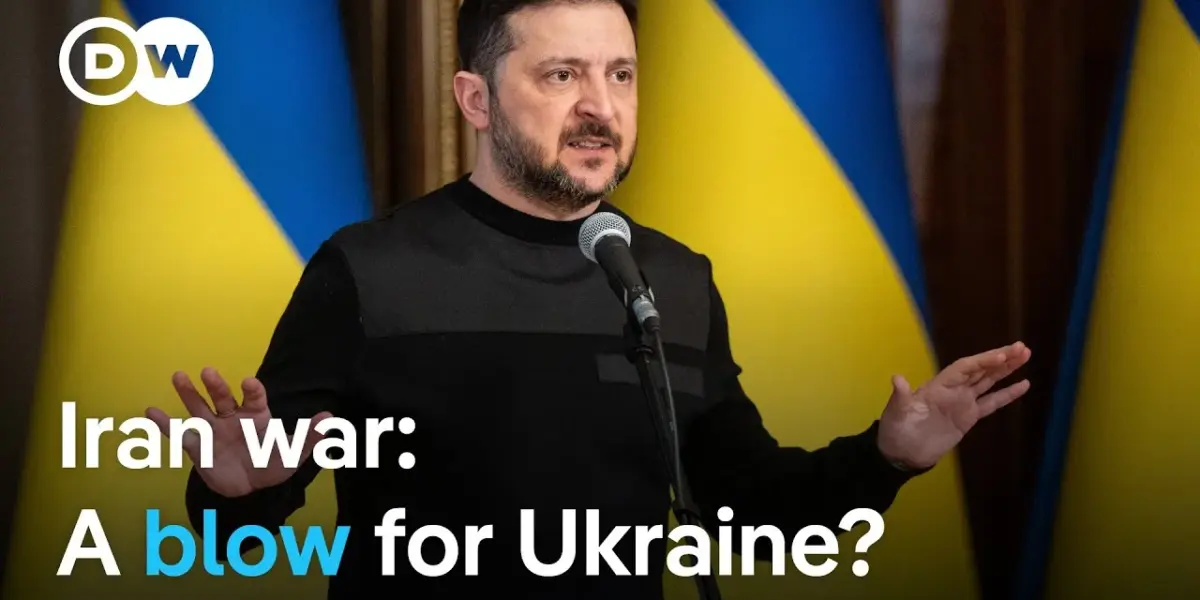
The war involving Iran is creating significant new challenges for Ukraine, potentially bolstering Russia's economy through higher oil prices and straining Western military aid, particularly air defense interceptors. Ukraine faces a critical shortage of these vital munitions as global demand surges.

Iran War’s Ripple Effect: Ukraine Faces New Threats
The escalating conflict involving Iran has sent shockwaves far beyond the Middle East, presenting a complex and potentially perilous set of new challenges for Ukraine in its ongoing defense against Russia. While Iran’s use of attack drones, the Shaheds, has been a significant factor in the Ukraine war for years, the recent shift in Iran’s focus towards its neighbors and potential adversaries in the Persian Gulf and beyond creates a dangerous new dynamic. This regional instability directly impacts Ukraine by potentially bolstering Russia’s economy, diverting crucial Western military aid, and exacerbating shortages of vital air defense munitions.
Drones: A Double-Edged Sword
For years, Russia has heavily relied on Iranian-supplied Shahed attack drones, launching tens of thousands of these relatively inexpensive yet effective weapons against Ukrainian cities. However, the narrative surrounding drone supply has evolved. While Iran is now reportedly using its drones against targets like Bahrain and the United Arab Emirates, and even reportedly sending them as far as Cyprus, this shift may not significantly hinder Russia’s drone capabilities.
Experts suggest that Russia has successfully ramped up its domestic production of Shahed-like drones, effectively creating its own versions of the technology. Furthermore, crucial spare parts are largely sourced from China, insulating Russian production from direct Iranian supply disruptions. “Now basically there is a copy and and Russian version of this technology. Most of the spare parts they do come from outside come from China. So I think Russia is unlikely to notice much of a difference there. They’ve really been able to ramp up production,” noted one analyst.
This domestic capability means that even if Iran ceases supplying drones to Russia, Moscow is likely to continue its drone warfare against Ukraine with undiminished capacity. The implications for Ukraine are clear: the threat of drone attacks remains, with no significant reduction in Russia’s ability to launch them.
Economic Fallout: A Boon for Putin
Perhaps the most immediate and concerning impact of the Iran conflict on Ukraine is the surge in global energy prices. Iran’s attacks on oil and natural gas facilities in neighboring countries, coupled with the closure of the Strait of Hormuz – a vital chokepoint for global oil transport – have led to significant disruptions in supply. Qatar, for instance, has shut down a plant producing a substantial portion of the liquefied natural gas (LNG) used in Europe.
This surge in oil prices presents a critical lifeline to Russia’s war effort. The Russian budget has been under considerable strain, with oil prices hovering at levels that made financing the war increasingly difficult. “The Russian budget was really struggling… All because oil was basically just much too cheap,” explained an observer. The budget had anticipated revenue based on oil prices around $59-$60 per barrel, but discounts required to circumvent sanctions meant Russia was selling at significantly lower prices, closer to $15-$20 per barrel.
The current global uncertainty, however, is driving up prices and making it more feasible for countries like India to purchase Russian oil. This could allow Russia to approach its target oil price, injecting much-needed revenue into its economy. “And you know, Russia might actually end up getting closer to that target of $60 a barrel in the next few weeks at least if this carries on. And that is really crucial because there’ve been real hope here in Ukraine that that financial stress would actually force Putin to think twice about continuing this war,” the analyst added.
The prospect of reduced financial pressure on the Kremlin is a severe blow to Ukraine’s hopes of weakening Russia’s resolve through economic attrition.
The Competition for Munitions: A Growing Concern
Beyond economic factors, the Iran conflict poses a direct threat to Ukraine’s ability to defend itself by intensifying competition for critical military hardware, particularly air defense interceptor missiles. The United States has been a cornerstone of Ukraine’s defense, providing not only intelligence but also vital munitions and air defense systems like the Patriot.
However, as the US and its allies are drawn into the conflict in the Middle East, their stockpiles of these advanced interceptor missiles are being depleted. “The real crucial system here is the Patriot missile defense system. That is basically the only game in town here in Ukraine to protect Ukrainian cities from Russian ballistic missiles,” a source highlighted.
The production capacity for these sophisticated interceptors is limited. The US produces around 600 PAC-3 interceptor missiles annually – a figure dwarfed by the number of ballistic missiles fired by Iran at the UAE and Russia at Ukraine in recent times. “If you’ve got a worldwide production in the hundreds and simply more than that being fired in a very short space of time, that shows you quite how big the competition is for these interceptor missiles,” the analysis pointed out.
European nations, while attempting to bolster Ukraine’s defenses, are also facing limitations. Germany’s pledge of five interceptor missiles for Ukraine, with hopes for a dozen more from other European countries, underscores the scarcity. The situation is further complicated by the fact that intercepting one ballistic missile often requires firing multiple interceptors.
With US allies in the Persian Gulf now drawing down their own stockpiles to defend against Iranian attacks, Ukraine faces the prospect of being pushed down the priority list for these crucial interceptors. “There’s going to be a lot of pressure from those allies with a lot of money to put on the table in a hurry that they should be prioritized over Ukraine. That’s a real real worry here that you might see Ukraine in a much worse state in terms of its ability to defend from Russian ballistic attacks at a time when Russia is ramping up its own production of those ballistic missiles,” the expert warned.
Ukraine’s Desperate Measures and Shifting Priorities
The sheer scarcity of interceptor missiles has led Ukraine to consider drastic measures. Reports indicate that Ukraine has offered to trade its anti-drone technology, a key component of its air defense, to countries in the Persian Gulf in exchange for desperately needed interceptor missiles.
The potential for a prolonged conflict in the Middle East, coupled with high oil prices, could also see a shift in US attention and resources away from Ukraine. While former President Donald Trump has stated that the war in Ukraine remains a high priority, he has also characterized it as distant and not directly affecting the United States. The crucial role of US intelligence and military aid, including Patriot systems and other munitions supplied via European allies, means any reduction in US focus or supply could have devastating consequences for Ukraine’s defense capabilities.
Looking Ahead
The unfolding situation in the Middle East presents a stark reminder of the interconnectedness of global security. For Ukraine, the coming weeks and months will be critical in assessing the extent to which the Iran conflict impacts the flow of Western aid and the stability of global energy markets. Ukraine’s ability to secure vital air defense munitions amidst increasing global demand will be a key determinant in its capacity to withstand continued Russian aggression.
Source: How is the Iran war affecting Ukraine? | DW News (YouTube)

Related Articles
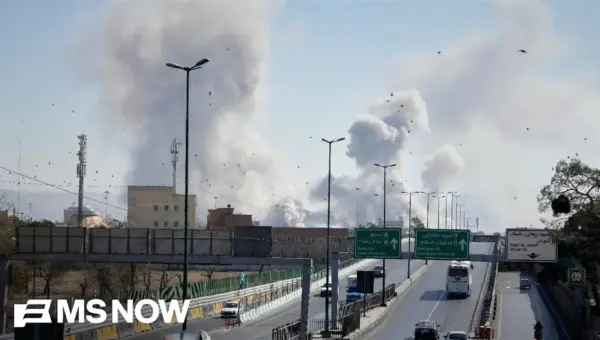
Iran Under Fire: Airstrikes Intensify Amidst New Retaliatory Wave
Iran is facing intense airstrikes from the U.S. and Israel while launching its own retaliatory attacks, escalating regional tensions. The conflict has led to evacuations, the deployment of allied military assets, and the tragic loss of six U.S. soldiers. Diplomatic efforts appear stalled as the situation intensifies.

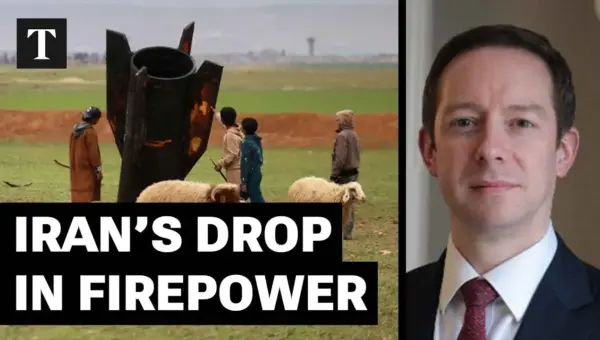
UK Navy Struggles as Iran Conflict Escalates
Vice Admiral Duncan Potts has raised alarms about the UK's declining naval readiness, drawing parallels to the Falklands War amidst escalating tensions with Iran. Meanwhile, experts analyze Iran's degraded military capabilities and the uncertain path of its nuclear ambitions.

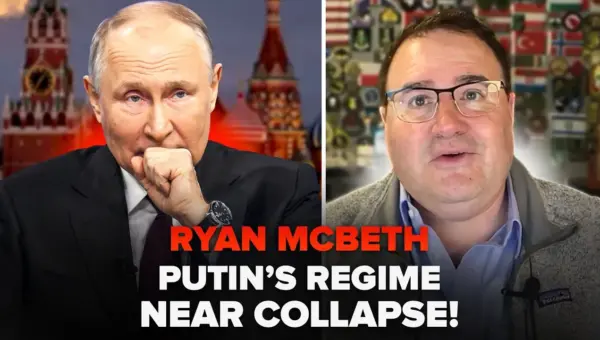
Russia Faces Internal Revolt Risk Amid Ukraine War Strain
US Army veteran and analyst Ryan Mugbat warns that Russia's protracted war in Ukraine could trigger internal rebellion due to economic strain and returning, disgruntled veterans. He details how military corruption and battlefield realities might lead to widespread unrest against Putin's regime. The analysis also covers evolving warfare tactics and geopolitical shifts.