Iran War’s End Game: Beyond ‘Unconditional Surrender’ Rhetoric
The Iran War's end is far from the 'unconditional surrender' often proclaimed. Analysis reveals that conflict termination hinges on resolving root causes and generating surprising information, not just predictable negative outcomes. Both military and negotiated solutions face significant hurdles, suggesting a prolonged and complex path to peace.

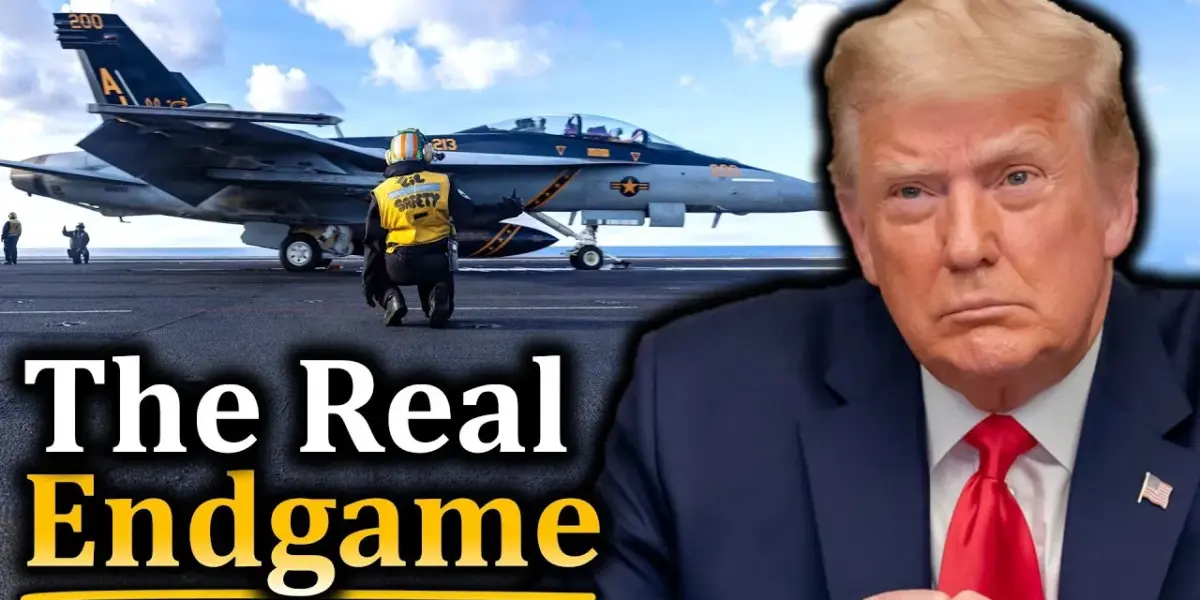
Iran War’s End Game: Beyond ‘Unconditional Surrender’ Rhetoric
The assertion that the current conflict with Iran will only conclude with “unconditional surrender” is a powerful, albeit simplistic, statement. While such pronouncements may resonate with certain audiences, they often sidestep the fundamental principles that govern the termination of warfare. The enduring question surrounding the Iran War is not merely why it began, but more critically, when and how it will cease. A core tenet of ending any war is that the conflict must resolve the very issues that precipitated its outbreak. Examining the ongoing narrative through this lens can help distinguish between reasoned analysis and mere rhetoric.
Deconstructing Futile Expectations for War Termination
Discussions about the war’s conclusion frequently falter by overlooking a crucial element: the necessity of generating surprising information that alters perceptions and strategic calculations. This is not about surprising the general public, who may be less engaged with the intricacies of geopolitical conflict. Instead, it refers to information that genuinely shocks military strategists in the Pentagon, diplomats at the State Department, or political leaders in the White House. Simply observing negative or positive developments, without them fundamentally challenging pre-existing expectations, will not shift the war’s trajectory. Many of the widely reported negative outcomes are, in fact, consistent with the initial expectations held before the conflict began. Experiencing a predictable negative consequence, much like realizing a newly purchased car requires fuel, does not inherently provide a reason to reverse a decision already made.
Consider the frequently cited potential closure of the Strait of Hormuz. Geopolitical analysts widely anticipated this as a probable outcome of a major conflict with Iran. Consequently, the subsequent rise in fuel prices, while impactful, does not constitute surprising information that would compel an end to the war. Such an event would require a crisis of 1970s proportions to significantly alter the strategic calculus. Similarly, stock market declines driven by higher fuel costs and general uncertainty were largely predictable. A modest dip in the S&P 500, while notable, is unlikely to be a catalyst for peace unless it escalates into a full-blown bear market. Likewise, reports of the war costing $1 billion per day, a figure likely calculated in advance by Pentagon teams, do not introduce unexpected variables that would necessitate an end to hostilities.
Foreseeable consequences, such as civilian casualties, damage to the energy sector, and an ambiguous timetable for U.S. operations, dominate media coverage. However, these developments, while tragic, were often anticipated. A slow drip of U.S. casualties, while regrettable, is also an inevitable consequence of an expansive military operation and will not end the war unless casualties surge catastrophically. The depletion of weapons stockpiles, a significant concern in potential future conflicts, was already factored into the strategy of bombing Iran into submission. Iranian civilian casualties, though tragic, are an unfortunate byproduct of military action, and past experiences in Afghanistan and Iraq demonstrate that such occurrences, even due to intelligence errors, do not automatically lead to the cessation of hostilities. While reports of civilian deaths from Iranian sources should be approached with caution, mirroring the skepticism applied to Russian reports on Ukraine, their occurrence alone is unlikely to be a war-ending factor.
Military Endgames: A Path to Resolution?
The potential pathways to ending the Iran War can be broadly categorized into two camps: a military conclusion and a negotiated settlement. A military end is conceptually straightforward: one side achieves victory, and the other concedes defeat.
For Iran, military victory would mean reaching a point where the coalition’s objective of regime change becomes infeasible. This could occur if the United States depletes its available munitions, reaching a classified minimum stockpile threshold. If Iran can sustain its government until this point, it effectively wins by default, allowing the U.S. to declare a victory in neutralizing Iran’s medium-term military capacity and withdraw.
The U.S. conception of military victory, however, is more complex and experimental. The stated aim is regime change, but the mechanism for achieving this remains unclear, resembling a “Phase One: bomb Iran. Phase Two: ???. Phase Three: overthrow and/or profit” scenario. Despite this apparent ambiguity, it is unlikely that U.S. military leadership, many of whom have direct experience in post-invasion Iraq, are entirely unprepared. Their strategy may be an experimental “if you build it, they will come” approach, aiming to foster either a civilian uprising or a civil war faction.
A civilian uprising, akin to the rapid collapse seen in Ukraine in 2014, is the preferred U.S. outcome. This scenario relies on security forces losing cohesion, triggering a domino effect of defections. The Pentagon’s bombing strategy aims to reduce civilian fear and encourage street protests. However, the absence of reports indicating the Iranian government losing control of major population centers after initial bombing runs is not a reassuring sign. The ideological commitment of the Islamic Revolutionary Guard Corps (IRGC) also presents a significant obstacle to such a rapid collapse.
An alternative military strategy involves instigating a more traditional civil war, with a U.S.-backed rebel group acting as ground forces. This scenario, however, presents significant challenges. Civil wars are notoriously protracted, often lasting a decade or more, which conflicts with President Trump’s stated preference for avoiding long engagements. Furthermore, establishing a safe zone for a rebel army to operate from is a critical hurdle, with potential focus on Iran’s Kurdish region. The historical precedent of U.S. unreliability in supporting Kurdish uprisings, as seen in past dealings with Iraq and Syria, raises doubts about the feasibility and long-term commitment to such an endeavor. Moreover, fomenting sectarian violence, a direct consequence of supporting specific ethnic or religious factions, carries the risk of exacerbating instability, echoing the problems encountered in Iraq.
Bargaining Frictions and the Path to Negotiation
The second major approach to ending the war involves addressing the underlying bargaining frictions that initiated the conflict. The fundamental principle is that war is costly, incentivizing both sides to seek a peaceful resolution. A key bargaining problem in the current conflict stems from a potentially transient peak in anti-government sentiment within Iran. This creates a window of opportunity for the U.S. to exert pressure while the Iranian government is vulnerable domestically. Conversely, the Iranian government may be hesitant to offer credible long-term concessions, knowing that once domestic stability is restored, its leverage to resist U.S. demands will increase.
If the Iranian government can navigate this period of domestic vulnerability, perhaps through significant crackdowns that paradoxically could worsen its situation or leave it open to further strikes, the bargaining window for the U.S. may close. In such a scenario, the war might end with the U.S. declaring a victory on arms control or deterrence, similar to a military withdrawal scenario, rather than achieving regime change.
Another critical bargaining friction arises from the potential underestimation of an opponent’s capabilities, resolve, or motivations, such as using the conflict as a domestic distraction. Most wars ultimately conclude with a settlement, often because the prolonged fighting demonstrates each party’s commitment and clarifies the likely battlefield outcomes. Once the costs and commitments are clearer, striking a deal becomes more rational.
However, this process requires the war to continue long enough to deter opportunistic bluffing by less committed actors. While this resolution can occur relatively quickly, it is not instantaneous. Therefore, the conflict is likely still in a phase where demonstrating resolve is paramount, suggesting that a settlement is not imminent.
Why This Matters
Understanding the potential endgames of the Iran War is crucial for policymakers, the public, and regional stability. The analysis highlights that simplistic notions of “unconditional surrender” are unlikely to be the mechanism for peace. Instead, the war’s termination will likely hinge on either a demonstrable military stalemate or a shift in the bargaining dynamics, both of which require time and the generation of genuinely surprising information or outcomes. The current trajectory suggests that neither a swift military victory nor an immediate negotiated settlement is on the horizon. The protracted nature of potential military solutions, coupled with the complex bargaining environment, implies a long and potentially costly conflict. This understanding is vital for managing public expectations, informing strategic decisions, and mitigating the devastating human and economic costs associated with prolonged warfare.
Implications, Trends, and Future Outlook
The discussion underscores a critical trend: the difficulty of achieving clear-cut military objectives in complex geopolitical environments, especially when the primary tool is aerial bombardment without a robust ground strategy for post-conflict stabilization. The reliance on an “if you build it, they will come” strategy for regime change is a departure from traditional approaches and carries significant inherent risks. The potential for protracted civil conflict or a prolonged stalemate, coupled with the U.S. administration’s aversion to long engagements, creates a fundamental tension. The future outlook suggests a conflict that may not end decisively but rather peter out due to resource constraints, shifting political priorities, or a gradual exhaustion of will on both sides. The bargaining solution, while theoretically more efficient, is contingent on the complex internal dynamics of Iran and the U.S.’s ability to leverage transient vulnerabilities. The involvement of regional actors and the potential for escalating proxy conflicts remain significant risks that could alter the war’s trajectory and prolong its duration.
Historical Context and Background
The current conflict is situated within a long history of U.S.-Iran relations, marked by periods of animosity, mistrust, and proxy confrontations since the 1979 Islamic Revolution. The current U.S. strategy, particularly the focus on regime change and the potential reliance on internal dissent or rebel factions, echoes aspects of past interventions in the Middle East, such as the Iraq War. The challenges highlighted, including intelligence failures, the difficulty of nation-building, and the unintended consequences of supporting opposition groups, are not new. The historical context of U.S. engagement with Kurdish populations in the region, often characterized by periods of support followed by abandonment, provides a cautionary tale for any strategy relying on such alliances. Furthermore, the broader geopolitical landscape, including the roles of Russia and China, adds layers of complexity that have precedents in Cold War dynamics and more recent geopolitical realignments.
Source: “Unconditional Surrender”? When and How Will the Iran War End (YouTube)

Related Articles


G7 Allies Clash Over Iran War Strategy, Urge Focus on Russia
G7 foreign ministers met in Paris, revealing deep divisions over the U.S. war with Iran. European allies urged the U.S. to pressure Russia, linking its actions to the conflict and fearing support for Ukraine will wane.

Iran Blocks China Ships, Exposing Beijing’s Weak Grip
Iran's recent decision to block Chinese ships at the Strait of Hormuz is exposing the limits of Beijing's influence in the Middle East. This action is causing delays and cancellations for Chinese manufacturers, turning a perceived geopolitical win into an economic strain.
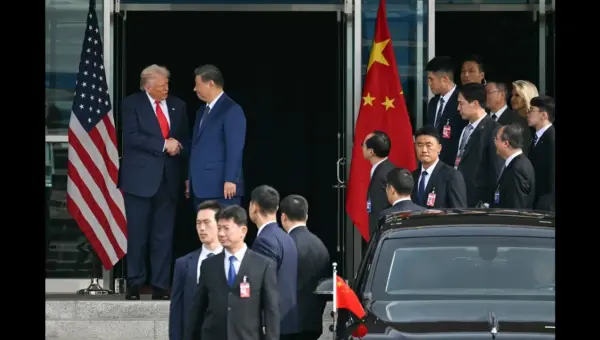
Trump’s “Walk Away” Tactic Signals Tougher Stance on China
Retired Air Force Brigadier General David Stillwell believes President Trump's strategy of being willing to walk away from negotiations puts pressure on China. This tactic, combined with US global actions and strengthened alliances, signals a more assertive American foreign policy.