Iran War’s Economic Shockwaves: Global Inflation Looms
The conflict involving Iran is set to trigger significant global economic repercussions, including widespread inflation and depressed growth, according to geopolitical expert Ian Bremmer. Disruptions to oil, gas, and petrochemical supply chains are impacting vulnerable nations and creating uncertainty in global markets.

Global Economy Braces for Iran Conflict’s Far-Reaching Effects
The escalating conflict involving Iran is poised to trigger significant global economic repercussions, extending far beyond the immediate geopolitical arena. Experts warn that the disruption to oil, natural gas, and petrochemical supply chains will inevitably lead to widespread inflation and depressed economic growth, impacting nations across the globe, particularly the most vulnerable.
Supply Chain Disruptions and Inflationary Pressures
Ian Bremmer, President and Founder of Eurasia Group and GZERO Media, drawing parallels to the initial weeks of the COVID-19 pandemic, highlighted the profound and often underestimated “second and third-order consequences” of the current conflict. “It’s oil, it’s natural gas, it’s everything involving petrochemicals, so it’s fertilizer, it’s packaging, it’s automotive parts, it’s synthetic fabrics,” Bremmer explained. This broad impact means that “inflation is going to happen globally because these are global supply chains that are getting disrupted and everyone is going to feel this.”
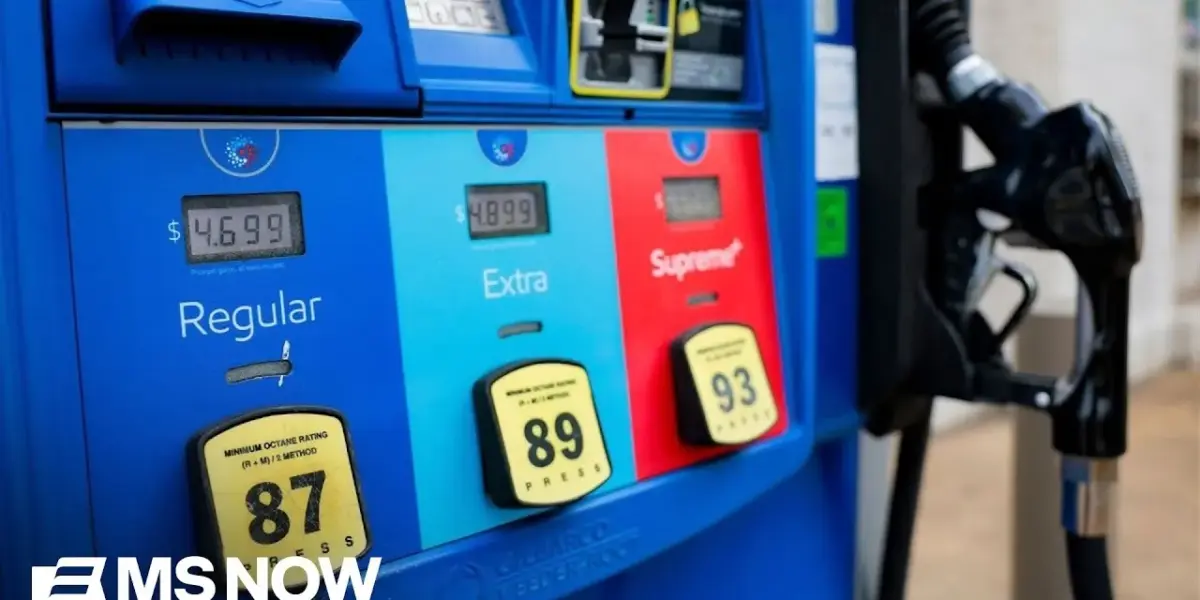
The immediate economic outlook is grim, with Bremmer predicting “two quarters of very depressed growth.” While the full extent of the downturn – whether it escalates into a massive recession or remains a significant hiccup – hinges on the war’s trajectory in the coming weeks, the initial signs are concerning. Oil prices, a key indicator, are expected to push gas prices towards the $4 per gallon mark, a threshold that typically signals broader inflationary pressures. The stock market has already seen significant volatility, with the S&P 500 erasing its gains for the year, reflecting investor uncertainty.
Geopolitical Complexities and Strategic Missteps
The conflict’s resolution is complicated by multifaceted political considerations. While former President Donald Trump has reportedly sought an “off-ramp,” his capacity to achieve one is limited by factors including Israel’s involvement and Iran’s willingness to retaliate. Bremmer noted that Israeli Prime Minister Netanyahu has strategic reasons for escalating the conflict, including rallying domestic support and potentially delaying legal proceedings against him.
On the Iranian side, Bremmer underscored the regime’s deep entrenchment within society, making a “Venezuela type taking out the top guy” scenario highly improbable. He also critiqued past U.S. strategies, suggesting that the assumption of Iran’s vulnerability after the assassination of Qasem Soleimani was a miscalculation. “The problem is that regime change or regime restructuring… was not something the Americans should have been remotely confident about, especially not after decapitation strikes,” Bremmer stated. Furthermore, a strategic failure led to the unintended killing of Iranian contacts who might have aided intelligence efforts, complicating any potential policy shifts.
“Inflation is going to happen globally because these are global supply chains that are getting disrupted and everyone is going to feel this.”
– Ian Bremmer
Nuclear Concerns and Uncertain Future
Adding another layer of complexity is Iran’s nuclear program. The nation possesses hundreds of kilograms of highly enriched uranium, sufficient for multiple nuclear weapons. This capability presents a critical dilemma for the United States and its allies. Military commanders have expressed significant reluctance regarding a commando strike on Iranian nuclear facilities, citing the extreme danger, potential for failure, and the risk of heavy U.S. casualties.
The disconnect between political rhetoric and the on-the-ground reality is stark. While Trump has declared the war nearing its end and claimed victory, Bremmer asserts this is “disconnected from reality.” The continued threat posed by Iran’s drone capabilities and its strategic positioning in vital shipping lanes, such as the Strait of Hormuz, means that even a declared end to hostilities would not immediately alleviate economic pressures or restore stability to global trade routes.
Looking Ahead
The coming weeks will be critical in determining the duration and severity of the economic fallout from the Iran conflict. Attention will remain fixed on the diplomatic efforts to de-escalate tensions, the potential for further military actions, and Iran’s response. The global community will be closely monitoring oil prices, inflation rates, and the stability of international trade as the situation unfolds. The unresolved nuclear issue also looms large, presenting a persistent challenge that could further destabilize the region and the global economy.
Source: Iran war’s effects on the global economy: ‘Everyone is going to feel this' (YouTube)

Related Articles


Farmers Need Innovation and Support Now
As planting season begins, American farmers face rising costs and global disruptions. An industry analyst calls for more innovation, investment, and policy support to ensure the future of family farms and food security for all.


Tiger Woods Arrested for DUI After Crash
Golf legend Tiger Woods was arrested for DUI in Florida following a dramatic rollover crash. Meanwhile, a government shutdown continues as House Republicans block a Senate deal, leading to airport chaos and TSA worker pay issues. The stock market also plummeted into correction territory amid fears of a prolonged Iran conflict.

Trump’s Iran War Plans Criticized Amid Border Funding Standoff
Lawmakers and analysts are criticizing the Trump administration's handling of the Iran conflict and its approach to border funding, arguing that a lack of clear planning and a focus on political battles are making the U.S. less safe. Concerns are particularly high regarding the FBI's priorities and the potential impact of these issues on national security.