Iran War Threatens Global Economy: Strait of Hormuz Closure Sparks Crisis
The closure of the Strait of Hormuz due to conflict involving Iran, the US, and Israel threatens to cripple global energy markets. Surging oil and gas prices, disrupted supply chains, and renewed inflation pose a significant risk to the world economy, impacting everything from consumer costs to central bank policies.

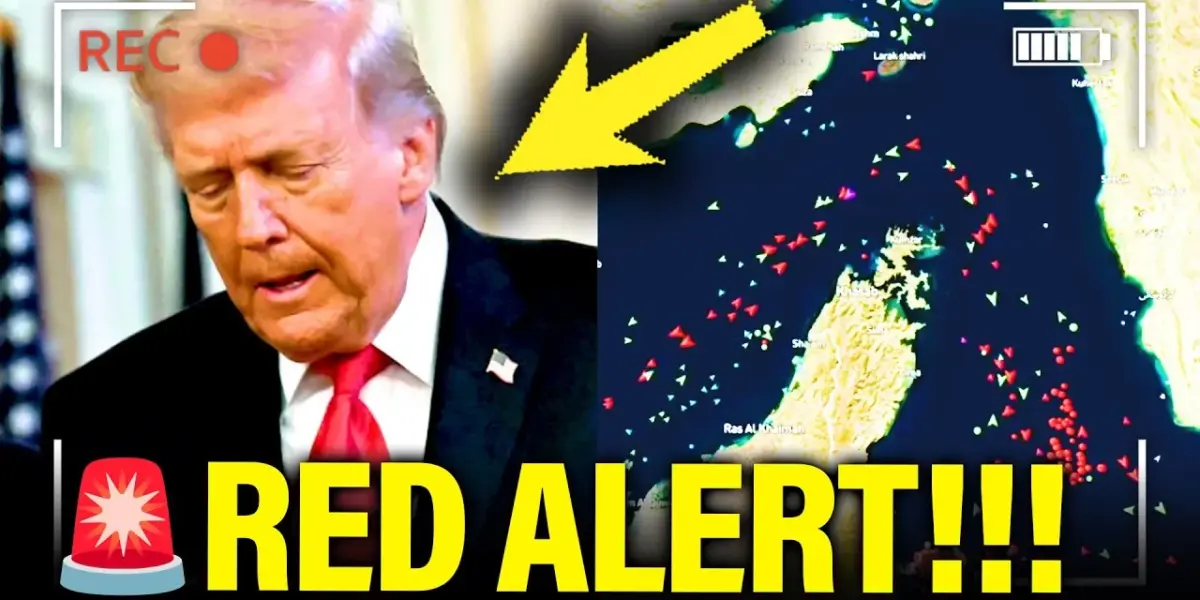
Iran War Threatens Global Economy: Strait of Hormuz Closure Sparks Crisis
The eruption of conflict involving the United States and Israel against Iran has sent profound shockwaves through the global economy, starkly revealing the inherent fragility of the world’s energy supply chain. What began as a geopolitical dispute has rapidly escalated into a full-blown economic crisis, with ramifications extending far beyond the Persian Gulf to touch Europe, Asia, and indeed, the entire planet. At the heart of this precarious situation lies a narrow, strategically vital waterway: the Strait of Hormuz.
The Strait of Hormuz: A Critical Chokepoint
This critical 21-mile-wide passage, situated between Iran and Oman, is responsible for the transit of approximately one-fifth of the world’s oil supply. In practical terms, the usable shipping lanes are even more constricted, reduced to two lanes, each roughly two miles wide. Under normal circumstances, this vital artery facilitates the daily passage of 70 to 80 oil tankers, earning it the moniker “the motorway of global energy trade.” It is the indispensable conduit connecting Gulf oil producers to the global marketplace.
However, in the current conflict, this artery has been effectively severed. Insurers have classified the zone as a “war risk area,” leading shipping companies to shun the route due to the palpable threat of missile and drone attacks. Consequently, tanker traffic has ground to a near standstill. Even without a formal declaration of blockade, the economic impact is identical: energy exports are frozen.
Surging Prices and Shifting Markets
The immediate implications are severe. Oil prices have already surpassed $85 a barrel, with intense market speculation focusing on the psychologically significant $100 mark. Yet, the impact extends beyond crude oil. Natural gas markets have experienced an even more dramatic reaction. Qatar, a global leader responsible for roughly 20% of worldwide liquefied natural gas (LNG) exports, possesses no viable alternative export route that bypasses the Strait of Hormuz. Any disruption to Qatari energy operations sends immediate ripples of shock across Europe and Asia. In recent trading sessions, European natural gas prices have experienced a twofold increase.
Gulf States Under Pressure
What initially appeared to be a contained confrontation has broadened, drawing in Gulf states that have long strived to position themselves as stable business and financial hubs, insulated from regional instability. The region’s economic linchpins are now directly threatened. Missile strikes targeting Saudi energy infrastructure and threats against key oil cities like Dhahran underscore the vulnerability of these vital economic assets. For nations such as Saudi Arabia, the United Arab Emirates, Kuwait, Bahrain, and Qatar, this crisis transcends mere oil revenue. It strikes at the very core of their modern economic identities.
Over the past decade, these nations have made substantial investments in diversifying their economies, promoting themselves as financial centers, tourist destinations, and attractive havens for expatriates. Cities like Dubai, for instance, host thousands of international businesses and a large expatriate workforce drawn by favorable tax policies and perceived stability. The escalating insurance costs, now covering everything from shipping to skyscrapers, threaten to dismantle this carefully constructed business model. Should the Gulf region cease to be perceived as secure, capital could rapidly withdraw.
Asymmetric Vulnerabilities and Global Repercussions
The conflict also highlights asymmetric vulnerabilities across the global economy. The United States, now the world’s leading oil producer, finds itself in a comparatively stronger position. While higher oil prices may impact consumers at the pump, American producers stand to benefit from elevated crude prices. Furthermore, record levels of US LNG contracts suggest that American energy firms could capitalize on disrupted Gulf exports.
However, even the US is not entirely immune. Constraints in refining capacity mean that higher crude prices can still translate into domestic cost pressures. Europe and Asia, conversely, are far more exposed. Nations such as Japan and India remain heavily reliant on Middle Eastern energy imports. Europe, still reeling from the energy shock following Russia’s invasion of Ukraine, now confronts renewed inflationary risks. The global nature of energy pricing means that even countries maintaining physical supply through domestic production or diversified imports must still contend with prevailing international prices. Consequently, a surge in oil and gas benchmarks transmits inflation worldwide.
This inflationary wave reverberates through bond markets, currencies, and equities. Expectations of interest rate cuts by central banks, once considered imminent in several developed economies, have been significantly scaled back. Higher energy prices contribute to headline inflation, making policymakers hesitant to ease monetary conditions. Consumers, already burdened by previous price shocks, now face the prospect of prolonged periods of high borrowing costs.
Broader Economic and Food Security Threats
The conflict also poses a significant threat to global food security. Approximately 30% of the world’s urea, a critical component in fertilizer production, transits through the Strait of Hormuz. Any disruption could lead to increased agricultural input costs, exacerbating existing pressures stemming from the war in Ukraine. Within the Gulf states themselves, where up to 70% of food imports pass through the strait, shortages could emerge if the closure persists.
Winners and Losers in the Crisis
While most economies face hardship, certain actors stand to gain. Russia, for instance, benefits from higher oil prices. Each additional dollar added to the global oil benchmark increases revenue for the Kremlin, bolstering its financial capacity amidst the ongoing conflict in Ukraine. With Iranian oil exports constrained by sanctions and conflict, Russia faces diminished competition in supplying energy-hungry markets like China.
Iran’s own strategy appears less focused on financial gain and more on leverage. International sanctions limit its ability to fully capitalize on rising prices. Instead, Iran’s approach seems designed to inflict maximum economic pain on its adversaries. Lacking the direct military capabilities of the United States and Israel, Iran can effectively weaponize its geography, transforming energy flows into a tool of asymmetric retaliation.
Policy Dilemmas and Psychological Impact
For the United Kingdom and the European Union, this crisis arrives at a particularly inconvenient time. Fiscal plans predicated on assumptions of falling gas prices and stabilizing inflation now appear tenuous. Government forecasts projecting declines in energy costs risk becoming rapidly obsolete if the conflict endures. Calls to revive North Sea oil and gas production highlight the inherent tension between energy security and long-term climate commitments. However, experts caution that any such revival would have limited global impact and require years of investment, noting that international prices cannot be offset by marginal increases in domestic production.
The broader concern is psychological. Markets have demonstrated surprising resilience in weathering dramatic events in recent years, from trade wars to brief Middle Eastern flare-ups. This time, however, feels different. The sheer scale of potential disruption, coupled with the genuine prospect of a prolonged regional war, challenges the long-held assumption that energy chokepoints are relics of the past.
Future Outlook: From Spike to Prolonged Crisis
If hostilities subside within days, the economic damage might be contained. Existing oil inventories and seasonal demand patterns could cushion the immediate impact, potentially leading to market retreats from their peaks and a fading of inflationary effects. However, if the conflict extends beyond several weeks, the outlook darkens considerably. Stockpiles would deplete, prices could surge well above $100 a barrel, and central banks would likely delay or even reconsider interest rate cuts. Gulf states might feel compelled to intervene more directly, risking escalation into a broader regional confrontation with sectarian dimensions.
In such a scenario, energy exports, LNG shipments, and fertilizer flows could remain suppressed for months. The global economy, already navigating post-pandemic adjustments and technological upheaval, would face a new and significant challenge. Growth would likely slow, inflation would persist, and political tensions within importing countries would intensify as households grapple with higher costs.
Why This Matters
The Strait of Hormuz, often an abstract geopolitical concept, has suddenly become a tangible symbol of global interdependence. The current crisis vividly illustrates how swiftly geopolitical conflict can metastasize into worldwide financial strain. The economic shockwave emanating from the Persian Gulf serves as a stark reminder of our interconnectedness and the profound vulnerability of global trade to regional instability. Whether this moment results in a temporary spike or a sustained crisis hinges not solely on military developments, but on the willingness of regional powers to de-escalate and step back from the brink. For now, the world watches, waits, and hopes that the idle oil tankers signal a pause, not a prelude to prolonged economic turmoil.
Source: This ONE Iran War Move Could WRECK the GLOBAL ECONOMY (YouTube)

Related Articles

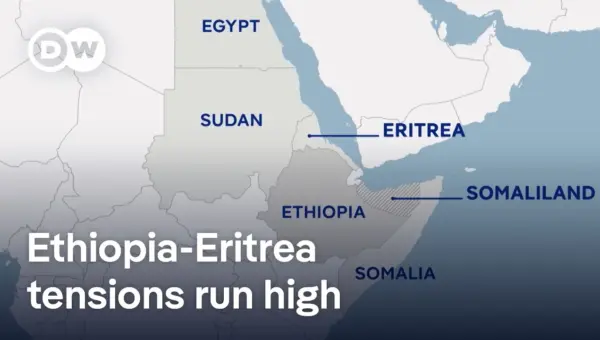
Ethiopia-Eritrea Tensions Escalate Amid Red Sea Access Ambitions
Fears of renewed conflict are escalating in the Horn of Africa as Ethiopia and Eritrea mobilize troops along their shared border. Ethiopia's ambitions to regain Red Sea access are at the heart of the crisis, raising sovereignty concerns for Eritrea and a complex web of regional alliances. The situation is further complicated by Ethiopia's ongoing internal conflicts and its strained relationships with neighboring countries.

Putin Threatens Gas Cutoff as EU Eyes Russian LNG Ban
President Putin has threatened to cut off gas supplies to Europe, a move that follows increasing EU involvement in Middle East conflicts and upcoming bans on Russian LNG. Meanwhile, reports of an alleged Iranian drone strike in Azerbaijan have heightened regional tensions, though Iran denies involvement. Analysts suggest Russia is exploring new markets as Europe solidifies its energy policy.


Middle East Conflict Boosts Putin’s War Chest, Weakens Russia’s Rivals
New Middle East conflict dynamics are inadvertently benefiting Russia, providing Putin with advantages in oil revenue and depleting U.S. military stockpiles. Ukraine's offer of drone expertise emerges amidst these complex geopolitical shifts.