Iran War Sparks Global Turmoil: Oil Prices Soar, Markets Tumble
The escalating war with Iran is sending shockwaves across the globe, triggering a sharp decline in stock markets and driving up oil prices. Regional leaders convened emergency talks as Iran targeted oil infrastructure in Saudi Arabia and Qatar. Meanwhile, U.S. intelligence assessments of the threat posed by Iran are under scrutiny.


Intel Chief Faces Scrutiny Over Iran War Justification
President Trump’s top intelligence official faced tough questions on Wednesday regarding the administration’s justification for the war with Iran. Appearing before the Senate Intelligence Committee, Director of National Intelligence Tulsi Gabbard presented an assessment that Iran’s regime, while intact, has been largely degraded by the conflict. She also stated that last year’s strikes had obliterated Iran’s nuclear sites, leaving no effort to rebuild enrichment capacity.
This assessment contrasts with President Trump’s repeated assertions that Iran posed an imminent threat, the primary reason cited for initiating military action. Democrats pressed Gabbard, seeking clarity on the intelligence community’s view of an “imminent nuclear threat.” When directly asked if the community assessed such a threat, Gabbard stated, “The only person who can determine what is and is not an imminent threat is the President.” This response drew criticism, with lawmakers emphasizing that the Worldwide Threats Hearing is meant for objective intelligence, independent of political considerations.
Both Gabbard and CIA Director John Ratcliffe acknowledged that U.S. intelligence anticipated Iran’s retaliation, specifically strikes on the Strait of Hormuz, a vital shipping lane handling about a fifth of the world’s oil. This foreknowledge raises questions about the war’s progression and its predictable consequences.
Global Oil Infrastructure Targeted as Regional Leaders Convene
The conflict’s impact is being felt across the Middle East, with Iran issuing warnings for civilians to stay away from oil facilities in Saudi Arabia, Qatar, and the UAE. Iran has openly telegraphed its strike plans, which include targeting oil fields. In a significant escalation, Israel launched attacks on the massive South Pars gas field, a site shared by Qatar and Iran. Potential long-term damage to this field could further destabilize global energy prices.
As these attacks unfolded, foreign ministers from across the Arab world gathered in Riyadh, Saudi Arabia, for emergency talks. NBC correspondent Keir Simmons reported from the scene, describing the most intense bombardment the Saudi capital has suffered since the war began. “We heard a boom after boom this evening,” Simmons said, noting that Saudi forces claimed to have intercepted all incoming missiles. The meetings, aimed at de-escalating the situation, occurred amidst ongoing Iranian missile strikes, which caused injuries and damage on the ground.
The regional gathering notably excluded the United States, as Arab nations grapple with the immediate threat posed by Iran. “They are trying to figure out how to find their way through this because ultimately they live here. This is a region that has Iran in its region,” Simmons explained. Tensions were further heightened as Qatar announced the expulsion of Iranian diplomats following a strike on a crucial gas installation, signaling the deep anger among Iran’s neighbors.
Lebanon Front Escalates Amid Diplomatic Stalemate
The conflict is also spreading to a new front in Lebanon, where France’s top diplomat criticized Israel’s actions. Israel has been expanding its operations against Hezbollah, a powerful paramilitary group seen by Israel as an extension of the Iranian regime. “Israel is being unreasonable, expanding in Lebanon to disarm Hezbollah while it is also being bombed,” the French diplomat stated, highlighting the growing death toll in Lebanon, with over 900 people reported dead.
Despite the escalating violence and international concern, Israel has not agreed to diplomatic solutions. The situation in Lebanon is viewed as another example of the war’s rapid spread and escalation across the region. Central Beirut has also reportedly been targeted by Israeli strikes, further intensifying the conflict.
Markets Reel as War Fuels Inflation Fears
Wall Street reacted sharply to the escalating conflict and its economic implications. The Dow Jones Industrial Average closed at its lowest level of the year, falling more than 1.5% after Federal Reserve Chair Jerome Powell expressed concerns that the war could fuel higher inflation. Powell noted that affordability remains a significant issue for consumers, exacerbated by rising energy prices.
Brian Cheung, reporting on the economic impact, highlighted the Fed’s dilemma. Despite calls for interest rate cuts from President Trump, the Federal Reserve held interest rates steady. Powell indicated that only one rate cut might occur this year, offering little relief for borrowing costs like mortgages. The Fed Chair also addressed his own future, stating he would not leave his post while an investigation into the Federal Reserve is ongoing, a situation that could potentially extend his term and frustrate the President’s desire for lower interest rates.
TSA Shortages Disrupt Air Travel, DHS Leadership in Question
Domestically, the Transportation Security Administration (TSA) is temporarily closing security checkpoints at major airports due to ongoing employee shortages. Reports indicate that nearly half of TSA employees called out sick in cities like Houston, Atlanta, New York, and New Orleans, leading to significantly longer wait times nationwide. Hundreds of TSA officers have quit in the past month, with many seeking second jobs to make ends meet.
The leadership vacuum at the Department of Homeland Security (DHS) adds another layer of concern. President Trump’s nominee for DHS Secretary, Senator Markwayne Mullin, faced a contentious confirmation hearing. Questions arose about his temperament, past remarks, and his ability to lead an agency overseeing critical functions like border security and emergency response, especially amid ongoing government shutdowns and security challenges.
Looking Ahead
As the conflict in the Middle East intensifies and its economic ripple effects spread, attention will remain fixed on diplomatic efforts to de-escalate tensions. The upcoming economic data and the Federal Reserve’s next moves will be crucial indicators of the war’s impact on inflation and interest rates. Meanwhile, domestic challenges like TSA staffing shortages and the confirmation of key leadership positions at DHS will continue to be closely watched.
Source: LIVE: NBC News NOW – March 18 (YouTube)

Related Articles
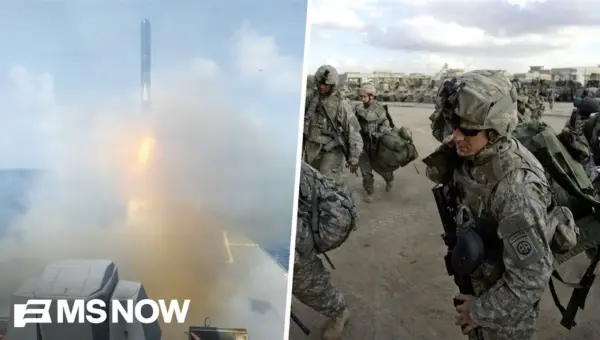
Iran Missile Strikes Injure US Troops, Raise War Concerns
Iranian missile strikes have injured U.S. service members, escalating tensions as the conflict nears one month. The attacks are raising concerns about the effectiveness of U.S. military strategy and the depletion of crucial missile stockpiles. Global oil prices have surged, impacting economies worldwide.


Americans Rally for Democracy Amidst War and Economic Woes
Thousands of Americans are participating in "No Kings" rallies nationwide, demanding accountability from leaders and drawing parallels to historical movements that spurred significant change. The protests occur amidst a controversial war with Iran, economic uncertainty, and a partial government shutdown. Organizers emphasize solidarity, joy, and the power of collective action in defending democracy.
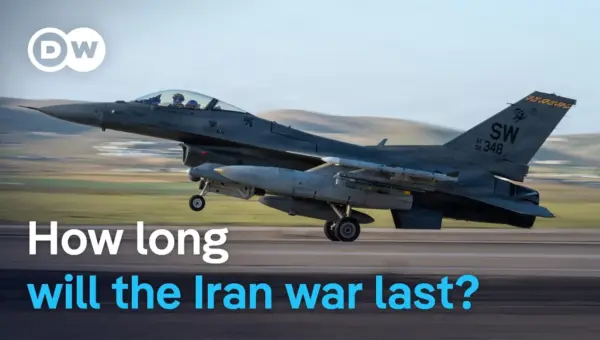
US Official Claims Iran War Could End Soon; Expert Skeptical
Despite US envoy Steve Woff's optimism about imminent talks and a swift end to the conflict with Iran, expert Aaron David Miller expresses significant doubt. Miller argues that a lack of shared urgency and fundamental miscalculations by the US administration make a quick resolution unlikely.