Iran War Shifts: Ground Troops May Be Key
Recent reports suggest the U.S. may be preparing to deploy ground troops in Iran, a significant shift from initial war objectives. The focus has narrowed to securing the Strait of Hormuz, a vital global energy route. This potential escalation carries major implications for regional stability and international markets.

Iran War Shifts: Ground Troops May Be Key
A new assessment suggests the United States might need to send ground troops into Iran to achieve its mission. This idea, highlighted by the Wall Street Journal, comes as recent signs point to a possible land operation. This wasn’t the original plan. If it had been, the necessary military equipment would have been ready from the start.
Now, however, it appears a ground mission is a path the U.S. may have to take. Even retired General Mattis, a former Secretary of Defense, admitted the difficult situation. He recently stated that there aren’t many clear options available. The Wall Street Journal’s suggestion of putting troops on the ground is one of those options. This publication often takes a strong stance on Iran and has supported changing its government, recognizing the threat it poses.
This proposal could be a way to test public reaction before committing to a major action. The Trump administration, according to the Journal, faces a larger conflict than expected. To keep the Strait of Hormuz open and show American strength, President Trump may have to deploy ground forces. Failing to do so could harm his historical legacy, while succeeding could prepare the U.S. for future global challenges.
It’s concerning that the situation has reached a point where not taking this step could be seen as a failure for the United States. The Strait of Hormuz has suddenly become the main focus. This wasn’t an initial goal because the strait was open before the conflict began. Now, the idea is to risk more lives to secure it.
A Shift in War Aims
The Wall Street Journal argues that the main goal is now reopening the Strait of Hormuz. It’s not about changing Iran’s government, stopping its missile program, or ending its nuclear ambitions. The focus has rapidly narrowed to this vital waterway. The Washington Post also noted this shift, stating that securing the strait is now perhaps the most important objective. Security officials believe that initial goals, like overthrowing Iran’s government or stopping its nuclear weapons program, may no longer be achievable.
Keeping Iran from controlling the strait could allow President Trump to end the war and claim victory. It could also help stop a growing global energy crisis and remove a key way Iran deters future attacks. This change shows how Iran’s power over the Strait of Hormuz has shifted the focus. If the U.S. is now reacting to Iran’s control rather than pursuing its original goals, it means Iran is influencing the situation.
While military strikes on targets across Iran continue, with no sign of stopping, and Iran’s military capabilities are being hurt, the Strait of Hormuz is now the center of attention. However, any operation to restart commercial shipping through the strait could take weeks. It would also put U.S. sailors and other forces in danger. U.S. warships could face attacks from hidden positions along the coast, underwater mines, or drones.
Keeping the strait open might require ongoing military and intelligence efforts to escort ships and monitor threats. Any successful attack by Iran could cause panic in energy and shipping markets. Iran’s ability to use drones or missiles, even if not every attack succeeds, poses a significant threat. They only need to get one drone or missile through occasionally to cause major disruption.
Mines Add to the Threat
Reports of Iranian mines in the Strait of Hormuz are now being confirmed by U.S. officials. At least a dozen underwater mines have been found in the vital passage. These are identified as Iranian-made Maham 3 and Maham 7 limpet mines. This adds another layer of danger to the existing threats from drones and anti-ship missiles. Ships could now face the risk of exploding and sinking directly within the strait.
Ground Forces Mobilization
The possibility of U.S. ground troops being involved in Iran is becoming more likely. The 82nd Airborne Division’s quick reaction force is reportedly being prepared for a possible deployment related to operations in Iran. Thousands of Marines are also heading to the region, raising questions about a potential ground mission. While no final order has been given for the 82nd Airborne’s immediate response force, which includes 3,000 soldiers, careful planning is underway.
This brigade can be sent anywhere in the world within 24 hours and acts as the Army’s emergency response team. This rapid activation is typical when ground forces might be needed. However, when combined with other developments, it increases the likelihood that ground forces will be used. The Tripoli Amphibious Ready Group, carrying forces that could be used in a land operation, is arriving in the Middle East soon. Another group, the Boxer Amphibious Ready Group, has already left the U.S. and is expected to arrive next month.
What Would a Ground Operation Look Like?
The exact nature of a ground operation in Iran remains unclear. The objectives are not well-defined, unlike at the beginning of the war when unconditional surrender was mentioned. The idea of marching on Tehran and occupying parts of Iran would require a different military approach and different forces than other potential missions.
For example, capturing an island in the Persian Gulf is a different task than occupying territory. It requires different forces, has different timeframes, and different potential casualties. A special forces raid to secure nuclear materials at various sites is also very different from holding territory along the coast indefinitely to keep the Strait of Hormuz open. It’s difficult to assess what a ground operation might entail because it could take many different forms, each with its own risks.
Looking at the military capabilities currently in the region is more useful. Experts have discussed what amphibious ready groups and marine expeditionary units can and cannot do. They have also considered what size operations they could undertake, what extra support they might need, and how long they could hold territory.
A Crucial Period Ahead
Many signs point to the possibility of using ground forces. A deadline President Trump set for Iran to open the Strait of Hormuz is approaching. Around the same time, key Marine units are set to arrive in the region. There are also unconfirmed reports of special operations forces moving to the Middle East, potentially ready by the weekend. The next few days could be very revealing about the direction this conflict is taking.
Why This Matters
The potential deployment of U.S. ground troops into Iran marks a significant escalation and a departure from initial war aims. The shift in focus to securing the Strait of Hormuz highlights the strategic importance of this waterway for global energy supplies and demonstrates how Iran can use its position to its advantage. If the U.S. is forced to commit ground troops, it means a prolonged and potentially costly engagement with unpredictable outcomes. This situation underscores the complex geopolitical dynamics at play and the high stakes involved for regional stability and international trade.
Implications and Future Outlook
The ongoing military actions and the potential for ground operations in Iran carry serious implications. A ground war could lead to significant casualties on all sides and further destabilize the Middle East. The impact on global energy markets could be severe if the Strait of Hormuz remains disrupted. The long-term outlook suggests a period of heightened tension and competition in the region, with the U.S. potentially facing a protracted commitment of resources and personnel.
Historical Context
The current situation in Iran is part of a long history of complex relations between the U.S. and Iran, marked by periods of tension and proxy conflicts. The strategic importance of the Strait of Hormuz has historically been a key factor in regional security. Past U.S. military interventions in the Middle East have shown the challenges and unintended consequences of ground operations. Understanding this history provides context for the current debate over military options and their potential repercussions.
Source: Iran War PIVOT: More Troops, New Focus (YouTube)

Related Articles


Stocks Ignore War Risks, Focus on “Taco Moments”
Stock markets appear to be overlooking the severe supply chain risks stemming from the Iran conflict, focusing instead on potential diplomatic de-escalations. While the S&P 500 shows resilience, bond and commodity markets signal deep concern over disruptions to critical resources like LNG, helium, and fertilizers.

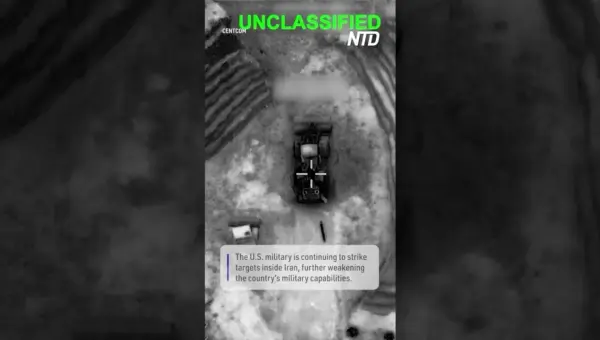
US Strikes Cripple Iran’s Military Might, CENTCOM Reports
U.S. Central Command reports ongoing strikes inside Iran are significantly weakening its military power. This direct action aims to reshape regional security dynamics, but carries risks of escalation. The long-term impact depends on Iran's response and ability to adapt.


U.S. Iran Tensions Rise Amid Shifting Alliances
Rising tensions between the U.S. and Iran are creating a volatile geopolitical situation. With conflicting signals on de-escalation and potential shifts in alliances like NATO and U.S.-Israel relations, the path forward remains uncertain. The global economy and regional stability hang in the balance.