Iran War Shifts Calculus on China’s Taiwan Ambitions
The war in Iran, while seemingly creating an opportunity for China to invade Taiwan, actually shifts the calculus. Modern warfare favors defenders, and China's logistical and energy vulnerabilities are now more exposed, making an invasion less likely.


Iran Conflict Alters China’s Taiwan Invasion Odds
The ongoing war in Iran has sparked widespread worry. Some fear the conflict could escalate, leading to a scenario where other nations might exploit the global chaos to make their own moves. This concern is particularly focused on China and its long-held desire to take control of Taiwan.
Many believe China has been preparing its military for this exact purpose. The timing of the Iran war, some argue, presents a perfect opportunity for Beijing. The United States, for instance, is deeply involved militarily and faces significant domestic political debate over foreign policy. This could mean less willingness and fewer resources available for intervention in a Taiwan conflict.
Adding to this, the U.S. is using up crucial military supplies, like Patriot missile stockpiles, which would be vital for defending Taiwan. American naval fleets are also currently positioned in the Middle East, not near China. Furthermore, the continuing war in Ukraine keeps Europe occupied and hesitant to shift military assets elsewhere, like to protect Taiwan. This combination of factors appears to create a unique window of opportunity for China.
Rethinking China’s Readiness
However, a closer look suggests that the situation is more complex. While the global distractions are real, they don’t automatically mean China is ready to attack Taiwan. The focus has been on whether the U.S. and Europe can intervene, but less attention is paid to whether China itself is prepared for such a massive undertaking.
China needs a substantial number of ships to invade Taiwan. At present, China likely does not possess the necessary resources for a successful invasion, regardless of how favorable the global situation might seem. This leads to a critical question: what does the war in Iran reveal about the *type* of warfare China would need to fight, and how does this change the odds?
Modern Warfare Favors Defenders
The warfare China would need to employ to attack Taiwan shares similarities with conflicts happening now. In the Strait of Hormuz, Iran uses inexpensive technology, like drones, to disrupt shipping. This is highly relevant because the strait between China and Taiwan is a body of water within missile and drone range.
The U.S. is currently struggling to keep the Strait of Hormuz open against a less powerful opponent. This struggle highlights how Taiwan might succeed against a much larger force like China. We’ve seen similar outcomes in Ukraine, where Russia, a much larger nation, has faced unexpectedly strong resistance from Ukraine, largely due to advances in modern technology.
Both conflicts show a pattern: even without a large navy, Ukraine used naval drones to push back Russia’s Black Sea fleet. Similarly, Iran, despite its navy being decimated, controls the Strait of Hormuz through asymmetric strategies using cheap drones. The methods to counter these drones are not affordable or available in sufficient numbers to match the scale of the attacks.
This is crucial for a Taiwan invasion. China needs many ships for repeated troop landings over time. The ease with which inexpensive drones can destroy ships makes the calculus of a Chinese invasion incredibly difficult. The idea that the U.S. might be running low on Patriot missiles for Taiwan’s defense is less relevant than the possibility of Taiwan overwhelming Chinese ships with its own drones.
Taiwan could likely produce thousands of inexpensive drones, scalable and easy to launch. The U.S. is even developing its own version of Iranian drones, suggesting Taiwan could have access to similar defensive technology. The ability to destroy Chinese ships at sea is more critical for Taiwan than defending its skies.
A Race Against Time
While China might theoretically have a window of opportunity, it is not yet prepared to exploit it. China now faces a race against time. Can they launch an invasion before Taiwan can learn from these conflicts and deploy the necessary technology to counter China?
If Taiwan is sufficiently prepared with modern technology, a Chinese invasion could become effectively impossible. This might seem surprising, but Ukraine’s defense against Russia, and Iran’s continued disruption of the Strait of Hormuz despite U.S. power, demonstrate the effectiveness of modern defensive tactics.
China’s Energy Vulnerability Exposed
The war in Iran also highlights China’s significant energy dependence, a major weakness. China relies heavily on energy imports, and the current situation shows how easily vital choke points can be closed. This is a serious problem for China, as its energy supply depends on routes like the Strait of Hormuz and the Strait of Malacca.
Blockading the Strait of Malacca, especially during a conflict like an invasion of Taiwan, could cripple China’s economy and war effort. While China has alternative routes, they are insufficient and pass through potentially hostile territories like Japan. The dangers China has always faced regarding its energy supply are no longer theoretical; they are very real.
If China were to attack Taiwan, energy supplies would be severely disrupted unless China could seize them by force, which would be impossible if its navy is engaged in an invasion. The current situation in Iran, where some oil still flows to China due to their alliance, would not apply in a Taiwan conflict.
Iran’s Diminished Role
Another factor is the demilitarization of Iran. While Iran still possesses some capabilities, its long-range options have been significantly reduced. This is a problem for China because a strong Iran was seen as a strategic asset.
Iran’s ability to threaten other countries, like Europe and U.S. interests, could have forced the U.S. and Europe to reconsider intervening in a Taiwan conflict, fearing Iran’s actions. With Iran’s military largely crippled, this strategic advantage for China is diminished.
Conclusion: A Complex Equation
The war in Iran has exposed Western weaknesses, which on the surface might seem to favor China’s ambitions. However, it has also revealed asymmetric strengths of less powerful nations and, more importantly, how modern warfare has shifted in favor of defenders like Taiwan.
The geopolitical situation has adjusted, with more cons than pros for China concerning a Taiwan invasion. While some media might present a one-sided view, the reality is more complicated. For now, the immediate threat of a Chinese invasion of Taiwan appears less likely due to these evolving dynamics.
Source: The War in Iran Just Changed the Calculus on China’s Invasion of Taiwan (YouTube)

Related Articles

Iran’s Shocking Peace Deal Victory: US Concedes Major Demands
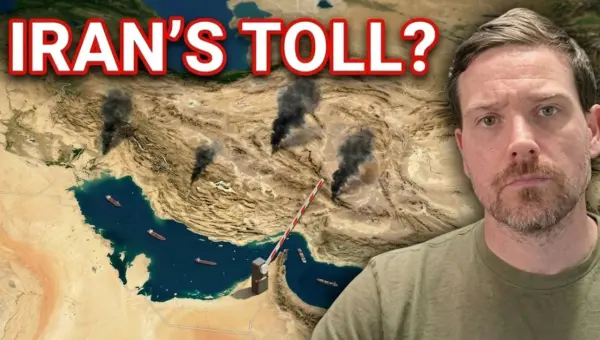
A supposed ceasefire between the US and Iran has plunged the Middle East into confusion, with both sides claiming victory but presenting contradictory terms. Israel feels blindsided, and Gulf nations are still facing Iranian attacks. The deal appears to concede major Iranian demands, including control over the Strait of Hormuz and uranium enrichment, raising serious questions about the US's objectives and the true outcome of the conflict.

US Considers Military Action in Iran for Nuclear Material
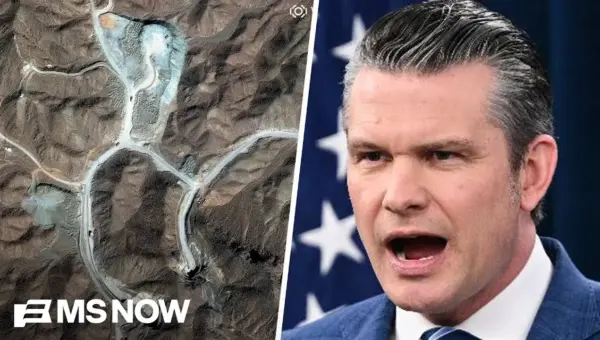
A top US official has not ruled out military action in Iran to secure nuclear materials, following a recent conflict where key objectives were not fully met. Concerns remain over Iran's enriched uranium and control of the Strait of Hormuz as diplomatic talks are set to resume.


Iran Dominates Hormuz: Trump’s Deal Fails to Reclaim Key Waterway
Iran has significantly strengthened its control over the vital Strait of Hormuz, challenging previous assumptions about its influence. Despite potential deals, ideological drivers and a sense of strategic advantage appear to empower Iran, impacting global oil security.