Iran War Ignites Regional Crisis: Pakistan Pulled In
The ongoing war in Iran is igniting a wider regional crisis, pulling Pakistan into escalating border conflicts with Baloch separatists and the resurgent Pakistani Taliban. Missile strikes, protests, and a refugee crisis are destabilizing the region, with significant implications for global energy markets and nuclear security.

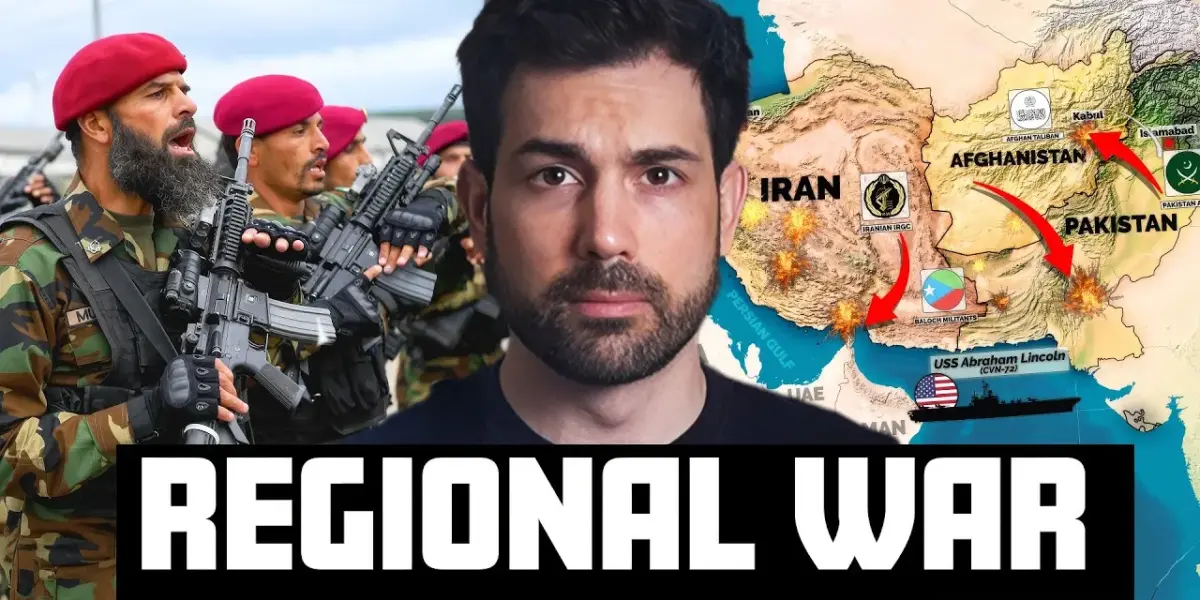
Iran War’s Reach Extends: Pakistan Faces Escalating Border Conflicts
The conflict in Iran is no longer contained. It is now spilling over into neighboring Pakistan, igniting a complex web of security threats and regional instability. This escalating violence threatens global energy markets, nuclear stability, and the balance of power across Asia. The fighting is particularly intense along the 900-kilometer (about 600-mile) border between Pakistan and Iran, a region that runs through the volatile province of Baluchistan.
Baloch Insurgency Fuels Cross-Border Tensions
A key driver of this instability is the Baloch Liberation Army (BLA), a separatist group fighting against both Pakistan and Iran. For years, this conflict was largely contained. However, with Iran’s Islamic Revolutionary Guard Corps (IRGC) distracted by wider regional conflicts, their ability to police this remote border has weakened. This has allowed the BLA to intensify its operations.
The Baloch people are an ethnic group spread across Pakistan, Iran, and Afghanistan. They do not recognize these modern borders and seek full independence. Their province, Baluchistan, is Pakistan’s largest, covering over 40% of the country. Such insurgencies often thrive in border regions where security presence is limited, creating a vacuum that can be exploited.
Missile Strikes and Retaliation Intensify Conflict
The friction between Iran and Pakistan over border security has a long history. Both nations accuse each other of harboring militants. In 2024, Iran launched missile strikes into Pakistan, targeting the BLA. Pakistan responded with its own retaliatory strikes inside Iran against Baloch fighters. These actions, while aimed at perceived threats, effectively meant both countries were taking security into their own hands on each other’s territory.
Relations have often fluctuated between cooperation and disagreement. This tension further erupted in January 2026 when the BLA launched coordinated attacks across more than a dozen Pakistani cities. They targeted police stations, banks, and schools, even taking over entire towns. Pakistani forces engaged in multi-day battles to regain control, resulting in significant casualties among civilians, security personnel, and BLA fighters.
Geopolitical Ripples: China, US, and Israel’s Role
The Baluchistan province is strategically vital, especially for China. It includes the Gwadar port, a cornerstone of China’s Belt and Road Initiative. Instability here threatens infrastructure that China considers crucial for its trade routes. This situation is drawing Iran, Pakistan, and China into closer proximity, with potential implications for global trade.
Adding another layer of complexity, the United States has a history of covert operations in the region. Reports suggest that as early as 2002, the US may have funded and armed the BLA to pressure the Iranian regime. However, some intelligence memos later indicated that Israeli intelligence agents, posing as American spies, may have been the ones recruiting the BLA for covert actions against Iran. This alleged Israeli ‘false flag’ operation aimed to draw the US into conflict with Iran.
Pakistan’s Internal Strife: Shiite Protests and Diplomatic Incidents
The conflict has also ignited internal tensions within Pakistan. Pakistan has one of the world’s largest Shiite populations, with about 15% of its 250 million people adhering to Shia Islam. For many Shiites globally, Iran’s Supreme Leader is a figure of religious authority. When Iran’s leader was reportedly killed in a 2026 air strike, it sparked widespread protests in Pakistan. These demonstrations often clashed with the Pakistani army, leading to dozens of deaths and the imposition of curfews in Shiite-majority areas.
The situation reached a critical point on March 1st when pro-Iranian protesters attempted to storm the U.S. consulate in Karachi. The ensuing confrontation with U.S. Marine security resulted in the deaths of over 20 protesters and injuries to many more. This was a major diplomatic incident, echoing the 2012 attack on the U.S. consulate in Benghazi, Libya. Such events highlight how quickly regional conflicts can trigger political unrest in neighboring countries.
Economic Fallout and Nuclear Concerns
The economic impact on Pakistan is significant. The country relies on the Persian Gulf for 85% of its oil, much of which normally passes through the Strait of Hormuz. Disruptions to this route have led to a 20% increase in gas prices in Pakistan, further fueling instability that insurgent groups exploit.
What makes the escalating violence on Pakistan’s border particularly concerning is its status as a nuclear-armed state. Pakistan possesses an estimated 170 nuclear warheads. While its arsenal is considered to be under strict centralized control, its existence in a country actively dealing with multiple internal militant threats raises serious questions about long-term security. Any increase in Pakistan’s economic and security instability heightens concerns about its nuclear deterrent.
Refugee Crisis and the Resurgence of the Taliban
The war in Iran has also created a significant refugee crisis. Three million Iranians are internally displaced, with thousands fleeing to Pakistan and tens of thousands to Afghanistan. This influx strains relations and resources in the host countries.
Furthermore, the conflict has impacted Afghanistan’s trade routes with Iran, severely affecting its economy. This instability creates opportunities for other militant groups, notably the Pakistani Taliban (TTP). The TTP has become increasingly emboldened, reportedly utilizing billions of dollars worth of U.S. military equipment seized during the American withdrawal from Afghanistan in 2021. This includes advanced weaponry and armored vehicles, giving them new capabilities for large-scale attacks.
A Multifaceted Threat on Pakistan’s Borders
Pakistan finds itself facing a three-front threat. Beyond the BLA and the TTP, the country is dealing with ongoing insurgencies along its extensive and challenging border. Pakistani troops have been crossing into Afghanistan to target TTP strongholds, leading to retaliatory ground attacks by the TTP on Pakistani outposts. This convergence of militant activity in the region where Iran, Pakistan, and Afghanistan meet resembles the complex geopolitical environment preceding World War I.
The historical roots of these conflicts trace back to colonial-era borders, particularly the Durand Line between Afghanistan and Pakistan, which Afghanistan has never officially recognized. This has resulted in a persistent mix of ethnic groups, tribal militias, and refugees, creating a deeply unstable region.
Pakistan’s Strategy and the Future Outlook
In response, Pakistan has adopted aggressive measures, including a mass expulsion campaign of Afghan refugees. Over a million Afghans were deported in 2025 as part of a counter-terrorism effort. Pakistan is also pressuring the Afghan Taliban government to dismantle the TTP, signaling a willingness to escalate costs if its demands are not met. This strategy aims to restore deterrence in a region where insurgent groups often fund their operations through illicit trade, such as heroin smuggling.
The potential for groups like the TTP to ally with even more brutal factions like ISIS-K adds another dangerous dimension. As violence escalates along this critical border region, it draws in major global powers like Iran, the United States, and China. History shows that when such volatile regions begin to bleed into each other, conflicts can spiral rapidly and unpredictably.
Source: Iran War Explodes Spilling into Pakistan (YouTube)

Related Articles


Polls Reveal Deep Voter Concerns Over War, Economy for Trump
Recent polls and political analysis suggest President Trump faces significant challenges due to voter concerns about the prolonged conflict in Iran and the struggling economy. Republicans are growing anxious as these issues impact the president's standing, while Democrats see an opportunity to present themselves as a more stable alternative.


Senate Passes DHS Funding, Easing Airport Chaos Amid Shutdown
The Senate has passed a bill to fund the Department of Homeland Security, offering relief to TSA officers facing missed paychecks and aiming to ease airport chaos. Meanwhile, a near-miss incident involving a passenger plane and helicopter in Los Angeles is under investigation. TODAY's Savannah Guthrie shared her enduring faith and hope amidst her mother's disappearance, announcing her return to the show on April 6th.


Advisors Shield Trump From War Truths, Fueling Danger
President Trump is reportedly being fed a diet of manipulated information regarding the war with Iran. Advisors allegedly curate video updates to show only U.S. successes, while downplaying or hiding setbacks. This deliberate 'cocoon of ignorance' prevents Trump from seeing the full picture, leading to potentially dangerous decisions and a distorted view of reality.