Iran War Ignites: Eight Crucial Signs to Track Now
The "Operation Epic Fury" against Iran marks a significant escalation with broad implications. This analysis examines eight key signs to watch, from the domestic response within Iran to international geopolitical shifts and the domestic political fallout in the U.S.

Iran War Ignites: Eight Crucial Signs to Track Now
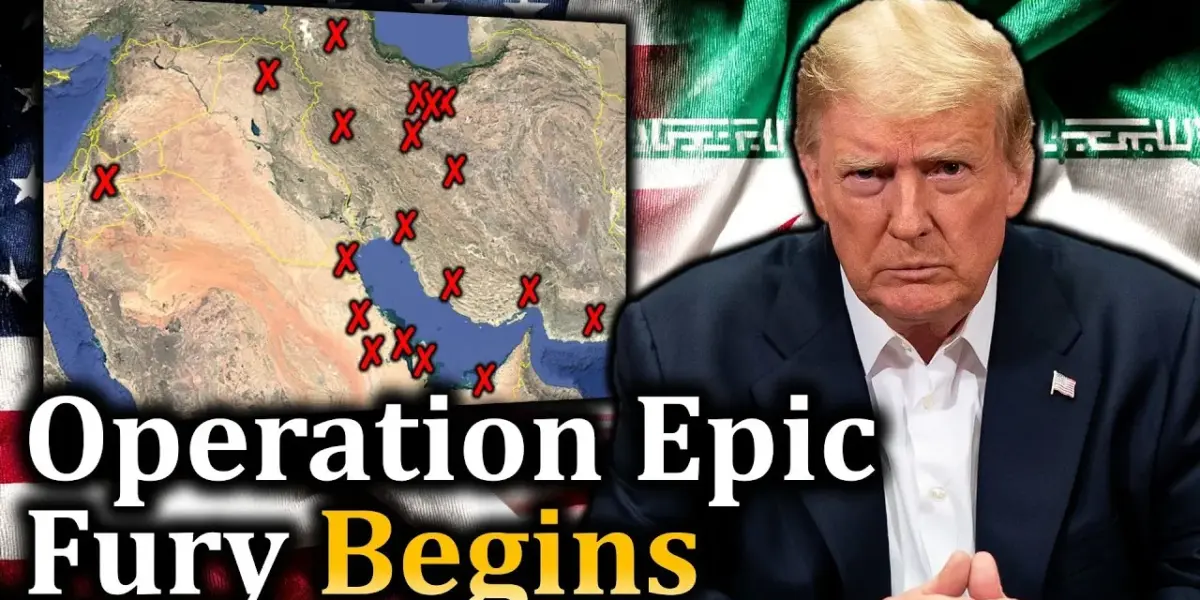
The geopolitical landscape has been dramatically reshaped with the commencement of hostilities against Iran, following a significant buildup of military assets in the region. Dubbed “Operation Epic Fury,” this is not a limited engagement but a comprehensive operation involving U.S. assets across the region, signaling a conflict designed to last for days, if not longer, unless Iran capitulates or its regime is overthrown. The initial strikes have targeted a broad spectrum of Iranian infrastructure, including crucial anti-aircraft and missile installations to secure air superiority and neutralize retaliatory capabilities. The prior conflict between Iran and Israel has reportedly simplified some of these initial efforts. Strikes have also been directed at Iran’s nuclear infrastructure, though the extent of the damage remains uncertain.
A New Escalation: Targeting Leadership
What truly sets this conflict apart is the reported targeting of Iran’s top leadership, including the Ayatollah and the president. While Iranian media has claimed retaliatory strikes on U.S. assets in Qatar, Kuwait, the United Arab Emirates, Bahrain, Jordan, and Northern Iraq, these claims have yet to be independently confirmed, keeping the conflict, for now, a trilateral affair between the U.S., Israel, and Iran. Israel itself has faced incoming missiles and drones, though significant damage has not been reported.
Watching Iran: The Domestic Equation
The initial phase of the war raises critical questions about its trajectory. A key indicator will be the response of the average Iranian. The transcript highlights the difficulty of achieving regime change solely through aerial bombardment, emphasizing the need for ground presence. While a large-scale land war like the one in Iraq is currently infeasible due to troop limitations, a more limited intervention, akin to the Venezuela scenario, remains a possibility, though not the current strategy. The U.S. approach appears to mirror the Libyan model, providing air support to a faction, but with a crucial inversion: instead of rebels requesting support, the U.S. is seemingly seeking to foster a rebellion.
The recent large-scale protests in Iran suggest a population potentially receptive to change. The re-establishment of an internet blackout in Iran underscores the regime’s awareness of this threat. However, the distinction between widespread protests and organized resistance is significant, as it will determine whether the conflict devolves into a prolonged air campaign or concludes swiftly. The logistical strain on U.S. naval and air assets, exemplified by issues with the USS Ford, also presents a challenge, especially if the conflict extends, potentially serving as a preview for a larger confrontation in the Taiwan Strait.
The U.S.-Israel Nexus and Domestic Politics
The joint nature of this operation with Israel introduces a specific domestic narrative within Iran, where the government is likely to frame it as an Israeli plot to destabilize the Islamic Republic, rallying citizens against foreign interference. Leaks from the White House regarding the origins of this joint effort—whether initiated by the U.S. or Israel—will be crucial. Prime Minister Netanyahu’s own domestic political challenges may also influence Israel’s engagement, potentially limiting the scope for peaceful settlements.
Domestically, within the United States, the war is likely to expose divisions among key political figures and within the administration. Concerns raised by figures like JD Vance, who previously viewed the Middle East as a European concern, and Marco Rubio, who might prefer a focus on Latin America, will be amplified. Pentagon policy chief Bridge Colby’s focus on China is also relevant, as the conflict in Iran has significant geopolitical implications that extend to U.S. strategy towards Beijing.
The role of military leadership, such as Chairman of the Joint Chiefs of Staff Dan Caine, in advising against strikes due to unpredictable outcomes, is noteworthy. While his role is to provide factual advice, the ultimate decision rests with the political leadership. The lack of traditional Congressional authorization for the use of force in Iran is a significant point of contention. While Congress may initially voice complaints, their ability to act is limited in the short term. However, a protracted conflict could escalate into a constitutional battle between the executive and legislative branches.
Public Opinion and Persuasion Gaps
The challenge of garnering public support for the war in the U.S. is immense. Unlike the Iraq War, which saw a months-long persuasion campaign, the current administration’s efforts have been minimal. The lack of a clear articulation of the war’s objectives has led to social media speculation, including theories about distractions from domestic issues like the Epstein files. The unusual, pre-recorded video address by the President, featuring a baseball cap and a noticeable edit, has further fueled confusion and criticism.
The inevitable occurrence of U.S. casualties will be a critical turning point for public opinion. A public already struggling to understand the war’s rationale could react strongly to fatalities, echoing past experiences like the “Black Hawk Down” incident in Somalia, where unclear benefits led to severe consequences.
International Repercussions and Geopolitical Shifts
Internationally, Russia’s outrage is tempered by its ongoing commitments in Ukraine, limiting its capacity for significant action. China’s reaction, however, is of paramount importance. The conflict’s impact on oil supplies, crucial for the Chinese economy, and the potential fallout from a post-Ayatollah Iran, especially in light of Venezuela’s recent cooperation with the U.S., could significantly complicate China’s plans regarding Taiwan. A disruption of oil imports could cripple China’s global power status and serve as a deterrent against invasion.
The specter of a “Libya 2.0” scenario in Iran, leading to long-term chaos and a devastating impact on global oil markets, is a significant concern. However, such instability could paradoxically serve to restrain China’s ambitions, regardless of whether a new Iranian government is West-friendly or the country simply ceases oil exports.
Allied Relations and Strategic Chokepoints
U.S. allies, particularly in Europe, are expected to navigate a period of turbulence. Their response, characterized by ambivalence and calls for peace, may frustrate the U.S., especially given the argument that Iran’s missile program posed a direct threat to Europe. The war’s potential to weaken Russia and deter China from invading Taiwan could indirectly enhance European security, a connection that may be overlooked by European allies.
The Strait of Hormuz, a critical chokepoint for global oil transit, remains a key area to monitor. Any attempt by Iran to close the strait in a desperate last-ditch effort would have severe global economic consequences, a scenario previously explored in detail.
Why This Matters
The unfolding conflict in Iran is far more than a regional dispute; it is a complex geopolitical event with profound implications for global stability, energy markets, and the balance of power. The U.S. and its allies are navigating a delicate path, balancing military objectives with the potential for unintended consequences, including regional destabilization and shifts in major power dynamics. The domestic political ramifications within the U.S., the reactions of key international players like China and Russia, and the potential for a protracted and costly conflict all underscore the critical need to closely observe the eight key signs highlighted. The outcome will not only determine the fate of Iran but also shape the future of international relations for years to come.
Implications, Trends, and Future Outlook
The conflict signals a potential shift in U.S. foreign policy, moving towards more assertive interventions in regions deemed critical to national interests. The reliance on air power and the potential fostering of internal dissent represent evolving military strategies. The geopolitical trend of increased competition between major powers, particularly the U.S. and China, is amplified by this conflict, with Iran’s stability and oil exports playing a crucial role in this broader dynamic. The future outlook suggests a volatile period marked by potential energy market disruptions, strained alliances, and a heightened risk of escalation. The effectiveness of U.S. and Israeli strategies, the internal response within Iran, and the reactions of global powers will collectively dictate the long-term consequences.
Historical Context and Background
The current situation is rooted in decades of complex U.S.-Iran relations, marked by the 1979 revolution, the subsequent hostage crisis, and periods of proxy conflict and sanctions. The U.S. has historically viewed Iran’s nuclear program and regional influence as significant threats. Israel, facing its own security challenges from Iran and its proxies, has long advocated for a more forceful approach. The recent escalation can also be seen against the backdrop of broader regional realignments and the ongoing struggle for influence between Iran and its rivals, including Saudi Arabia and the UAE. The transcript also implicitly references past U.S. military interventions, such as Iraq and Libya, drawing parallels and distinctions to inform the current situation.
Source: Eight Key Signs to Watch for in the Iran War (YouTube)

Related Articles


G7 Allies Clash Over Iran War Strategy, Urge Focus on Russia
G7 foreign ministers met in Paris, revealing deep divisions over the U.S. war with Iran. European allies urged the U.S. to pressure Russia, linking its actions to the conflict and fearing support for Ukraine will wane.

Iran Blocks China Ships, Exposing Beijing’s Weak Grip
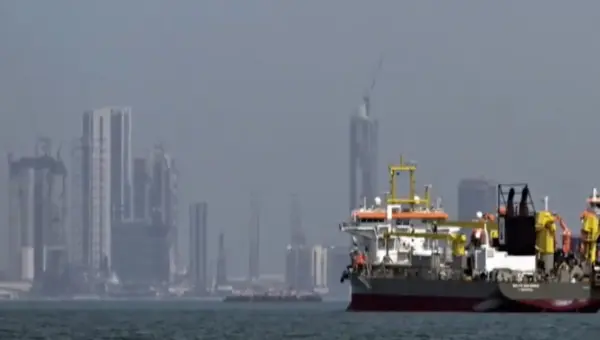
Iran's recent decision to block Chinese ships at the Strait of Hormuz is exposing the limits of Beijing's influence in the Middle East. This action is causing delays and cancellations for Chinese manufacturers, turning a perceived geopolitical win into an economic strain.
Trump’s “Walk Away” Tactic Signals Tougher Stance on China
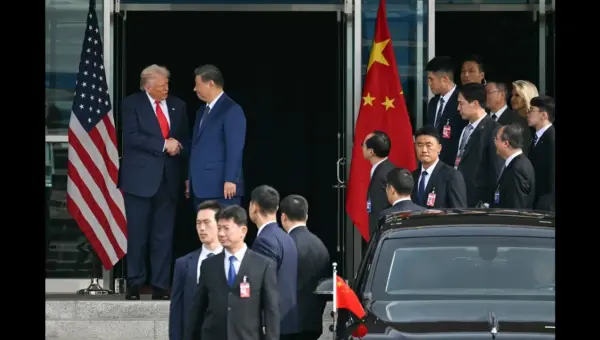
Retired Air Force Brigadier General David Stillwell believes President Trump's strategy of being willing to walk away from negotiations puts pressure on China. This tactic, combined with US global actions and strengthened alliances, signals a more assertive American foreign policy.