Iran War Fuels Worst Energy Crisis: Ex-Biden Advisor Warns
The world faces its worst energy crisis ever, driven by escalating tensions with Iran and disruptions to vital shipping lanes like the Strait of Hormuz. Former Biden advisor Amos Hochstein warns that the crisis extends beyond oil to LNG, fertilizers, and other critical commodities, with recovery efforts complicated by the time needed to restore supply chains.


Global Energy Markets Brace for Unprecedented Crisis Amidst Iran Tensions
The world is currently experiencing the most severe energy crisis in its history, surpassing even the turmoil of the 1970s and 1980s, according to Amos Hochstein, former Senior Advisor to President Biden for International Energy Security. Speaking on a recent broadcast, Hochstein detailed the multifaceted nature of the crisis, emphasizing that it extends beyond oil to encompass crucial commodities like Liquefied Natural Gas (LNG), Liquefied Petroleum Gas (LPG), jet fuel, and fertilizers. The situation is exacerbated by the ongoing conflict involving Iran, which threatens key global shipping lanes.
Strait of Hormuz: A Critical Chokepoint
The Strait of Hormuz, a vital waterway through which a significant portion of the world’s crude oil passes, has become a focal point of concern. Iran has declared the strait open only to ships not aligned with its adversaries, while warning that others, particularly those associated with the United States and Israel, could face attack. Hochstein noted that while the strait remains technically open, security concerns deter many vessels, highlighting the precariousness of global energy transport.
“We are already in the worst energy crisis the world has ever seen. Even worse than the 1970s when there was a total embargo or the 1980s when we had what was it’s called the Tankers and we U.S. Navy escorted ships. This is worse for a few reasons. One, the scale is so much bigger now.”
Beyond Oil: The Broader Impact on Commodities
Hochstein elaborated on the expanded scope of the current energy crisis. “People talk about oil, but it’s not just oil,” he stated. “We have oil, 20% of the world’s LNG, the liquefied natural gas.” The disruption also impacts the production of essential goods, including LPG, commonly used by lower-income populations, jet fuel, and critically, fertilizers. The timing is particularly dire, as increased fertilizer costs and potential shortages loom just as planting season commences in the United States, threatening agricultural output and food security.
The Long Road to Recovery
A significant challenge in resolving the crisis, Hochstein explained, is the time required to restart disrupted energy flows. “It takes hours to shut something down, it takes a lot longer to restart it up,” he observed. “So it’s not like the war ends and you flip a switch and everything goes through.” This lengthy recovery period means that even a cessation of hostilities would not immediately alleviate market pressures. The lack of advance contingency planning by the current administration has led to a reactive, piecemeal approach, with various proposed solutions—from naval escorts to insurance schemes and Strategic Petroleum Reserve (SPR) releases—failing to stabilize the market. This constant shift in strategy, Hochstein suggested, signals to the market that no definitive solution is in sight, contributing to significant price increases.
Lessons from the Ukraine Crisis
Drawing parallels to his experience managing energy security during the Ukraine conflict, Hochstein criticized the lack of proactive measures. “Before the war, we started thinking about, all right, let’s in advance get supplies to Europe,” he recalled. “So before the invasion ever happened, we were surging supplies to Europe knowing that one of the things that the Russians may do is cut off the pipelines, cut off supplies.” This foresight ensured that European storage facilities were adequately stocked, enabling the continent to weather the initial shock. Hochstein argued that similar advance planning—prepositioning ships and securing additional loads—could have mitigated the current global shock and lessened Iran’s leverage.
International Cooperation and National Interests
Recent international responses, such as South Korea’s pledge to coordinate with the U.S. and Britain’s consideration of aid, are driven primarily by self-interest rather than solidarity, according to Hochstein. “A hundred percent. They are,” he confirmed when asked if these nations were acting to protect their own interests. Countries like South Korea, heavily reliant on gas for industrial and economic stability, are facing their own energy crises, with LNG supplies from Qatar now at zero. Similarly, Japan, India, the UK, and Europe are deeply dependent on stable energy imports, with approximately 90% of crude oil flowing through the Strait of Hormuz destined for Asia.
Risks of Direct Confrontation
The proposed solution of naval escorts, Hochstein warned, carries substantial risks. Unlike the Iran-Iraq War of the 1980s, where attacks primarily targeted tankers, a direct confrontation with Iran today would likely involve attacks on U.S. naval vessels. “Here it will put our men and women at great risk if we suddenly do it,” he stated. Furthermore, the willingness of ship owners to send their crews through potentially dangerous waters remains questionable. The strategy of using allied naval assets as ‘cover’ for U.S. ships is also seen as a flawed approach, as Iran could still target any vessel transiting the strait.
Questions of Competence and Preparedness
Hochstein expressed concern over the perceived lack of competence and preparedness within the current administration’s national security apparatus regarding energy security. He suggested that the world began contemplating war with Iran as early as January, yet significant preparatory actions, such as increasing oil supply and filling storage, were not adequately undertaken. The price of oil, which stood at $60 per barrel in the U.S. before these discussions, has since surged to $100, underscoring the market’s reaction to perceived instability and inadequate policy responses.
Looking Ahead: The Path Forward
The current global energy landscape is fraught with peril, marked by escalating tensions, volatile markets, and the potential for widespread economic disruption. The lack of proactive strategy and the reactive nature of policy responses have amplified the crisis. As the situation evolves, attention will remain fixed on diplomatic efforts, the security of critical shipping lanes, and the capacity of global powers to stabilize energy markets before the crisis deepens further, impacting nations and populations worldwide.
Source: ‘Worst energy crisis the world has ever seen’: Fmr. Biden energy advisor on backdrop for Iran war (YouTube)

Related Articles
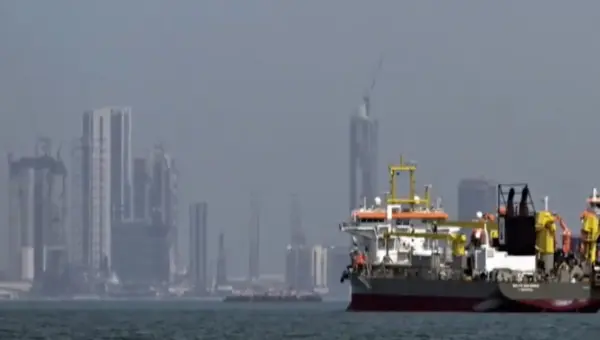
Iran Blocks China Ships, Exposing Beijing’s Weak Grip
Iran's recent decision to block Chinese ships at the Strait of Hormuz is exposing the limits of Beijing's influence in the Middle East. This action is causing delays and cancellations for Chinese manufacturers, turning a perceived geopolitical win into an economic strain.
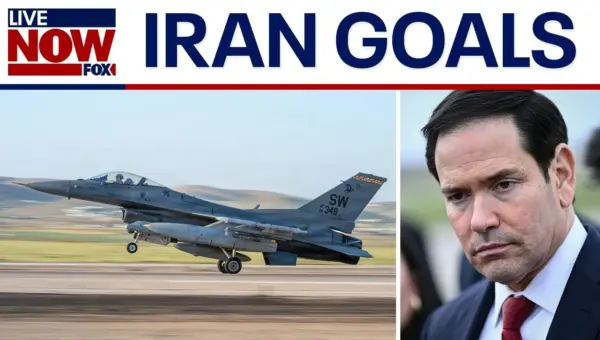
Rubio: US Can Achieve Iran War Goals Without Troops
Senator Marco Rubio outlined a strategy to counter Iran without deploying U.S. ground troops, focusing on weakening the regime and enhancing maritime security. He also criticized Cuba's economic system and expressed concerns about West Bank violence.


Israel Escalates Iran Strikes, Warns of Wider War
Israel has launched significant strikes inside Iran following continued missile fire, warning of further escalation. The conflict risks wider regional instability and economic disruption, especially concerning the Strait of Hormuz.