Iran War Fuels US Inflation Fears, OECD Warns
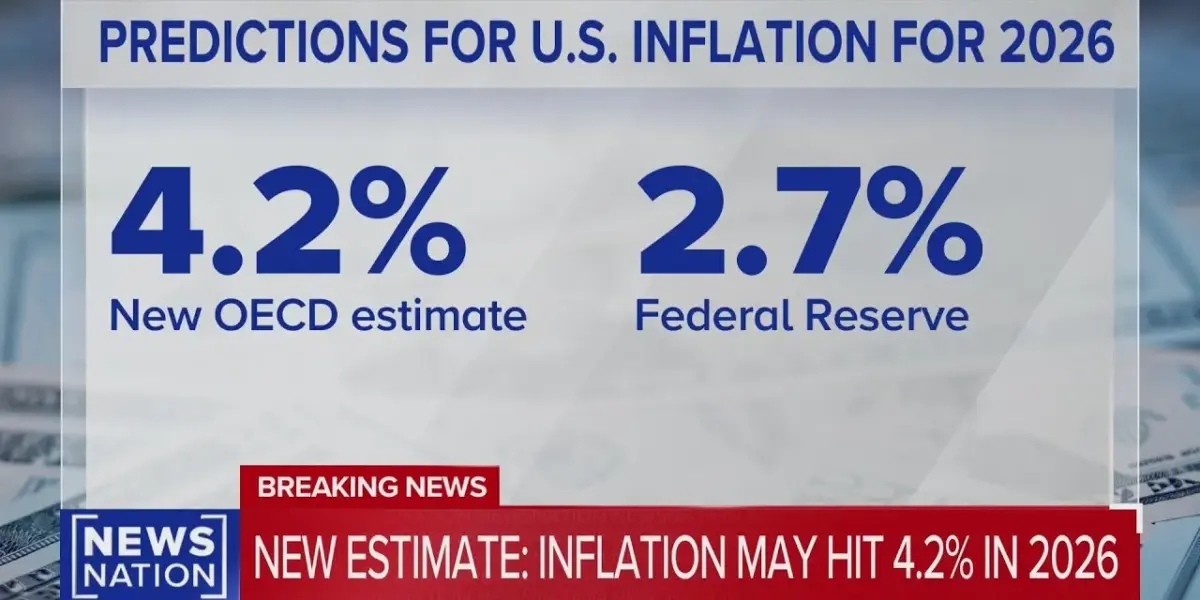
A conflict in Iran is projected to push U.S. inflation above 4% this year, according to the OECD. Higher energy prices are the main driver, impacting gas, groceries, and interest rates. This raises concerns about a cost of living squeeze for Americans.

Iran War Fuels US Inflation Fears, OECD Warns
A conflict in Iran, now entering its second month, is raising new economic worries for the United States. New predictions suggest the war could push American inflation higher than expected. The Organization for Economic Cooperation and Development (OECD) recently released a report. It warns that U.S. inflation could climb above 4% this year. This is double the Federal Reserve’s current target of 3%.
Energy Prices Drive Inflation Concerns
The main reason for this predicted price increase is the ongoing war in Iran. Higher energy prices are a direct result of the conflict. This impacts everything from gas at the pump to the cost of goods in grocery stores. Transportation costs rise because of fuel prices. Fertilizer prices also increase, affecting food production.
The OECD’s projection offers a slight glimmer of hope for the future. It predicts inflation could cool down to 1.6% by 2027. However, this depends on energy prices dropping. It also relies on some kind of resolution to the conflict. A key concern is the Strait of Hormuz, a vital shipping route for oil. If oil can flow freely again, it could help stabilize prices.
Broader Economic Impacts Felt by Americans
The effects of the war are already being felt by everyday Americans. Gas prices have risen nationally, affecting household budgets. Grocery prices are also going up and are likely to continue increasing. This is due to higher transportation costs for food products.
Beyond consumer goods, the conflict is also impacting interest rates. The cost of borrowing money is going up. This is especially true for housing. The average 30-year mortgage rate has risen to 6.38%. This is up from previous months. This increase is linked to spiking Treasury yields. These yields are reacting to the war and concerns about U.S. debt during this uncertain time.
Economic Slowdown and Cost of Living Squeeze
The overall picture painted by these economic trends is one of a slowdown. People are paying more for goods and services. This creates a real cost of living squeeze. While the latest data may not be uplifting, White House officials believe the current economic challenges might be short-lived. They point to the potential for relief by 2027.
However, bridging the gap from now until 2027 presents a significant challenge. The current economic outlook suggests a difficult period ahead for American consumers. The war’s impact on global energy markets and supply chains creates uncertainty. This uncertainty translates directly into higher prices and increased financial pressure.
Global Impact: Reshaping the World Order
The war in Iran highlights the interconnectedness of the global economy. Disruptions in one region can have far-reaching consequences. The conflict’s effect on oil prices is a stark reminder of this. Energy is a critical commodity that underpins most economic activity. When its supply is threatened, prices rise across the board.
This situation also shows how geopolitical instability impacts financial markets. Investors react to uncertainty by demanding higher returns on government debt, such as U.S. Treasuries. This, in turn, increases borrowing costs for businesses and individuals. The war is not just a regional conflict; it is a global economic event.
Historical Context
The importance of the Strait of Hormuz has been a recurring theme in international relations for decades. Control over this narrow waterway has been a point of strategic interest for many nations. Past tensions in the region have often led to fluctuations in oil prices. This current conflict brings these historical vulnerabilities back into sharp focus.
The OECD’s role as an international economic organization also provides context. It brings together major economies to discuss and coordinate policies. Its warnings about U.S. inflation show that the problem is not just a domestic issue. It is a concern for the broader global economic community.
Future Scenarios
One possible future scenario is a swift resolution to the conflict. This could lead to a rapid stabilization of energy prices and a quicker return to lower inflation. Another scenario involves a prolonged conflict. This would likely mean sustained high energy prices and continued inflationary pressures for years.
A third scenario could see the U.S. and its allies implementing new policies to mitigate the impact of high energy prices. This might include increasing domestic energy production or seeking alternative supply routes. The Federal Reserve will also be watching closely. They may need to adjust their monetary policy to combat inflation, potentially leading to higher interest rates for longer.
Economic Leverage and Dependencies
The war underscores the world’s dependence on oil. Nations that are major oil producers, like those in the Middle East, hold significant economic leverage. Disruptions to supply routes like the Strait of Hormuz can be used to exert influence.
The United States, despite being a major energy producer itself, is still sensitive to global price shocks. This sensitivity affects its consumers directly and influences its economic policy. The interconnectedness of global energy markets means no country is entirely insulated from such events.
Source: War in Iran will push US inflation above 4% this year, OECD says | Morning in America (YouTube)

Related Articles

Trump’s Iran War Gamble: Broken Promises, Rising Costs
Reports indicate the Pentagon is preparing for ground operations in Iran, signaling a potential escalation of conflict. This move is criticized as a betrayal of campaign promises to avoid new wars and comes with rising gas prices and significant costs to American taxpayers. The analysis questions leadership priorities, contrasting campaign rhetoric with policy actions and highlighting the economic and human toll of prolonged military engagement.

US Considers Ground Troops as Iran Conflict Intensifies
Middle East powers convene in Pakistan for peace talks as the month-long war intensifies. The US is reportedly considering ground troops amid escalating strikes on Iran, while experts caution against air power's political pitfalls and highlight the risks of a prolonged conflict.


US Faces Global Trade Shift as Auto Jobs Flee
The US is losing its global edge in auto manufacturing as jobs move to Europe, a shift overshadowed by internal culture wars and fears of foreign billionaires. Critics argue this distraction prevents Americans from addressing real economic decline and rising costs, while allies reassess their ties to a nation perceived as increasingly divided and economically vulnerable.