Iran War Fueled by Intelligence Miscalculation: Analysis
A potential intelligence miscalculation regarding Iranian public support for regime change may have triggered the recent conflict. Experts analyze the role of 'bargaining failure' and private information discrepancies in the escalation, suggesting the war's outcome hinges on converging expectations between the U.S. and Iran.

War Ignites Amidst Intelligence Gap on Iran Uprising
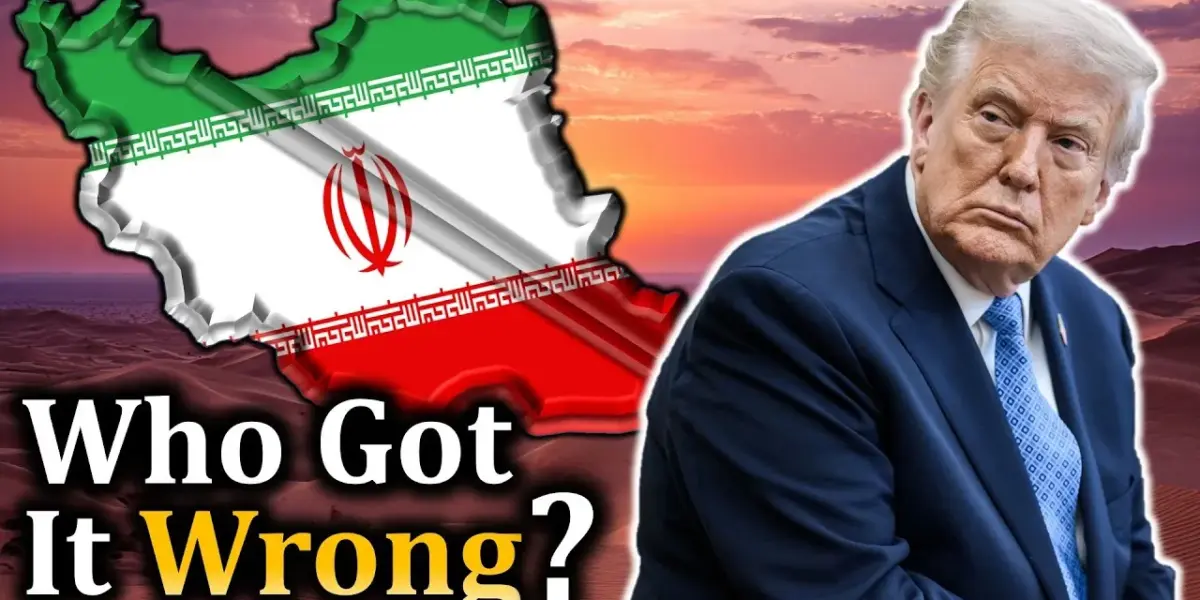
A conflict with Iran, potentially triggered by a significant intelligence miscalculation, has erupted in the Persian Gulf. Reports suggest key figures in Israel and the United States believed a coalition could instigate a regime change within Iran. This belief, despite skepticism from U.S. intelligence agencies, appears to have been a primary driver for initiating hostilities. The war has not yet yielded the expected internal uprising, leading to frustration among coalition partners.
The Intelligence Disconnect: Mossad’s Optimism vs. U.S. Caution
Central to the unfolding events is the assessment by David Barnea, head of Israel’s intelligence service Mossad. He reportedly believed that the Iranian public would rise up against its government within days of a war’s commencement. Prime Minister Benjamin Netanyahu seemingly embraced this outlook and sought to gain support from then-President Donald Trump. However, U.S. intelligence and military officials expressed less confidence in such a rapid and widespread internal revolt. Despite these differing assessments, President Trump reportedly supported the plan, leading to the current conflict.
Bargaining Failure: The Theoretical Framework for War
Beyond the specific intelligence assessments, a deeper theoretical explanation for the war’s initiation lies in the concept of ‘bargaining failure.’ This theory suggests that wars occur not simply because one side is optimistic or pessimistic, but due to a fundamental disagreement on the expected outcomes of negotiation versus the costs of conflict. Imagine the political disagreements between the U.S. and Iran as a scale. If the U.S. gets its way on most issues, it sits on one end; if Iran prevails, it sits on the other.
The expected outcome of a war is an average of all possible events, including the potential for internal protests in Iran. A high likelihood of protests would shift this expected outcome favorably for the U.S., as a government facing internal revolt would struggle to implement its policies. Conversely, if the Iranian government could easily suppress protests, the expected outcome would favor Iran. However, war is costly in lives and resources. The difference between what each side expects to gain from war, after accounting for these costs, forms a potential ‘bargaining range’ where a peaceful settlement should be possible.
The Role of Private Information in Escalation
The critical factor leading to war, according to this theory, is a discrepancy in private information. If one side possesses information that the other lacks, their expectations about the war’s outcome can diverge significantly. For instance, the Iranian government might have a clearer understanding of its ability to control internal dissent than the U.S. intelligence apparatus. If the U.S. believed that protests were likely to occur and support an intervention, while Iran knew its crackdown had effectively silenced opposition, a major gap in expectations would emerge.
This information asymmetry can lead to a situation where the U.S. makes demands at the negotiating table based on its optimistic (and potentially flawed) assessment, while Iran, possessing more accurate information about its internal stability, refuses even minimal concessions. This deadlock, driven by differing beliefs about the costs and benefits of conflict, is what precipitates war. It is not merely about whether protests are likely, but about how each side *perceives* that likelihood and its implications.
Challenging Media Narratives on War Initiation
The narrative that the war began simply because the U.S. was overly optimistic about protests is, according to this analysis, a simplification. While optimism might be a factor, the core issue is the *divergence* in expectations between the warring parties. U.S. intelligence’s pessimistic assessments, if accurate, should ideally lead to more modest demands and a higher chance of negotiation. The fact that war occurred despite these assessments suggests a deeper misalignment of information and beliefs.
Furthermore, attributing the war solely to a lack of protests is misleading. The absence of protests does not automatically prove that the decision to go to war was a mistake. The critical element is the difference in expectations *before* the conflict began. If both sides had a similar, albeit pessimistic, view of the situation, war might have been avoided. The conflict likely arose because Iran’s internal reality differed from the U.S. perception, leading Iran to be more resistant to U.S. demands.
Strategic Implications and War Termination
The implications for ending the conflict are tied to the convergence of these expectations. If the war began due to an overestimation of internal support for regime change, then observable changes on the ground—or the continued absence of widespread protests—can prompt a reassessment. As U.S. intelligence gathers more accurate information about the situation within Iran, its expectations may shift, leading to more realistic demands and a greater willingness to negotiate a ceasefire.
Historically, interventions aimed at fostering regime change without pre-existing widespread rebellion are rare and often costly experiments. The current conflict appears to be no different. The path to ending the war will likely involve a clearer understanding by all parties of the true internal dynamics within Iran, leading to a shared assessment of the costs and benefits of continued fighting. Until that convergence occurs, the conflict may persist, driven by the lingering effects of the initial intelligence gap.
Source: Miscalculation: Inside the Intelligence Gap That Pushed the U.S. to War with Iran (YouTube)

Related Articles

Trump’s Oil Market Influence Wanes Amidst Global Instability
Former President Donald Trump's attempts to influence oil markets have reportedly failed, raising concerns about his diminishing credibility. Analysts compare his approach to "the boy who cried wolf," suggesting a loss of trust among market participants. The discussion also touched upon the use of personal devices for government communication and the vetting of political candidates amidst controversial remarks.
Trump’s War Talk Distracts as World Burns
As global conflicts escalate and economic pressures mount, Donald Trump's focus on past grievances and symbolic wins overshadows pressing issues. His rhetoric, including questionable claims about ending wars and strategic use of terminology to bypass Congress, raises concerns about leadership and national priorities.

Iran Extends Strait of Hormuz Deadline Amid Global Oil Tensions
The U.S. has granted Iran a 10-day extension to reopen the Strait of Hormuz, a critical global oil route. This move comes amid complex negotiations, military actions, and concerns over Iran's strategic leverage and resilience. Lawmakers express frustration over the lack of a clear strategy and potential escalation.