Iran War Escalates: US Ships Burn, Allies Flee, Global Order Shifts
As the conflict in Iran intensifies, U.S. ships face attacks and allies question American strategy. The global order is shifting, with Russia and China seemingly benefiting from perceived U.S. weakness, leading to economic volatility and diplomatic strain.

Iran War Escalates: US Ships Burn, Allies Flee, Global Order Shifts
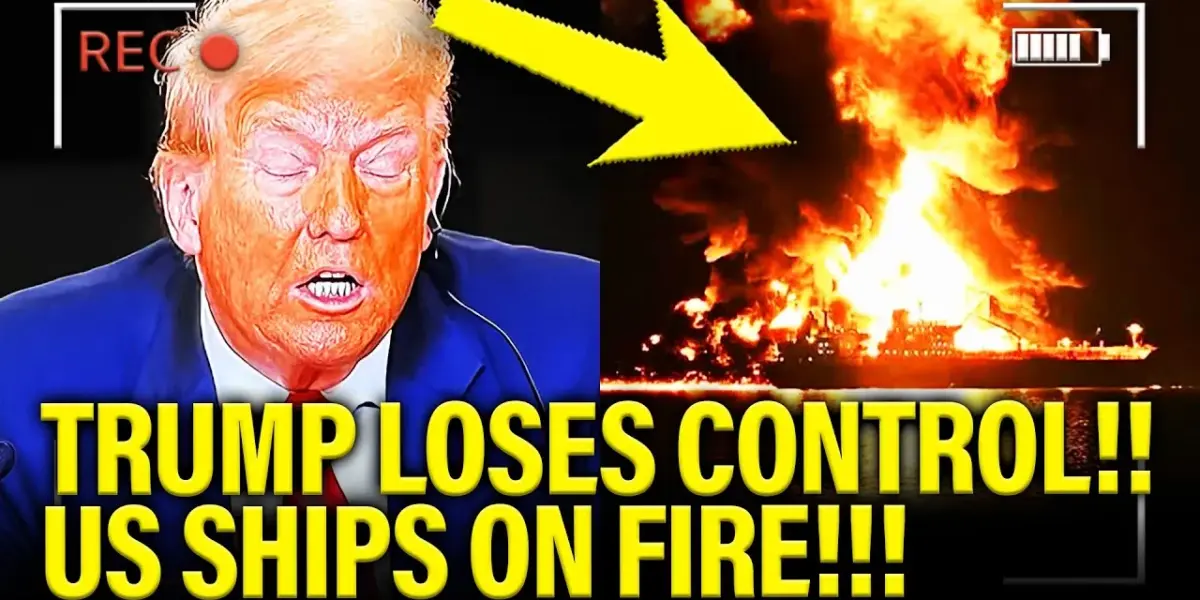
The geopolitical landscape is in turmoil as the conflict in and around Iran intensifies, marked by alarming incidents and strategic realignments. Recent events, including a significant fire aboard the U.S. aircraft carrier USS Gerald R. Ford and an attack on a U.S.-owned cargo ship, signal a dangerous escalation. These incidents, coupled with shifting international alliances and a volatile global economy, paint a grim picture of a world grappling with a widening conflict.
A Conflict Spiraling Out of Control?
The U.S. aircraft carrier USS Gerald R. Ford experienced a serious fire originating in its laundry spaces. While military officials have stated it was not combat-related, the incident underscores the inherent risks and operational challenges faced by naval forces in a heightened state of alert. Simultaneously, footage emerged showing a Marshall Islands-flagged cargo ship, identified as U.S.-owned, being struck by an Iranian unmanned surface vehicle off the coast of Basra. These events, occurring amidst a backdrop of escalating tensions, raise questions about the security of maritime trade routes and U.S. naval assets in the region.
The ongoing conflict has also drawn accusations of civilian casualties, with claims that the U.S. has been involved in attacks on civilian infrastructure, including an elementary school in Iran. General Grankowich, the top allied supreme commander in Europe, reportedly admitted U.S. involvement in hitting an elementary school, a statement that, if accurate and fully contextualized, would carry significant implications for international law and public perception.
Economic Ripples and Political Rhetoric
The immediate economic fallout from the conflict is evident in surging oil prices and a tanking stock market. Former President Donald Trump has publicly commented on the situation, suggesting that rising oil prices are beneficial for the U.S. as a major oil producer. He stated, “The United States is the largest oil producer in the world by far. So when oil prices go up, we make a lot of money.” However, he also framed his primary concern as preventing Iran from acquiring nuclear weapons and destabilizing the Middle East and the world. This perspective suggests a strategic calculus where economic gains from higher oil prices are secondary to national security objectives and the containment of perceived threats.
Critics, however, argue that such policies have destabilized the region, alienated allies, and potentially contributed to the very conflicts they aim to prevent. The assertion that the U.S. has “destroyed all of our alliances in the Middle East” and that “all of these Arab nations are under attack right now” reflects a deep concern about the erosion of diplomatic ties and the effectiveness of U.S. foreign policy.
Shifting Alliances and Global Reordering
The conflict appears to be accelerating a global reordering, with Russia and China reportedly supporting Iran. This collaboration is seen by some as a strategic move to weaken the United States and establish a new world order where American influence is diminished. The transcript points to meetings between Russian officials and former Trump administration figures like Steve Bannon and Jared Kushner, discussing economic cooperation and potential policy shifts regarding sanctions on Russian oil. This raises questions about the U.S. stance towards Russia, particularly in light of ongoing geopolitical challenges such as the war in Ukraine.
Furthermore, the U.S. appears to be losing influence in Asia. The withdrawal of THAAD and Patriot missile systems from South Korea and a lack of promised military aid to Taiwan are cited as examples of the U.S. alienating its Asian allies. This perceived weakness is seen by adversaries like China and Russia as an opportunity to advance their own interests.
Diplomatic Strain and International Condemnation
The international community is expressing increasing confusion and frustration with U.S. actions. French President Emmanuel Macron reportedly voiced exasperation during a G7 video call, questioning the clarity of U.S. intentions and plans. This sentiment suggests a growing disconnect between U.S. policy and that of its traditional allies.
Adding to the diplomatic friction, official Iranian accounts have used social media to highlight civilian casualties, particularly children, in attacks attributed to the U.S. and its allies. For instance, the Iranian embassy in The Hague posted a message in memory of schoolchildren killed in an attack, framing it as an act by “the most evil people on earth.” This narrative warfare underscores the battle for hearts and minds in the ongoing conflict.
Historical Context and Strategic Parallels
The current situation draws parallels to historical conflicts. General Grankowich’s observation that attacking civilian populations often hardens resolve, citing the London Blitz in World War II and the conflict in Ukraine, suggests that current U.S. and allied strategies may be counterproductive. The idea that “anytime you attack a civilian population, you usually end up finding that it just hardens their resolve” highlights a potential strategic miscalculation that could prolong and intensify the conflict.
Economic Strategy and Public Perception
The U.S. Department of Energy’s communication strategy has also come under scrutiny. A deleted tweet from the department regarding the safe passage of ships through the Strait of Hormuz, which reportedly caused market disruption and financial losses, highlights issues of transparency and accuracy in government messaging. The energy secretary took ownership of the miscommunication, promising it would not happen again. This incident, framed as “short-term pain for long-term gain,” reflects a broader economic strategy that involves managing oil reserves and prices, even if it leads to immediate market volatility.
Why This Matters
The escalating conflict in and around Iran, marked by direct attacks on U.S. assets and a widening network of international support for Iran, signals a dangerous new phase of geopolitical instability. The perceived weakening of U.S. alliances and the rise of a more coordinated challenge from Russia and China suggest a significant shift in the global power balance. The economic consequences, including volatile energy markets and the immense cost of sustained military operations, will undoubtedly impact global economies. Furthermore, the ethical and legal implications of alleged civilian casualties and the effectiveness of current military strategies in achieving long-term security objectives remain critical questions that demand urgent attention and a clear-eyed assessment of the path forward.
Implications, Trends, and Future Outlook
The current trajectory suggests a prolonged period of heightened tension and potential for wider conflict. The trend of eroding U.S. influence and the consolidation of anti-U.S. alliances point towards a more multipolar, and potentially more volatile, world order. The economic strain of sustained conflict, coupled with the domestic political ramifications of perceived failures or successes, will shape future policy decisions. The future outlook is one of significant uncertainty, with the potential for further escalation, diplomatic breakthroughs, or a prolonged period of proxy conflicts and economic warfare.
Source: Trump PANICS as US SHIPS ON FIRE in WAR!!! (YouTube)

Related Articles
Ukraine Strikes Russian Oil Refinery, Eyes Iran Threat
Ukrainian forces struck a key Russian oil refinery, disrupting Moscow's war capabilities. Meanwhile, Finland's president urged continued U.S. support for Ukraine, as Kyiv shares its air defense expertise globally amid growing geopolitical complexities involving Iran and potential sanctions against Hungary.
Iran’s Missile Threat Reduced by 90%, Analyst Says
An analyst reports that Operation Epic Fury has degraded Iran's missile launchers by 90%, despite challenges in targeting hidden sites. The conflict's duration and media coverage are also discussed, with implications for global energy markets and investor confidence.
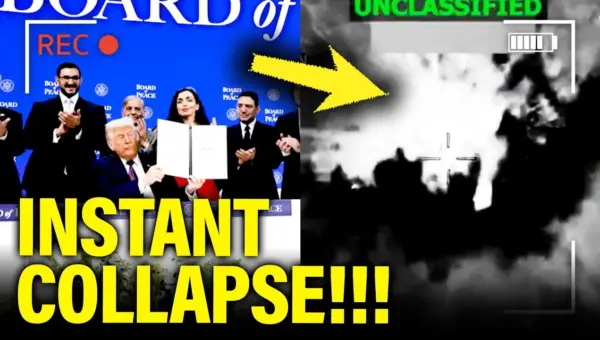
Trump’s ‘Board of Peace’ Crumbles Amidst Global Conflict
Donald Trump's 'Board of Peace,' launched with grand ambitions from Davos, faced immediate scrutiny over its $1 billion permanent membership fee. Despite attempts to secure ceasefires, the initiative appeared to falter as global conflicts, including strikes on Iran, escalated, leaving its intended purpose overshadowed.