Iran War Escalates: US Sends Troops Amidst Oil Crisis
The United States is deploying an additional 5,000 troops as the war with Iran intensifies, fueling concerns over rising oil prices and Iran's blockade of the Strait of Hormuz. President Trump remains non-committal on the war's duration, while global economic fears mount.


US Deploys 5,000 More Troops as Iran Conflict Intensifies
Washington D.C. – As the conflict with Iran nears its two-week mark, the United States is escalating its military presence in the region, announcing the deployment of an additional 5,000 service members. This move comes amidst rising global oil prices and ongoing concerns over Iran’s blockade of the Strait of Hormuz, a critical chokepoint for global energy transport. President Trump has remained non-committal on the potential duration of the war, while the U.S. death toll continues to climb.
Strait of Hormuz Blockade Fuels Global Economic Fears
The strategic Strait of Hormuz, through which approximately 20% of the world’s oil passes, has become a focal point of the escalating tensions. In a recent radio interview, President Trump addressed the situation, stating, “We would do it if we needed to, but we would do it if we needed to. But, you know, hopefully things are going to go very well.” He added, “We’ve already damaged them so badly. It would take years for them to ever rebuild, and we’re going to be hitting them very hard over the next week.”
Despite these remarks, Defense Secretary Pete Hegseth attempted to downplay the immediate threat from the strait, while General Dan Keane, Chairman of the Joint Chiefs, warned that Iran still poses a significant danger to global shipping. “Iran still has the capability to harm friendly forces and commercial shipping, and our work on this effort continues,” General Keane stated. “The only thing preventing commercial traffic and flow through the straits right now… is Iran. They are the belligerents here holding the straits.”
Economic Repercussions: Oil Prices Soar, Gas Prices Climb
The impact on global markets has been immediate and severe. Crude oil prices settled around $97 per barrel, marking a 46% increase since the commencement of the war. Average gasoline and diesel prices have also seen a significant rise. President Trump, however, sought to reassure the public about the economic consequences, offering a new, albeit vague, timeline for the war’s conclusion: “When I feel it. It. Feel it in my bones.”
This comes as the Treasury Department announced a lifting of some sanctions on Russian oil, a move made after Russia’s invasion of Ukraine. Treasury Secretary Scott Bessent acknowledged the unfortunate reality that Russia would financially benefit from this decision, expressing hope that it would be temporary.
U.S. Casualties Mount Amidst Conflicting White House Messaging
The human cost of the conflict is also rising. The Pentagon confirmed the deaths of six U.S. crew members aboard a refueling aircraft that went down in western Iraq. A second aircraft involved in the incident sustained damage but landed safely in Israel. The loss of the aircraft is currently under investigation, with initial reports indicating it was not a result of hostile or friendly fire.
“The only certainty is that he [President Trump] says he’s going to be the one to dictate [the end of the war] based on feeling and based on instinct, which is not totally aligned with what military officials and the senior leadership at the Pentagon have tried to lay out in terms of military objectives.”
– Monica Alba, NBC News White House Correspondent
White House correspondent Monica Alba reported on the administration’s messaging, noting the divergence between the President’s intuitive approach to ending the war and the more defined military objectives outlined by Pentagon leadership. The initial timeline of 4-6 weeks has become increasingly uncertain, with the President reserving the right to declare victory based on his own feelings.
Vice President’s Stance on the Conflict
The Vice President’s perspective on the conflict also came under scrutiny. While initially reportedly skeptical about engaging in war with Iran, he has attempted to project unity with the administration. “I hate to disappoint you, but I’m not going to show up here and in front of God and everybody else, tell you exactly what I said in that classified room, partially because I don’t want to go to prison and partially because I think it’s important for the President of the United States to be able to talk to his advisors without those advisors running their mouth to the American media,” the Vice President stated, indicating a desire to maintain confidentiality regarding internal discussions.
Regional Dynamics and International Reactions
Keir Simmons, reporting from Dubai, highlighted the shifting perspectives among Iran’s regional neighbors. He spoke with a senior government minister in the United Arab Emirates who expressed defiance and determination, stating, “We didn’t want this war, but now we’re in it. President Trump, let’s see it through.” The minister also emphasized the need for a post-conflict future where Iran is not armed with missiles and drones capable of threatening the region.
Dubai itself experienced an incident where a tower in its financial district sustained damage from debris during an intercepted drone attack. This event underscored Iran’s strategy of targeting economic hubs to exert pressure on the U.S. administration.
Looking Ahead: Uncertainty and Potential for Further Escalation
With no clear end in sight to the conflict and the U.S. continuing to bolster its military presence, the coming weeks will be critical. The world will be watching to see how the situation in the Strait of Hormuz evolves, the impact on global energy markets, and whether President Trump’s unique approach to conflict resolution yields the desired outcome, or further destabilizes an already volatile region. The ongoing investigations into domestic terror attacks also add a layer of complexity to the national security landscape.
Source: Meet the Press NOW — March 13 (YouTube)

Related Articles

Trump Halts Iran Strikes Amid Stalled Diplomacy
President Trump announced a pause on planned strikes against Iran, citing productive talks, though Iran denies negotiations occurred. Reports also suggest a potential U.S. ground operation on Iran's Hark Island. The situation raises concerns about international support for Ukraine and potential shifts in U.S. foreign policy.
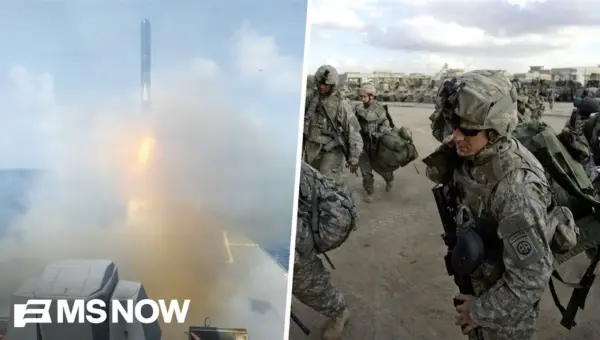
Iran Missile Strikes Injure US Troops, Raise War Concerns
Iranian missile strikes have injured U.S. service members, escalating tensions as the conflict nears one month. The attacks are raising concerns about the effectiveness of U.S. military strategy and the depletion of crucial missile stockpiles. Global oil prices have surged, impacting economies worldwide.


Americans Rally for Democracy Amidst War and Economic Woes
Thousands of Americans are participating in "No Kings" rallies nationwide, demanding accountability from leaders and drawing parallels to historical movements that spurred significant change. The protests occur amidst a controversial war with Iran, economic uncertainty, and a partial government shutdown. Organizers emphasize solidarity, joy, and the power of collective action in defending democracy.