Iran War Escalates: US Faces Questions on Objectives, Casualties, Prices
The war against Iran escalates as the US faces questions on military goals, civilian casualties, and rising energy prices. President Trump's call for "unconditional surrender" and reports of Russia providing intelligence to Iran add to regional tensions.


US Grapples with Iran War’s Expanding Impact
As the conflict with Iran enters its second week, the United States administration is facing mounting scrutiny over its military objectives, the accuracy of its civilian casualty claims, and its response to soaring energy prices. President Trump’s call for Iran’s “unconditional surrender” via social media has further intensified debate about the war’s endgame.
Defining “Unconditional Surrender”
White House Press Secretary Karoline Leavitt clarified the administration’s stance on “unconditional surrender,” stating it signifies a point where Iran no longer poses a threat to the U.S. and the goals of “Operation Epic Fury” have been fully realized. “When he, as Commander in Chief of the U.S. Armed Forces, determines that Iran no longer poses a threat to the United States of America and the goals of Operation Epic Fury has been fully realized, then Iran will essentially be in a place of unconditional surrender, whether they say it themselves or not,” Leavitt explained.
Energy Price Shockwaves
The conflict has coincided with a dramatic surge in energy prices, with the average price per gallon of gasoline increasing by $0.34 since the war began. U.S. crude oil has also seen a significant spike, settling at over $90 per barrel and recording its largest weekly gain since March 1983. Leavitt addressed these concerns, linking the short-term price increases to the mission’s objective: “We have to focus on the short term and the temporary goals of Operation Epic Fury to obliterate the Iranian regime will be a very good thing for the energy and oil markets and for oil prices across the globe. In the long term, when you no longer have a terrorist regime that is restricting the free flow of energy through the Strait of Hormuz and to the rest of the world.”
NBC News Senior Business Correspondent Christine Romans noted the historical precedent of price fluctuations, citing the 2008 record high of $140 per barrel and the spike following the invasion of Ukraine. “Prices tend to go up much more quickly than they come down,” Romans observed, highlighting the immediate impact on consumers and small businesses. The White House’s previous emphasis on falling gas prices as a sign of economic strength has been reversed, creating a new headwind for the administration.
Civilian Casualties and Investigations
New details have emerged regarding a strike on an elementary school in southern Iran on the first day of the war. Iranian officials report over 160 fatalities, while the Pentagon is investigating whether U.S. forces were responsible. According to NBC News reports citing closed-door briefings, administration officials informed lawmakers that the U.S. was operating in the vicinity of the school when it was struck.
Broader Regional Conflict and Geopolitical Tensions
NBC News correspondent Daniele Hamamdjian reported from Beirut on the intensifying Israeli assault on Lebanon, particularly in the Hezbollah stronghold of Daraya. Evacuation orders for entire neighborhoods have displaced hundreds of thousands, leading to widespread panic and traffic gridlock. The UN has raised concerns about potential violations of international humanitarian law regarding forced transfers.
Israel’s stated goal is to disarm Hezbollah, a move complicated by Lebanon’s internal politics. Despite a Lebanese government ban on Hezbollah’s military activities, its enforcement remains uncertain. With Israel reporting strikes on 500 targets and amassing tanks along the Lebanese border, the conflict shows no signs of de-escalation. Half a million people have been displaced in Lebanon, a nation already grappling with severe economic challenges.
Adding another layer of complexity, reports indicate Russia is providing Iran with intelligence on U.S. forces in the Middle East. White House Press Secretary Karoline Leavitt dismissed the significance, stating, “Whether or not this happened, frankly, it does not really matter because President Trump and the United States military are absolutely decimating the rogue Iranian terrorist regime.” However, former Commander of U.S. Central Command, retired Four Star General Joseph Votel, emphasized the importance of such intelligence sharing, even if its tactical impact is not yet evident.
Military Readiness and Munitions Stockpile
The intensity of U.S. military strikes has raised concerns about the depletion of American munitions stockpiles and its impact on global military readiness. General Votel acknowledged this as a “reasonable concern,” noting that while immediate impacts may not be visible, a prolonged conflict could strain resources. The administration has also been touting increased production from defense contractors, agreeing to quadruple their output of certain weaponry.
The Epstein Files and Disturbing Allegations
In a separate development, the Justice Department released previously unreleased documents from the Jeffrey Epstein files, containing allegations from a woman who claims she was sexually assaulted by Donald Trump in the early 1980s when she was a teenager. The documents, summaries of FBI interviews from 2019, detail the woman’s account of being taken to a building where Trump allegedly asked her to perform a sex act and struck her when she resisted. These allegations have not been assessed for credibility by the FBI, and Trump has denied all wrongdoing.
Looking Ahead
As the Iran conflict continues, attention will remain focused on the administration’s clarity regarding its long-term objectives, the economic repercussions of sustained high energy prices, and the potential for further regional escalation. The ongoing investigations into civilian casualties and the implications of international intelligence sharing will also be critical to monitor.
Source: Meet the Press NOW — March 6 (YouTube)

Related Articles

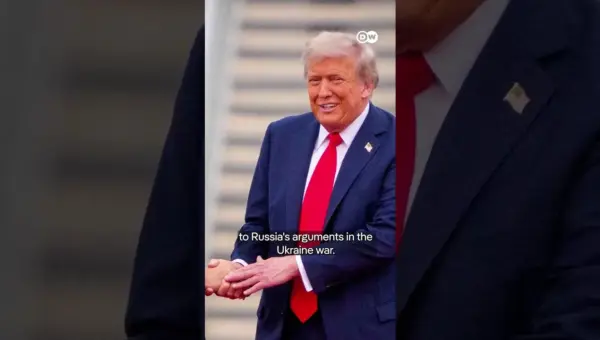
Russia’s Iran Gamble: Strategic Ally or Future Liability?
Russia and Iran's strategic partnership, forged under mutual sanctions, deepens with military cooperation including Iranian drones for Ukraine and Russian arms. However, Moscow's support has limits, impacting its global prestige and potentially risking instability if Iran's regime falters.
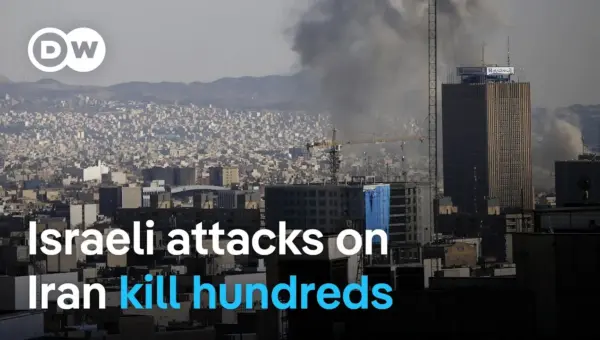
Iran Faces New Strikes Amidst Calls for Regime Change
New strikes target Iranian infrastructure amidst escalating conflict, while citizens face an information blackout and internal repression. Activist Nagin Shiraay discusses the complex sentiments of the Iranian people, their long-standing desire for regime change, and concerns over external intervention.


Oil Surge, Job Losses Hammer Bitcoin Price
Bitcoin's price is under pressure due to escalating geopolitical tensions, a historic oil price surge, and weak US jobs data. Meanwhile, Florida pioneers stablecoin regulation, and innovative AI crypto projects like BitTensor gain attention.