Iran War Disrupts Global Fertilizer Supply, Threatens Food Prices
Geopolitical tensions around the Strait of Hormuz are disrupting global fertilizer supplies, leading to a 30% price increase for U.S. farmers in one week. This crisis threatens to exacerbate global food insecurity and drive up grocery prices worldwide.


Global Fertilizer Market Faces Major Disruption Amidst Iran Tensions
The ongoing geopolitical tensions in the Middle East, particularly around the Strait of Hormuz, are significantly disrupting one of the world’s largest and most critical markets: fertilizer. While oil prices and tanker security dominate headlines, a substantial portion of global fertilizer and its key ingredients, estimated between 30-50%, pass through this vital waterway. This disruption is already leading to a sharp increase in fertilizer prices, with farmers in the United States reporting a 30% jump in costs in just one week, raising concerns about global food security and the potential for a worldwide food crisis.
Understanding the Fertilizer Market and its Importance
Fertilizer, often appearing as small, round pellets resembling gumballs or large BBs, is not a niche commodity but a cornerstone of modern agriculture. These chemical compounds, including urea, phosphates, and nitrates, are essential for boosting crop yields and ensuring the consistent production of food to feed a growing global population. Brian Sullivan, CNBC co-anchor and former chemical fertilizer trader, emphasized the critical nature of these products, stating, “They’re critically vital for growing food around the world.” He highlighted that the current situation is not about outdated agricultural practices but about the fundamental chemical inputs necessary for large-scale food production.
The Strait of Hormuz: A Bottleneck for Fertilizers
The Strait of Hormuz, a narrow waterway connecting the Persian Gulf to the open ocean, is not just a chokepoint for oil but also for a significant volume of fertilizer shipments. “Around the Strait of Hormuz, about 30 to 50% of either the fully produced fertilizers or ingredients in those fertilizers goes through the Strait of Hormuz,” Sullivan explained. This means that any instability or conflict in the region directly impacts the availability and cost of these essential agricultural inputs. The disruption affects not only the physical movement of goods but also creates uncertainty that drives up market prices.
Rising Costs and Farmer Frustration
The immediate consequence of the supply chain disruption is a dramatic increase in fertilizer prices. In the United States, farmers are experiencing significant cost hikes, leading to frustration and concern about their profitability. “The farmers are irritated because their costs are going up,” Sullivan noted. However, the impact is far more severe in many other parts of the world. Farmers in developing nations often operate on razor-thin margins, making them particularly vulnerable to price increases. The concern is that these farmers may be forced to reduce or even cease production altogether if they can no longer afford the necessary fertilizer, potentially leading to widespread food shortages.
The Ripple Effect on Global Food Prices
The escalating cost of fertilizer has a direct and significant ripple effect on the broader food supply chain, impacting everything from livestock to grocery store prices. Sullivan elaborated on this interconnectedness: “WHAT DO CATTLE EAT? THEY EAT CORN, THEY EAT HAY, THEY EAT WHEAT, THEY EAT things that are grown.” As fertilizer prices rise, the cost of growing these animal feed crops increases. This, in turn, drives up the price of beef and other meat products. He pointed out that current record-high beef prices, while influenced by factors like drought and herd culling, are being exacerbated by the rising cost of feed, which is directly linked to fertilizer prices.
Furthermore, the cost of transporting food is also on the rise, compounding the issue. “All those cattle products, all those food products. They’re probably put on a train or a boat or a plane or a truck which are put in with diesel fuel or jet fuel,” Sullivan said. Increased fuel costs, coupled with the higher price of agricultural inputs, contribute to a broader inflationary pressure on food items available to consumers.
Global Food Crisis Implications
The potential for a global food crisis looms large as fertilizer supplies become constrained and prices soar. Nations that are heavily reliant on imported fertilizers and food, such as Pakistan, and major agricultural producers and consumers like Ukraine, are particularly at risk. “IT’S THE COUNTRIES THAT CAN LEAST AFFORD IT,” Sullivan observed, explaining how market dynamics favor buyers with greater purchasing power. When supplies are limited, countries and producers with more financial resources will likely secure the available fertilizer, leaving less for those who are already struggling. This creates a scenario where the most vulnerable populations are disproportionately affected, potentially leading to widespread hunger and instability.
Chef and humanitarian José Andrés has been a vocal advocate for addressing global food insecurity, and the current fertilizer crisis aligns with his concerns about feeding populations affected by disasters and economic hardship. The situation serves as a stark reminder that global stability is intricately linked to the smooth functioning of essential supply chains, far beyond what is typically considered headline news.
Looking Ahead: What to Watch Next
The coming weeks and months will be critical in observing how the global community responds to the fertilizer supply crunch. Key factors to monitor include diplomatic efforts to de-escalate tensions in the Strait of Hormuz, the effectiveness of alternative supply routes, and government interventions aimed at supporting farmers and mitigating food price inflation. The long-term implications for agricultural practices and global food security will depend on the resolution of these immediate challenges and the development of more resilient supply chains.
Source: Iran war is holding up one of the biggest markets in the world – fertilizer (YouTube)

Related Articles

Strait of Hormuz Blockade Sparks Global Energy Crisis
The Strait of Hormuz, a vital global oil shipping route, is effectively shut down amidst escalating conflict between the US and Iran. This blockade has sent oil prices soaring and sparked fears of a wider energy crisis, as Iran vows to restrict passage until attacks cease. Analysts warn of significant global economic fallout and a prolonged period of instability.


Iran Escalates Strait of Hormuz Attacks, US Strikes Back
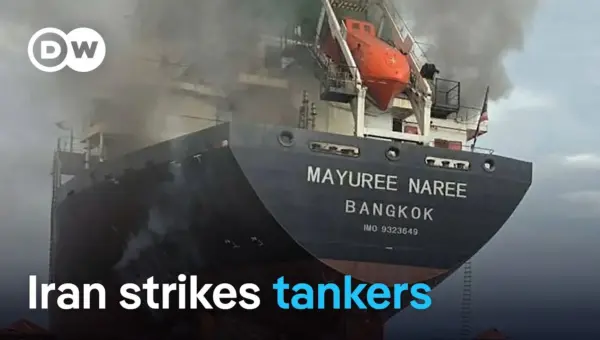
Iran's aggressive targeting of tankers in the Strait of Hormuz has triggered a robust US military response. Amidst conflicting signals on war duration and objectives, the conflict's strategic implications, including potential economic disruption and the human cost of errors like the recent school strike, are under intense scrutiny.


Iran Conflict Threatens Global Food Supply, Sparks Inflation Fears
The conflict in the Middle East has disrupted vital fertilizer shipments through the Strait of Hormuz, threatening global food production and potentially driving up prices for consumers worldwide. Experts warn of increased food inflation and potential shortages.