Iran War Ceasefire: What Did It Achieve?
A fragile two-week ceasefire has been declared between the U.S. and Iran, averting immediate wider conflict and leading to global celebrations and market upticks. While both nations claim victory, experts caution that the truce is a respite, not a resolution, with significant uncertainties remaining about the deal's specifics and the path to lasting peace.

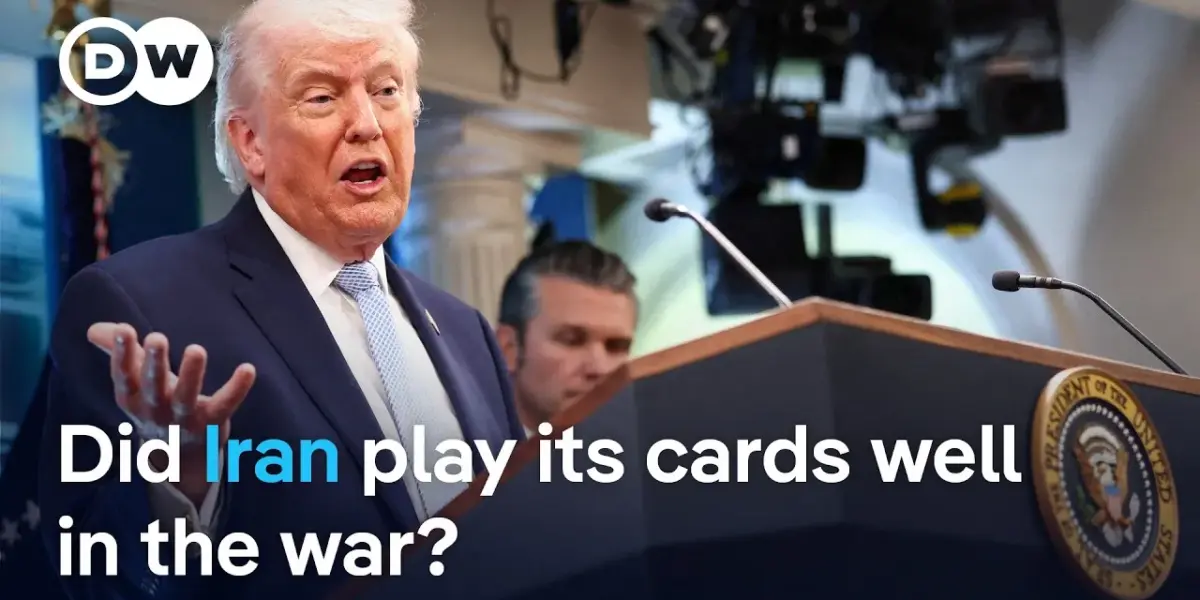
Iran War Ceasefire: Fragile Peace Declared, World Watches
CEASEFIRE – Celebrations erupted across Iran following a two-week ceasefire, narrowly averting a wider conflict and the direct threat of President Trump’s vow to “destroy Iran’s entire civilization.” While details of the deal remain scarce, the reopening of the Strait of Hormuz has been confirmed. World leaders, including those from Germany, Britain, Japan, and Canada, have welcomed the news with cautious optimism, calling for a lasting peace. However, U.S. Defense Secretary Pete Hexath issued a warning: America could strike again if Iran refuses to hand over its enriched uranium.
A War of Words and Claims of Victory
The announcement of the ceasefire came just hours before a deadline set by President Trump in a social media post. What was a hot war quickly turned into a war of words, with both the U.S. and Iran claiming the agreement as a national triumph. Iranian state television hailed what it called Iran’s victory, stating, “Our fingers are still on the trigger. The enemy has suffered an undeniable, historic, and crushing defeat in its cowardly, illegal, and criminal war against the Iranian nation.” President Trump, in turn, posted that Iran had “had enough” and predicted a “golden age of the Middle East.”
Global Reactions and Market Impacts
Political and religious leaders worldwide offered positive, though less strident, reactions. German Chancellor Angela Merkel stated, “I welcome with satisfaction and as a sign of true hope the announcement of an immediate truce for two weeks. Only through going back to the negotiations can we reach the end of the war.” The United Nations Secretary-General António Guterres added, “We welcome the ceasefire reached and hope that it leads to a lasting peace in West Asia. Deescalation, dialogue, and diplomacy are essential to bring an early end to the ongoing conflict.” Global markets responded enthusiastically. Tokyo’s Nikkei index saw stocks rise by over 5% within minutes of opening. The agreement to ease restrictions on the Strait of Hormuz also caused global oil prices to plummet from recent record highs.
Expert Analysis: A Respite, Not a Resolution
Bradley Bowman, a senior director at the Foundation for the Defense of Democracies, offered a balanced perspective. “If the ceasefire holds… that’ll be positive humanitarian effects for civilians in Iran and Israel and the Gulf,” he noted. “We’ve already seen impacts on the energy markets.” Bowman also pointed out that both militaries would use this time to recover and prepare for potential future conflicts. He acknowledged the heavy cost, stating, “Are you any clearer what thousands of people, including 200 Iranian school girls and 13 U.S. military personnel, gave their lives for?”
Military Gains and Lingering Questions
Bowman cited U.S. Chairman of the Joint Chiefs of Staff General Kaine, who reported significant degradation of Iran’s military capabilities. “U.S. forces have destroyed approximately 80%… of Iran’s air defense systems, sunk about 90% of its regular fleet… destroyed about 95% of their Iranian naval mines… more than 80% of its missile facilities are gone.” However, Bowman cautioned, “That is severe degradation. That is not destruction.” He added, “From an American perspective, that is a good thing, but it’s also not a mission accomplished thing.” This raises the question of what was truly achieved, as Iran’s leadership remains in place despite extensive military strikes and billions spent on munitions.
The Strait of Hormuz: A Strategic Chokepoint
The conflict highlighted the strategic importance of the Strait of Hormuz. Bowman explained that the Pentagon had long-standing war plans for this scenario. He noted that the use of drones, a tactic Iran employed effectively, was not entirely surprising, especially given Iran’s assistance to Russia in Ukraine. “They didn’t need to hit all ships, just a few to make shippers and insurance companies nervous. And they succeeded in doing that.” Bowman clarified that the U.S. military did not stand idly by but faced constraints. “There’s also an issue of military capacity. It would have been very foolish… We would have lost dozens or hundreds of American service members if we had tried to fully retake the strait before we had addressed their ability to target things in the strait.” The operation was necessarily sequential: degrade capabilities first, then secure the strait.
Diplomacy Over Destruction?
Bowman argued that if the Strait of Hormuz can be reopened through diplomacy, while also pocketing the severe degradation of Iran’s military, it represents a positive outcome. “After all, we do support diplomatic solutions. Correct? Or would you rather see the war continue for weeks and weeks and weeks and lots of more people dying?” He emphasized that the U.S. supports a diplomatic path, especially if it leads to a good outcome. However, he remained skeptical about the Iranian regime agreeing to core U.S. demands, which include ending its nuclear program, curtailing its ballistic missile program, and ceasing support for terrorism.
Uncertainty Surrounds the Ceasefire Details
Simon Mabin, a political scientist at Lancaster University, echoed the sentiment of uncertainty. “There’s a great deal of uncertainty and that pertains to what’s actually been agreed.” He described the agreement as a pause in hostilities, with the U.S. and Iran stopping reciprocal attacks, and Israel stopping attacks on Iran. However, Mabin noted, “Beyond that, this is where it starts to get a bit murky.” Key questions remain about whether the ceasefire includes conflicts in Lebanon, attacks on Houthis, or actions in Iraq. The parameters of diplomatic talks for a lasting peace are also unclear, though the immediate goal is to prevent the “destruction of Iranian civilization,” as President Trump put it.
Building Trust and Defining Terms
Mabin highlighted the need to build trust between the parties. “If we look at what happened last June… Iran was engaging diplomatically with the United States and it was the U.S. that either unilaterally withdrew from the talks or started to engage in military activity against the Islamic Republic.” This history has left Iran deeply suspicious of U.S. intentions. Conversely, the U.S. remains wary of Iran continuing to support groups like Hezbollah and potentially using the ceasefire to enhance its missile capabilities.
The Strait of Hormuz: Open, But Not Unimpeded
Regarding the Strait of Hormuz, Mabin explained that while the U.S. desires complete freedom of shipping, Iran has stated that ships must comply with the Revolutionary Guard Corps (IRGC). This creates a tension between U.S. demands for free passage and Iran’s assertion of control. “Prior to the onset of this war the strait was open fully open, the Iranians were not imposing any type of tolls over shipping through the straight and now they are.” Furthermore, even with the ceasefire, the shipping industry lacks confidence. Only two ships have reportedly passed through, with Norway stating they have no confidence yet. A slow reluctance from ships is expected until the situation on the ground becomes clearer and Iran’s de facto control over the strait is better understood.
What’s Next?
The immediate focus will be on whether the two-week ceasefire holds and if diplomatic channels can be used to address the core issues dividing the U.S. and Iran. The international community will be watching closely to see if trust can be built and if tangible steps are taken towards de-escalation, dialogue, and a lasting peace in the region. The willingness of both sides, particularly the Iranian regime, to negotiate on fundamental demands like its nuclear program and support for terrorism will be critical in determining the long-term outcome.
Source: What did the Iran war actually achieve? | DW News (YouTube)

Related Articles

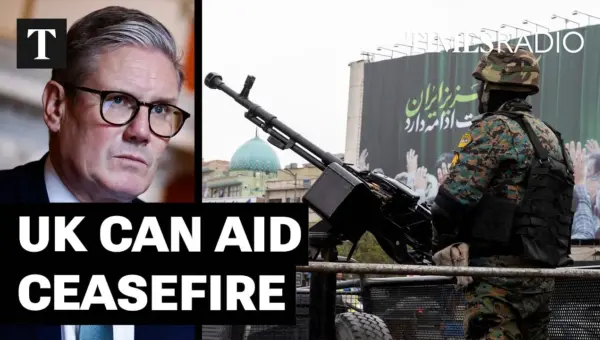
UK Offers Iran Negotiation Insight to Aid Trump’s Stalled Deal
The UK is offering its diplomatic expertise to the US to help President Trump navigate complex negotiations with Iran. As talks loom amidst uncertainty and strained UK-US relations, London believes its experience can aid in achieving a settlement and reopening the Strait of Hormuz. Discussions also highlight the UK's defense readiness and its role in regional stability.

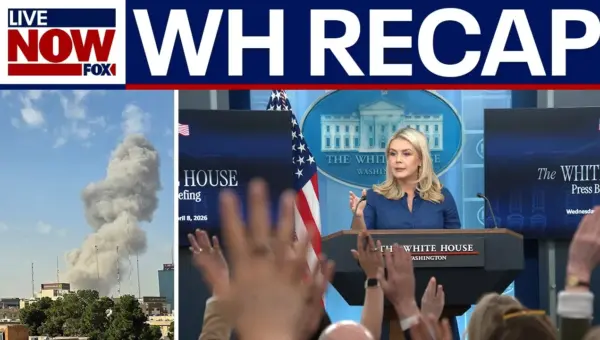
Iran Nuclear Talks Heat Up Amid Ceasefire Concerns
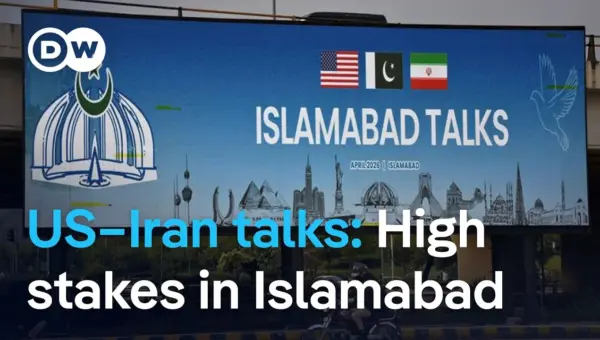
The White House is clarifying its stance on Iran's nuclear program, emphasizing that enrichment is off the table. Meanwhile, a high-level delegation is heading to Pakistan for critical talks amid reports of continued hostilities and the alleged closure of the Strait of Hormuz, testing a fragile ceasefire.
US-Iran Talks Falter Amid Hormuz Standoff, Ceasefire Strain
A fragile ceasefire between the US and Iran is under severe strain as tensions rise over the critical Strait of Hormuz. Both nations accuse each other of violating the terms of a recent deal, while international efforts to secure the vital shipping lane intensify. Crucial peace talks are underway in Pakistan, but deep-seated distrust and maximalist demands from both sides cast doubt on the likelihood of a comprehensive agreement.