Iran War Ceasefire: A Fragile Pause or a Path to Peace?
A recent ceasefire between the U.S. and Iran offers a temporary pause in conflict, but its long-term success is uncertain. Analyst Jacob Olidor notes the "fragile" nature of the truce, emphasizing that Iran's adherence to the terms is critical. The situation exposes internal Iranian political chaos and highlights U.S. economic leverage.

Iran War Ceasefire: A Fragile Pause or a Path to Peace?
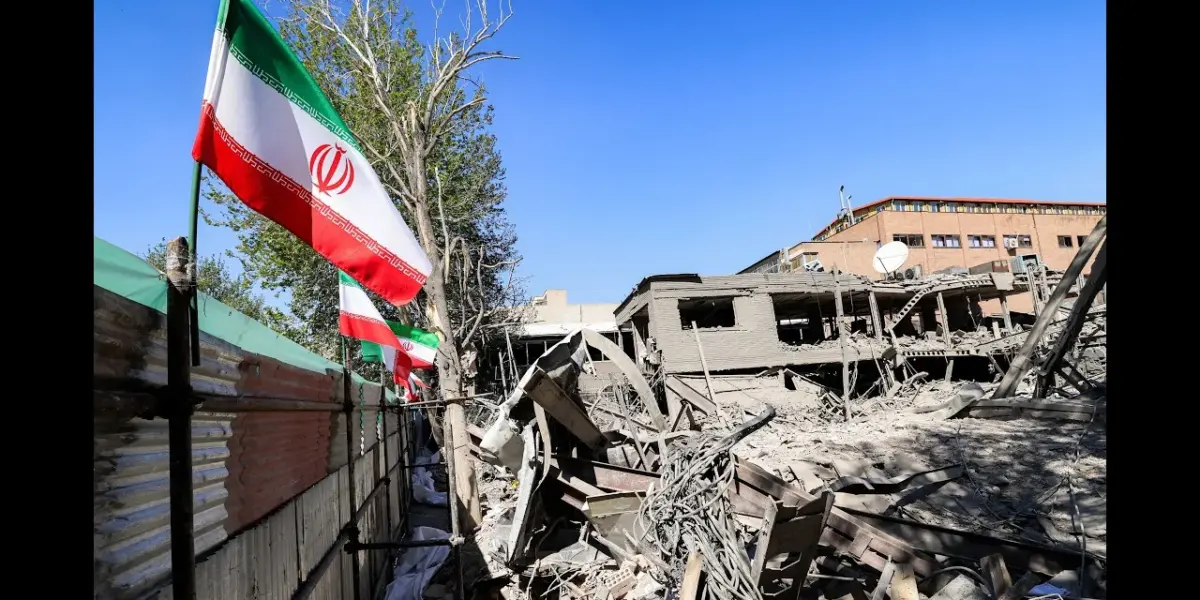
A recent ceasefire between the United States and Iran has brought a temporary halt to military actions, but questions linger about its long-term impact. National security policy analyst Jacob Olidor described the agreement as an “important moment” but cautioned that its success hinges on Iran upholding its end of the deal. This pause in fighting comes after significant military operations by the U.S. aimed at countering a global threat posed by the Iranian regime.
The ceasefire was announced at the “11th hour,” meaning it was a very last-minute development. Olidor explained that this agreement is not a final peace treaty but rather the start of a complex negotiation process. The initial reaction was one of cautious optimism, recognizing that any progress is significant, but also acknowledging the deep-seated issues that need to be addressed.
A Fragile Truce?
Vice President JD Vance characterized the ceasefire as “fragile,” a sentiment echoed by Olidor. The strength of this truce depends entirely on the Iranian regime’s willingness to comply. Even as the announcement was made, missiles were reportedly still flying to various Middle Eastern capitals, indicating that hostilities may not have fully ceased. A key demand of this agreement is the reopening of a vital strait, a condition that will be closely watched.
With only two weeks having passed since the ceasefire began, Olidor stressed that it’s still very early days. The true test will be how Iran behaves in the coming weeks and months. The history of dealing with the Iranian regime suggests that vigilance and clear expectations are crucial.
Internal Chaos in Iran
Olidor pointed out that the very nature of the ceasefire announcement revealed internal struggles within the Iranian regime. The statement came from the Foreign Minister on behalf of the National Security Council, with no mention of the Ayatollah. The Iranian President has also been sidelined. This internal disarray suggests that command and control within Iran’s military forces might be unstable.
The United States holds significant economic and military leverage over Iran. Years of imposing historic sanctions have weakened Iran’s economy. Furthermore, the U.S. has achieved energy independence, meaning it is no longer directly reliant on the Strait of Hormuz for its own energy needs. This gives the U.S. more flexibility and reduces Iran’s ability to disrupt global energy supplies.
Partners of the U.S. are also developing alternative energy routes, as seen with announcements from Saudi Arabia and the UAE. This collective effort further limits Iran’s influence. The U.S. is also prepared to impose a 50% tariff on goods from any country supplying military weapons to Iran, a move seen as a direct message to China.
China’s Role and Nuclear Concerns
China has been a significant consumer of Iranian oil and relies on the Strait of Hormuz for its transport. Therefore, China has a vested interest in stability in the region and was reportedly eager to push for a ceasefire on Iran’s behalf. However, China also has much to lose if the Iranian regime collapses or if military conflicts escalate.
A critical issue in any potential agreement is Iran’s enriched uranium. Olidor stated that this uranium must be accounted for, whether by the United States or the International Atomic Energy Agency (IAEA). It cannot be allowed to remain in the Iranian regime’s possession. This is a key point that needs to be addressed for any lasting peace.
Media Misinterpretations
Olidor strongly criticized some mainstream media outlets for their reporting on the ceasefire. He called claims that Iran had declared victory “completely misguided” and a “fundamental misreading” of the situation. He argued that these outlets are falling victim to Iran’s disinformation campaign, which he described as one of their key weapons.
He credited parts of the U.S. government, like Central Command, for providing real-time data and context. He also noted that some columnists have offered important historical context, highlighting the significance of U.S. military achievements. Olidor believes this situation reflects poorly on the mainstream media’s understanding of geopolitics and the history of the Iranian regime.
Why This Matters
The ceasefire represents a crucial juncture in a long-standing conflict. The outcome will have far-reaching implications for regional stability, global energy markets, and international relations. The U.S. approach, emphasizing economic leverage and clear demands, signals a strategic shift. It highlights the potential for diplomacy to succeed when backed by strong economic and military positions.
Implications and Future Outlook
If Iran adheres to the ceasefire and engages in good-faith negotiations, it could pave the way for de-escalation and potentially a more stable Middle East. However, if Iran violates the terms, the U.S. is prepared to exert further pressure. The involvement of China also adds another layer of complexity, as its economic ties to Iran could influence its actions.
The handling of Iran’s nuclear program remains a central concern. Any successful resolution must address the enriched uranium stockpile to prevent Iran from developing nuclear weapons. The effectiveness of international monitoring and enforcement will be paramount.
Historical Context
The current situation is rooted in decades of tension between the U.S. and Iran, marked by diplomatic disputes, sanctions, and proxy conflicts. Past attempts at negotiation have often stalled due to mistrust and differing objectives. The recent military actions by the U.S. can be seen as a response to perceived threats and provocations from Iran, leading to the current fragile state of affairs.
The analyst’s focus on Iran’s internal political dynamics is also significant. Understanding the power struggles within the regime is key to predicting its future behavior and the likelihood of a lasting agreement. The U.S. strategy appears to be leveraging these internal divisions while also presenting a united front externally.
Source: Ceasefire an ‘Important Moment’ in Iran War, Says National Security Policy Analyst (YouTube)

Related Articles

Middle East Tensions Spark Oil Rally, Inflation Fears
Renewed Middle East conflict and a U.S. naval blockade of the Strait of Hormuz have sent oil prices soaring and sparked fears of a 1970s-style economic crisis. Investors are watching closely as rising oil costs threaten to worsen inflation and force the Federal Reserve into difficult interest rate decisions.

Trump’s Ceasefire Claims Crumble Amidst Real-World Violence
Claims of a ceasefire were exposed as fabrications amidst ongoing violence, particularly in Lebanon, where a single day saw a record death toll. This situation highlights the dangers of political narratives clashing with harsh realities and questions the integrity of diplomatic pronouncements during conflict.

US Tightens Grip: Iran Strait Blockade Sparks Global Oil Fears
The U.S. is threatening to block Iranian ports, a move that could severely disrupt global oil supplies. This action tests international law and puts major economies like China and India at risk of inflation. The standoff signals a potential shift in global power dynamics.