Iran War Backfires? Analyst Warns Trump of Escalation Risks
Military analyst Sean Bell warns that President Trump's strategy in confronting Iran could backfire, leading to increased US casualties. He highlights the persistent threat of Iranian drones and missiles, Russia's potential strategic gains, and the unclear political endgame for the conflict.

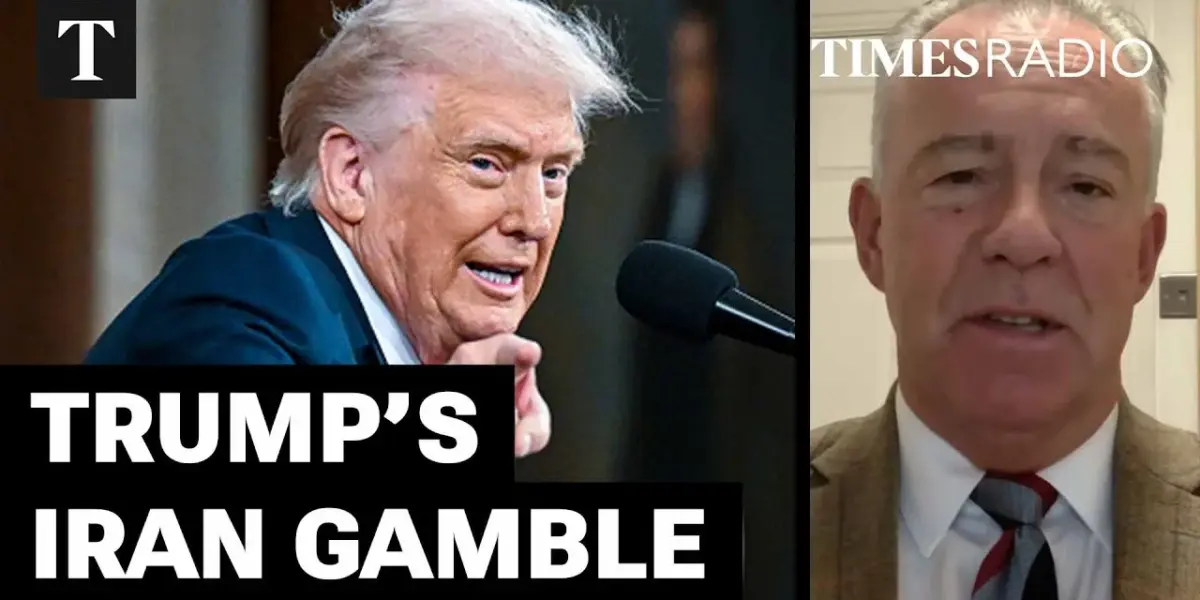
Iran Conflict: US Faces Escalation as Drones Strike Key Radar
In a stark warning about the escalating conflict with Iran, military analyst and former RAF pilot Sean Bell suggested that President Trump’s strategy could backfire, potentially leading to increased casualties and unforeseen consequences. The White House has presented a narrative of success, releasing dramatic montages of military strikes. However, Bell argues that the reality on the ground is a war of attrition, where low-cost Iranian drones and ballistic missiles pose a persistent threat, even if most are intercepted.
Russia’s Shadowy Role in Iran Conflict
Bell also shed light on the potential involvement of Russia, suggesting the nation has a vested interest in the continuation of the conflict. “There’s no doubt that Russia has a lot of intelligence available, satellite intelligence and the like of um the US positions, the Israeli positions in the region,” Bell stated. He outlined several reasons for Russia’s potential benefit: rising oil prices bolstering its struggling economy, a distraction from the conflict in Ukraine, and the depletion of Western weapons stockpiles that could otherwise be sent to Ukraine.
“The more that get used by the Americans and the Israelis in Iran, the fewer are available to actually give to Ukraine,” Bell explained, highlighting the complex geopolitical chess match at play.
The ‘Lucky Shot’ Threat: Drones and Casualties
The recent report of Iran striking a key radar system crucial for US missile defense batteries in the Gulf underscores Bell’s concerns. While acknowledging that Iran is not a superpower and its air defense capabilities are being systematically dismantled, he emphasized the persistent threat posed by its arsenal of ballistic missiles and drones.
“Even if you had said 99% will get shot down, then one is going to get through every now and again and going to cause some damage.”
Bell’s primary concern lies not just with the damage to military assets, but the potential human cost. “My bigger concern here is that if you can get one drone gets through and actually strikes a radar, what happens if one gets through and kills 50 American soldiers?” he posed. He noted that currently, the narrative favors the US, with reports of Iranian casualties. However, he warned, “What happens when he gets his hands further in the mangle and Iran gets lucky?”
Unclear Political Endgame: Ground Troops and Off-Ramps
Discussing the possibility of ground troop deployment, Bell expressed skepticism, pointing to the lack of a clear political objective. “You won’t engineer a regime change, for example, simply from the air. And all that Iran has to do is hunker down,” he observed. He suggested that President Trump, mindful of his election promise to “bring peace” and “end wars,” may be seeking an off-ramp from the conflict rather than a prolonged engagement.
“It’s very difficult to see if you put boots on the ground, you’re in it for the long term. You will end up with a lot more casualties,” Bell stated, implying that troop deployment would be politically untenable for the President.
Proxy Warfare: Houthis and Regional Instability
The role of Iran’s regional proxies, including Hezbollah and potentially the Houthis, adds another layer of complexity. While Hamas is currently contained and Hezbollah is facing significant pressure from Israel, Bell noted the Houthis’ past actions in disrupting shipping in the Red Sea.
“It may be that a lot of the expertise they use there could be invaluable,” Bell said, suggesting Iran could leverage the Houthis’ capabilities. He also pointed out that Iran could explore other avenues, such as sponsoring terror acts in other countries, to retaliate.
Civilian Aviation at Risk Amidst Missile Threats
The evacuation of Abu Dhabi airport due to a missile alert highlighted the vulnerability of civilian airspace. Bell explained the inherent risks to commercial aircraft, describing them as “vulnerable, they’re big, near the ground, they’re slow, and of course, you’ve got their pack full of people.”
While warning systems for slower drones can provide some lead time, ballistic missiles offer only minutes of warning. The danger of falling debris and explosives from intercepted missiles poses a catastrophic risk to fuel-laden civilian aircraft. Bell expressed surprise that air travel was still operational in such a volatile environment.
Looking Ahead: The Uncertain Future of the Conflict
As the conflict simmers, the strategic objectives remain unclear, and the potential for escalation looms large. The interplay of geopolitical interests, particularly Russia’s involvement, and the unpredictable nature of proxy warfare, suggest that the situation could evolve in unexpected ways. The risk of miscalculation, leading to increased casualties on all sides, remains a significant concern, particularly for President Trump as he navigates domestic political pressures and the broader implications of a prolonged Middle Eastern entanglement.
Source: How Trump’s Iran War Could Backfire On The President | Sean Bell (YouTube)

Related Articles


Pakistanis Protest Iran Conflict, Denounce ‘Barbarism’
Thousands of Pakistanis protested the Iran conflict, denouncing it as 'barbarism' and a violation of international law. Demonstrators voiced solidarity with the oppressed and called for adherence to UN principles.

Trump Fuels Iran Ground War Fears, Kurds Tipped for Uprising
The US is reportedly arming Kurdish groups near Iran's border, fueling fears of a ground war orchestrated by the Trump administration. As tensions escalate, regional powers and international observers watch closely for signs of de-escalation or further conflict.

Jobs Crisis: Trump’s Economy Faces Devastating Setback
The February jobs report reveals a shocking loss of 92,000 American jobs, marking the worst performance of the Trump administration. This data challenges optimistic economic narratives and raises critical questions about governance and policy. The analysis delves into media reactions, economic indicators, and the broader implications for the nation's financial future.