Iran War: Assassinations Fail to Topple Leaders, Experts Say
Targeting top leaders through assassination, a tactic recently employed against Iran's political elite, often fails to achieve its intended goals. Experts suggest this strategy can backfire, potentially empowering more extreme individuals and hardening opposition rather than weakening a regime. This approach, while seemingly direct, carries significant risks that have historically led to unintended consequences.

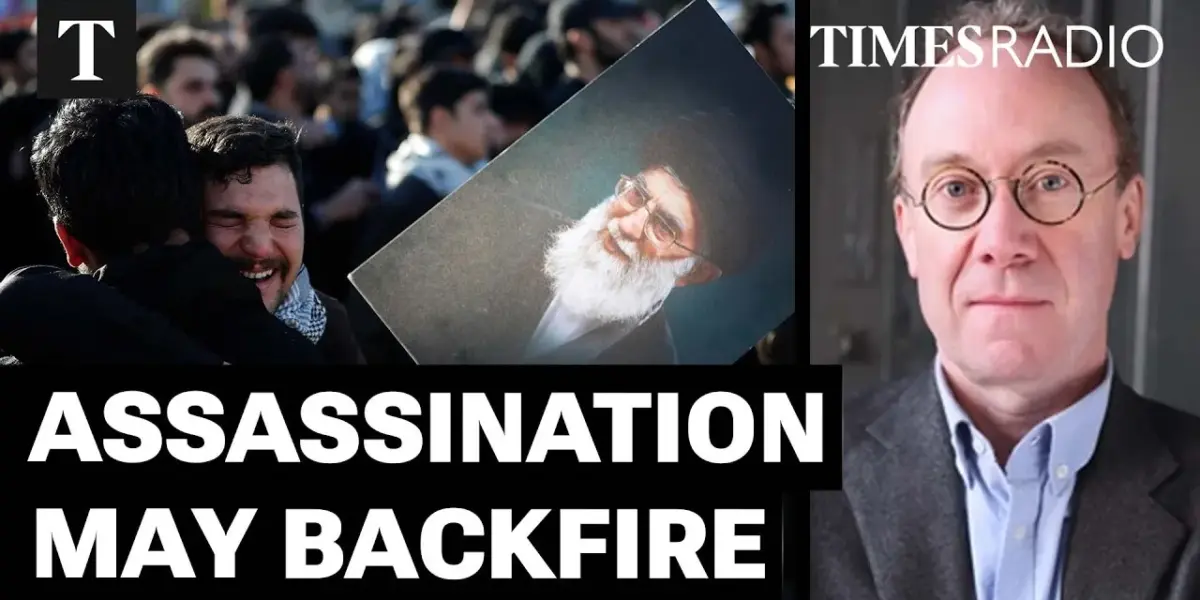
Why Political Assassinations Often Fail
Targeting top leaders through assassination, a tactic recently employed against Iran’s political elite, often fails to achieve its intended goals. Experts suggest this strategy can backfire, potentially empowering more extreme individuals and hardening opposition rather than weakening a regime. This approach, while seemingly direct, carries significant risks that have historically led to unintended consequences.
Decades of Planning, Uncertain Outcomes
The recent assassination of Iran’s Supreme Leader, Ayatollah Alamini, marked the culmination of a long-term intelligence effort by Israeli and US services. However, the ultimate success of this tactic in changing the course of the conflict remains highly questionable. While such operations can create significant disruption and fear, they rarely lead to the collapse of a regime.
Ben Macintyre, an associate editor and writer for The Times, explains that history shows a pattern of such attempts not yielding the desired political change. He notes that the effectiveness of assassinating key figures is “extremely dubious.”
Historical Precedents Show Risks
During World War II, Allied leaders like Churchill and Eisenhower considered assassinating senior Nazi generals. This plan was ultimately rejected for several reasons. A primary concern was the potential for massive retaliation, similar to the brutal reprisals that followed the killing of Reinhard Heydrich in Czechoslovakia.
Furthermore, there was a fear that removing one leader might result in a successor who was even more formidable or fanatical. In the case of Nazi Germany, some believed Heinrich Himmler, though perhaps a better military leader than Hitler, was a more dangerous adversary.
“If you start knocking off the big fish, you may end up getting people of the next rung who are who are even more fanatical.”
This concern is echoed in the current situation in Iran, where the second tier of IRGC leaders is thought to be even more committed and radical than those who have already been targeted.
The Hydra Effect and Iranian Resistance
The Iranian regime has been compared to a hydra, a mythical creature with many heads. The idea is that even if one head is cut off, more will grow back in its place. This analogy highlights the deep structure of the IRGC, which has leadership extending many levels down.
While spectacular strikes can destabilize the regime by creating fear and disrupting command structures, they may not fundamentally alter the war’s direction. The sophistication of intelligence gathering, allowing for the tracking and targeting of individuals anywhere, certainly impacts the Iranian leadership. However, this is countered by Iran’s cultural and religious tradition of martyrdom.
In Shia Islam, martyrdom is seen as a direct path to heaven. What Western observers might view as a debilitating blow, many in Iran may interpret as a just reward for leaders who are seen as deserving it. This differing perspective means that assassinations can be viewed not as defeats, but as acts of faith or validation.
Radicalization and Hardening Stances
The deaths of prominent figures can also have the effect of radicalizing those who remain. The large public mourning for assassinated leaders, even in a regime with declining popularity, indicates a dedicated base of support. The killing of their leaders can galvanize this core group, potentially increasing their fanaticism and resolve.
This was a key reason Churchill opposed assassinating top Nazi leaders; he believed it would only strengthen the resolve of groups like the SS. The fear is that such actions in Iran could similarly embolden the more extreme elements within the IRGC.
Israel’s Continued Action and US Withdrawal
Even if the United States were to withdraw from the conflict, it is widely expected that Israel would continue its targeted strikes. The effectiveness of Mossad, Israel’s intelligence agency, in carrying out these operations is well-established.
There may have been an expectation in Washington that Iran would collapse following the removal of its top leaders, similar to what was hoped for in Venezuela. However, this has not yet materialized. While the assassinations have disrupted command and control, the broader public reaction and the regime’s stability are still difficult to fully assess due to reporting limitations within Iran.
Personalized Warfare and Its Limits
The current conflict is characterized by a shift towards “personalized warfare,” where individual leaders are targeted rather than engaging in traditional battlefield combat. This is a tactic that both sides have employed, with Iran also having a history of targeting individuals abroad.
This approach differs from traditional methods of regime change, which historically have involved complete military victory and boots on the ground, as seen in the invasion and partition of Nazi Germany. Air bombing campaigns, while destructive, have rarely proven effective in changing a regime’s fundamental nature.
Ideology as a ‘Virus’
Macintyre suggests that the Iranian regime is less like an octopus, which can be decapitated, and more like a virus. This ideology has deeply permeated Iranian society, supported by severe repression, propaganda, and a vast security apparatus.
Removing such an ingrained ideological system is exceptionally difficult and cannot be achieved through bombs or drones alone. Ultimately, significant change may require altering people’s minds, a process that the current campaign of assassinations might either aid or hinder. The true impact of these targeted killings on Iranian public opinion and the regime’s future remains to be seen in the coming weeks.
Source: Iran War: Why Political Assassinations Often Fail | Ben Macintyre (YouTube)

Related Articles


Iran Targets US With Cyberattacks, Escalating Digital Warfare
Iran is increasingly using cyberattacks to challenge the U.S., as seen in a recent hack of the FBI director's account. Experts say this is a strategic shift due to Iran's limitations in conventional warfare. The U.S. needs to strengthen its digital defenses, focusing on encryption and cloud computing, rather than solely relying on traditional security measures.


Iran Hacks FBI Chief, Exposing U.S. Cyber Vulnerabilities
A recent hack of FBI Director Kash Patel's personal email by an Iran-linked group highlights Iran's growing cyber threat to the U.S. Experts explain how simple security oversights are exploited, emphasizing the need for basic defenses like two-factor authentication to protect against propaganda and potential infrastructure attacks.

Ukraine Strikes Russian Oil Refinery, Eyes Iran Threat
Ukrainian forces struck a key Russian oil refinery, disrupting Moscow's war capabilities. Meanwhile, Finland's president urged continued U.S. support for Ukraine, as Kyiv shares its air defense expertise globally amid growing geopolitical complexities involving Iran and potential sanctions against Hungary.