Iran-US Nuclear Talks: Progress or Peril?
Mediators from Oman report significant progress in U.S.-Iran nuclear talks, with further discussions set for Vienna. Despite diplomatic efforts, underlying tensions persist as the U.S. conducts a major military buildup in the Middle East.

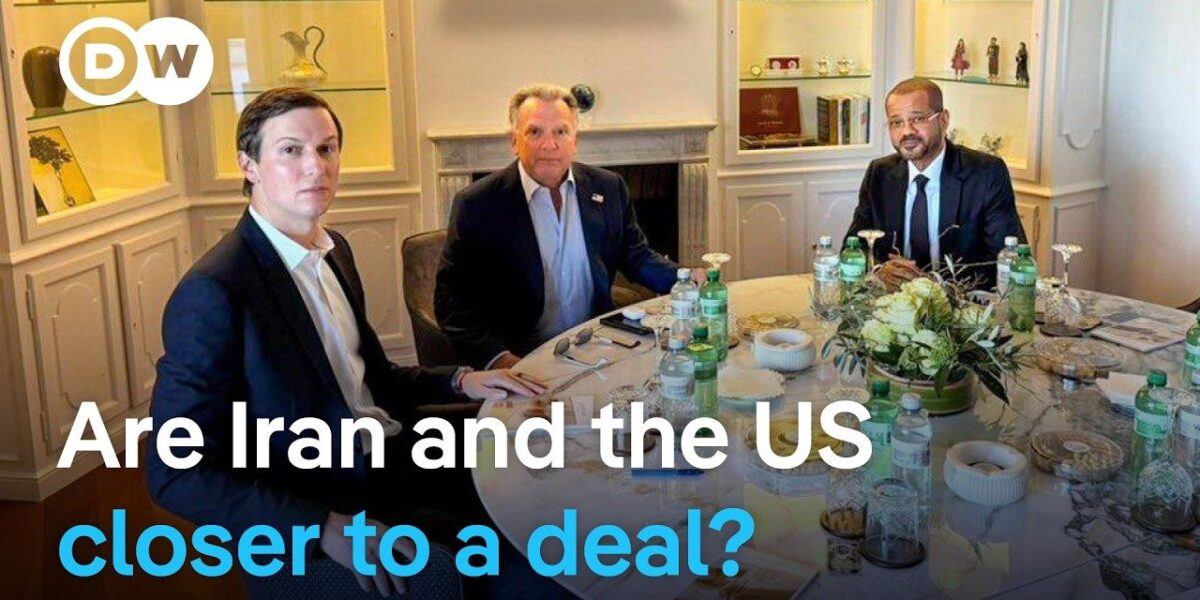
Oman-Mediated Talks Signal Progress on Iran’s Nuclear Program
Mediators from Oman have announced significant progress in the latest round of negotiations between the United States and Iran concerning Iran’s nuclear program. The talks, held in Geneva, were described by Iran’s foreign minister as among the most intense to date. Further discussions are scheduled for next week in Vienna, with these diplomatic efforts widely seen as a critical juncture in averting potential U.S. military action.
Underlying Tensions and Diplomatic Strategies
The United States accuses Iran of seeking to develop nuclear weapons, a charge consistently denied by Tehran. Benham Ben Taliblau, a senior fellow at the Foundation for Defense of Democracies, a U.S. think tank advocating for stringent sanctions against Iran, offered insights into the complex dynamics at play. He noted that diplomacy and assertive rhetoric can coexist, citing past interactions between Tehran and the Trump administration.
“I think the exercise in diplomacy and tough talk in 2026 between Tehran and the Trump administration shows that you can do both at the same time.”
The announcement of a fourth round of talks, specifically focusing on technical issues, suggests that both sides are still engaged in seeking a resolution. However, Ben Taliblau cautioned that this diplomatic engagement occurs alongside tangible efforts to bolster positions in the real world. The U.S. is increasing its military assets in the region, while Iran continues its rebuilding and hardening efforts.
Narrative Warfare and International Perception
A notable difference in communication strategies has emerged, with Iran actively publicizing progress after each round of negotiations, while the U.S. has remained largely silent. Ben Taliblau suggests this reflects a broader Iranian approach, often amplified through the Supreme Leader’s pronouncements and social media, aimed at shaping the international narrative.
“Actually, a lot of stuff is being run through Washington and in particular the president’s public comments and the president’s social media feed rather than that of the individual negotiators. Perhaps that’s a matter of style versus substance. But that in my view explains why the Iranians are trying to go full court press. They’re trying to shape the narrative.”
This focus on narrative control is seen as crucial for Iran’s leadership, particularly for Supreme Leader Ali Khamenei, who appears as invested in winning the information war as in any potential military confrontation.
Regime Survival and Deterrence
The ongoing talks are intrinsically linked to the survival of the Islamic Republic. Historically, Iran’s engagement in negotiations has often been aimed at securing sanctions relief. However, recent reports suggest a shift, with Tehran seeking to leverage the current administration to its economic benefit, rather than focusing solely on sanctions reduction.
Ben Taliblau elaborated on Iran’s motivations for engaging in these high-stakes discussions:
- Deterrence: To prevent a U.S. attack by signaling a willingness to negotiate.
- Impediment: To potentially delay or complicate any U.S. military planning.
- Domestic Control: To demoralize domestic protesters and reduce the likelihood of internal unrest following any potential military strike, especially given past U.S. support for opposition movements.
Tehran appears to believe that prolonged negotiations may diminish the resolve of the Iranian populace and reduce the potential for widespread protests in the event of hostilities.
Potential U.S. Military Scenarios
The current situation is underscored by the most significant U.S. military buildup in the Middle East in two decades. The nature and scope of potential U.S. strikes remain a critical question, with several possibilities being considered:
- Decapitation Strikes: Targeting key political or military leaders to destabilize the regime or incite internal upheaval.
- Strategic Systems Neutralization: Focusing on Iran’s air defense systems, ballistic missiles, long-range strike capabilities like cruise missiles and drones.
- Nuclear Program Disruption: Targeting any remaining elements of Iran’s nuclear infrastructure.
- Regime Change Facilitation: Actions aimed at paving the way for the overthrow of the current government.
The article highlights that President Trump has not yet publicly defined the political objectives behind any potential use of force, leaving a wide range of military options on the table.
Looking Ahead
As negotiations continue, the international community watches closely. The upcoming talks in Vienna will be crucial in determining whether diplomacy can de-escalate tensions or if the current military buildup signals an impending confrontation. The interplay between diplomatic maneuvering, Iran’s internal dynamics, and the U.S.’s strategic calculus will shape the future of the region.
Source: Oman: Iran, US talks end after significant progress | DW News (YouTube)

Related Articles

Trump: Iran Strikes Ahead of Schedule, Expects ‘Great Deal for World’
Three U.S. service members have been killed amid escalating conflict with Iran, President Trump confirmed. He stated that strikes are ahead of schedule, with senior Iranian leaders killed, and expressed optimism for a "great deal for the world" despite ongoing talks with Iranian officials.

Trump’s Putin Stance: US Strategy and Global Implications
Analysis suggests Donald Trump's approach to the Ukraine war involves pressuring Kyiv, but US involvement is crucial for resolution. China's influence and the 'MAGA' agenda's geopolitical implications are key factors.


US Strikes Iran: Mounk and Fukuyama Discuss Unpredictable Conflict
Leading political scientists Yascha Mounk and Francis Fukuyama analyze the recent US strikes on Iran, warning of unpredictable outcomes and internal instability. They question the objectives of the "war of choice" and its potential to destabilize the region, while also discussing the shifting global perceptions of Israel.