Iran Unleashes Missile Barrage: Direct Hits Spark Escalating Conflict
Iran has unleashed a significant barrage of ballistic missiles on Israel, with reports confirming direct hits and the use of powerful, potentially indiscriminate weaponry. This escalation is met with retaliatory strikes on Iranian targets, signaling a dangerous new phase of direct conflict.

Iran Unleashes Missile Barrage: Direct Hits Spark Escalating Conflict
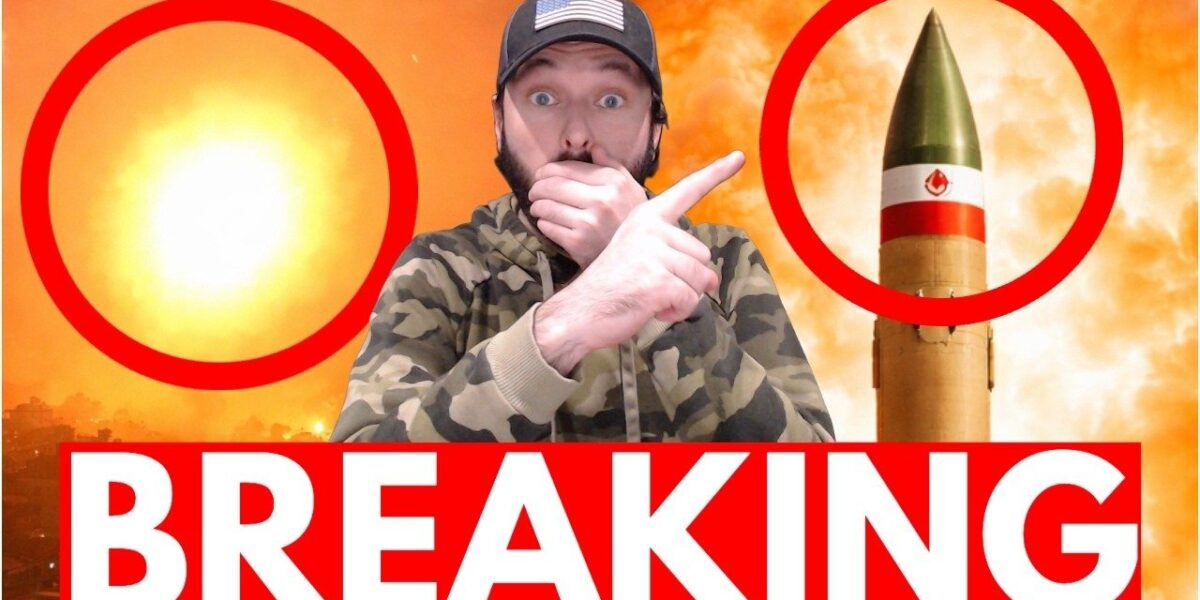
In a rapidly escalating and deeply concerning turn of events, Iran has launched a significant barrage of ballistic missiles targeting Israel. The scale and nature of this attack, occurring on the night of March 1st, mark a perilous new phase in regional tensions, with reports indicating direct hits and the use of more powerful weaponry than previously observed. The unfolding situation is described as “horrifying” and “insanely violent,” with terrifying footage emerging from the ground.
A Devastating Arsenal Deployed
Reports indicate that Iran is employing ballistic missiles armed with cluster munitions, a weapon known for its brutal and indiscriminate nature. Unlike precision strikes, cluster munitions disperse bomblets over a wide area, increasing the risk of civilian casualties and widespread damage. The visual evidence from the ground, though disturbing, shows a night sky illuminated by incoming missiles, the roar of air defense systems attempting to intercept them, and the devastating impact of successful strikes.
Direct Hits and Escalating Violence
The most alarming aspect of the attack is the confirmed scoring of direct hits on Israeli soil. Footage circulating shows the trajectory of these missiles, the sounds of explosions, and the subsequent plumes of smoke and fire. One particularly striking piece of evidence points to a direct hit in Jerusalem, with a massive barrage targeting the Israeli capital. The raw, unedited footage captures the chaos, with sounds of interceptors engaging and the visceral impact of the weapons hitting their targets. The visual of a “massive fireball smoke where the ballistic missile hit” underscores the destructive power unleashed.
Retaliatory Strikes and Shifting Dynamics
Simultaneously, the conflict is not one-sided. Footage also depicts extensive strikes being carried out against Iranian targets within Iran itself. These strikes, involving fighter jets and bombs, have resulted in massive explosions, smoke, and fire across multiple locations. The narrative suggests that the United States and Israel have established air superiority, with their aircraft operating “with zero resistance.” These actions appear to be a direct response to Iran’s aggression, aimed at degrading its military capabilities, particularly its air defense systems and ballistic missile infrastructure.
Targeting Iran’s Capabilities
Evidence suggests a concerted effort to neutralize Iran’s missile threat. U.S. Central Command (CENTCOM) has stated that the United States is actively “eliminating that threat,” referring to Iran’s “reckless use and proliferation of ballistic missiles.” Strikes have been observed on ballistic missile sites and launchers, with footage showing these facilities being “vaporized” by repeated hits. This indicates a strategic objective to dismantle Iran’s missile program and prevent future attacks.
A Drone Down, Defenses Challenged
Adding another layer to the complex situation, footage has emerged of what appears to be a U.S. or Israeli drone being shot down by Iranian air defenses. This incident, while occurring amidst broader retaliatory strikes, highlights that Iran’s defensive capabilities, though challenged, are still active. In response, Israel has reportedly conducted air strikes targeting Iranian SAM (Surface-to-Air Missile) launchers near Tehran, a move aimed at clearing the skies for allied aircraft.
The Broader Context and Future Outlook
The current events represent a significant escalation in a conflict that has simmered for years, with proxy battles and covert actions being the norm. The direct missile exchange between Iran and Israel, however, marks a departure from this pattern, raising the stakes considerably. The use of powerful ballistic missiles, some with cluster munitions, by Iran, and the subsequent, extensive retaliatory strikes by Israel and the U.S., point towards a dangerous trajectory. The situation is described as “far from over” and “going to get more violent before it gets less violent,” a grim but realistic assessment of the immediate future.
Why This Matters
This direct confrontation is a stark reminder of the volatile geopolitical landscape of the Middle East. The use of ballistic missiles, particularly those with indiscriminate payloads, raises profound concerns about regional stability and the potential for a wider conflagration. The involvement of major global powers, such as the United States, further complicates the situation, drawing international attention and potentially leading to broader geopolitical realignments. The conflict’s intensity and the strategic targeting of military infrastructure underscore the determination of the involved parties to assert their security interests, even at the risk of significant escalation. The events of March 1st are not isolated incidents but part of a long-standing regional power struggle, now manifesting in a more direct and alarming manner.
Historical Context and Background
Tensions between Iran and Israel have been a defining feature of Middle Eastern politics for decades. Following the 1979 Iranian Revolution, Iran adopted a strongly anti-Israel stance, viewing the nation as an illegitimate entity and a proxy for Western influence. This has manifested in various ways, including Iran’s support for militant groups like Hezbollah and Hamas, which have engaged in numerous conflicts with Israel. Israel, in turn, views Iran’s nuclear program and its regional influence as existential threats, leading to covert operations, cyber warfare, and targeted assassinations. The current missile exchange represents a significant escalation beyond these typical methods, indicating a potential shift in the strategic calculus of both nations.
Implications, Trends, and Future Outlook
The immediate implication is a heightened risk of further military action and potential for miscalculation. The trend observed is a move towards more direct confrontation, deviating from the previous reliance on proxies. This could lead to a protracted period of heightened military activity, with devastating consequences for the region. The future outlook is uncertain, but the current trajectory suggests a period of intense conflict, with the potential for wider regional involvement. The international community faces the challenge of de-escalation, but the deep-seated animosity and strategic objectives of the key players make this a formidable task. The effectiveness of the air defense systems and the strategic impact of the counter-strikes will likely shape the immediate next steps. The long-term implications could include a significant reshaping of regional alliances and a renewed focus on arms control and de-escalation efforts, should the immediate crisis be managed.
Source: Iran RAINS DOWN Missiles On Israel – DIRECT HITS Unleashed (YouTube)

Related Articles


US Strikes Iran: Rep. Luna Defends ‘Strategic Strikes,’ Denies ‘War’
Congresswoman Anna Paulina Luna defended recent U.S. strikes on Iran, classifying them as 'strategic strikes' rather than 'war.' She cited imminent threats to U.S. personnel and Iran's nuclear program as justifications, while assuring that boots on the ground are not planned.

US Policy Towards Iran: A Cycle of Intervention and Conflict
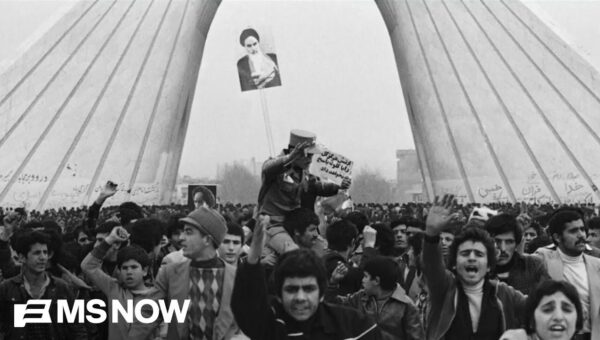
The U.S. finds itself in a recurring cycle of intervention and confrontation with Iran, marked by historical coups, shifting diplomatic strategies, and recent military actions. As Iran navigates a new leadership transition following the Supreme Leader's death, the rise of hardline clerics and the increasing autonomy of the Revolutionary Guard present complex challenges for both regional stability and U.S. foreign policy.

Trump’s ‘Likely Be More’ Remark Fuels Outrage and Hypocrisy Debate
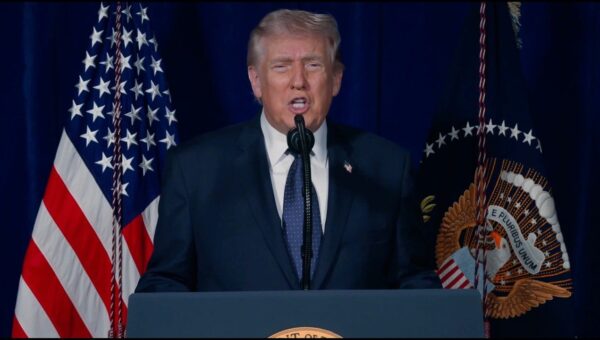
Former President Trump's "likely be more" comment following the deaths of three U.S. service members in Iran has ignited a firestorm. Critics decry its perceived callousness and highlight a stark double standard compared to the outrage over Benghazi, questioning the sincerity of political empathy and the exploitation of tragedy for partisan gain.