Iran Truce in Jeopardy Amid Conflicting Messages
A fragile ceasefire between the U.S., Israel, and Iran is under severe strain due to conflicting interpretations, particularly concerning Lebanon's inclusion. Intense Israeli strikes in Beirut and Iran's firm stance on its nuclear program and the Strait of Hormuz highlight deep disagreements that threaten future negotiations.


Iran Truce in Jeopardy Amid Conflicting Messages
Confusion and mixed messages are casting a shadow over a fragile ceasefire between the United States, Israel, and Iran. While Iran and its mediator, Pakistan, insist that Lebanon is part of the agreement, the U.S. and Israel disagree, raising serious questions about the truce’s viability. This disagreement highlights a deep rift in understanding and has fueled concerns about future stability in the region.
Conflicting Accounts Emerge
U.S. Vice President JD Vance stated that the confusion likely stems from a genuine misunderstanding, not bad faith. He explained that Iran believed the ceasefire included Lebanon, a point the U.S. never promised. Vance clarified that the U.S. agreement focused solely on Iran and its allies, specifically Israel and the Gulf Arab states. However, he also noted that Israel has reportedly offered to exercise restraint in Lebanon to help the negotiation succeed, not because it was part of the ceasefire terms.
This statement comes despite intense Israeli airstrikes on what the military described as Hezbollah targets in Beirut. Lebanon’s health ministry reported over 180 deaths and hundreds of injuries from these strikes, which Israel called its largest attack on Hezbollah infrastructure since the conflict began. These actions directly contradict any notion of a comprehensive ceasefire that includes Lebanon.
Expert Analysis Highlights Confusion and Stakes
Natasha Hall, an associate fellow at Chatham House, an independent policy institute, described the situation as a “confusing array of statements.” She noted that such confusion has marked negotiations not only recently but also during previous periods of tension with Iran.
“At the end of the day, a ceasefire has to be agreed to by both parties. If one side doesn’t agree to the points in the ceasefire, then a ceasefire doesn’t stand.”
Hall stressed that Israel would need to reduce its strikes in Lebanon for any progress with Iran. The devastation in Beirut, with around 100 airstrikes in just 10 minutes, is a shocking reality that will heavily influence immediate negotiations, she added.
Iran’s Stance and Key Sticking Points
Iran’s Foreign Minister has made its position clear on social media, stating that the U.S.-Iran ceasefire terms are explicit. He insisted that the U.S. must choose between a ceasefire and continued conflict via Israel, warning that the world is watching the “massacres in Lebanon.”
Hall identified several major obstacles beyond Lebanon. A key sticking point remains Iran’s uranium enrichment program, which Iran claims as a right, while the U.S. and Israel strongly oppose it. The immediate goal, Hall explained, is to achieve a two-week ceasefire to allow for discussions on these fundamental issues, with the hope of extending it. However, the deep disagreements make success uncertain.
Another critical issue is the Strait of Hormuz, a vital waterway for global oil transport. Iran has previously threatened to shut it down, while the U.S. insists it must remain open. Iran has suggested limited traffic and tolls, a move that would further empower the regime and concern Gulf states and the U.S.
Israel’s Strategy and U.S. Involvement
From Israel’s perspective, Hall suggested the strategy might be to weaken opponents through periodic strikes, a tactic often referred to as “mowing the lawn.” This approach aims to reduce enemy capabilities over time, even if they remain in place. Israel may have seen this conflict as a way to draw the U.S. into a war, potentially against advisors’ recommendations, and to degrade Iran’s capabilities.
However, Hall questioned whether the U.S. public supports repeated involvement in Middle Eastern wars, citing current polling that suggests a strong opposition. While Israel might be in a position it desired, the situation presents a significant loss for the U.S. and the world, as it demonstrated Iran’s ability to threaten global economic stability via the Strait of Hormuz. Hezbollah’s resilience against numerous strikes was also noted.
Internal Israeli Criticism
While the war has seen widespread support within Israel, opposition leader Yair Lapid has criticized Prime Minister Benjamin Netanyahu, suggesting he was sidelined in the ceasefire talks. Lapid called the agreement a “diplomatic disaster,” claiming Israel had no influence over the deal brokered by Pakistan between the U.S. and Iran and that claims of consultation were “hollow lies.”
Hall downplayed the idea of a humiliation for Netanyahu, viewing Lapid’s comments as typical opposition rhetoric. She noted that Netanyahu could have accepted various outcomes, including regime change in Iran, all of which would have met his objectives. However, Hall did see the situation as an “existential threat to the U.S.-Israeli partnership,” particularly due to U.S. reporting that Israel “dragged the United States into this war,” which could negatively impact upcoming U.S. midterm elections.
Strait of Hormuz: A Vital Chokepoint
The Strait of Hormuz remains a central issue. Since the ceasefire announcement, not much has changed in terms of shipping traffic. Many companies remain hesitant to resume full operations. While Iran has indicated some ships may pass with tolls, the uncertainty and potential for cryptocurrency payments to the Iranian regime add further complications. The presence of mines in the strait also contributes to companies’ reluctance to return quickly.
The U.S. administration considers the reopening of the Strait of Hormuz a dealbreaker. The strait provides Iran with enormous leverage, controlling passage for a fifth of the world’s energy exports and a third of essential fertilizers. Delays could severely impact the global economy. Hall noted that Iran’s demonstrated ability to control the strait was unprecedented and a significant failure for the U.S. administration, which may have been misled by Israeli assurances that Iran would capitulate.
Concerns linger over President Trump’s past threats to “destroy Iran’s civilization.” While it remains to be seen if these threats will be acted upon, opening the Strait of Hormuz is clearly a top priority for the president.
Negotiations Ahead and Leadership Choices
Upcoming negotiations in Islamabad, brokered by Pakistan, face significant hurdles. The success of these talks hinges on the actions of the U.S. and Israel in the coming days, particularly regarding de-escalation in Lebanon and the opening of the Strait of Hormuz. Hall expressed doubt about the talks’ success given the deep mistrust, especially from the Iranian side, following harsh rhetoric.
The choice of JD Vance to lead the U.S. negotiating team is seen as potentially signaling a desire for a softer, more pragmatic approach, especially given Vance’s reported opposition to the war. However, Hall questioned whether Vance possesses the deep understanding of the details and the Iranian side that their experienced negotiators will bring.
On the Iranian side, Reuters reports that Foreign Minister Mohammad Javad Zarif and Parliament Speaker Mohammad Bagher Ghalibaf may represent the country. Ghalibaf is described as a “hardline pragmatist,” while Zarif is known for his diplomatic skill. However, fundamental disagreements on key issues make progress challenging.
Outlook: A Region in Turmoil
Hall expressed limited hope for the region, describing it as being in turmoil. Even traditionally stable Gulf states are now worried about their future. The long-term consequences of the conflict are expected to be significant. Furthermore, the very notion of a U.S. president threatening to destroy a civilization could permanently alter global perceptions of the United States.
Source: Is the Iran truce already unraveling? | DW News (YouTube)

Related Articles

U.S. Tightens Grip on Hormuz Strait
Tensions escalate in the Strait of Hormuz as the U.S. threatens to blockade Iranian ports, causing oil prices to surge. Following failed peace talks, Iran vows retaliation against any perceived violations, setting the stage for a significant geopolitical standoff.

US Blockades Hormuz: War Looms as Iran Threatens to Fire
The U.S. military has imposed a total blockade on the Strait of Hormuz, leading to a dangerous standoff with Iran. This move could see U.S. forces boarding Chinese ships, escalating tensions significantly. Iran has threatened retaliation, raising fears of a wider regional conflict.

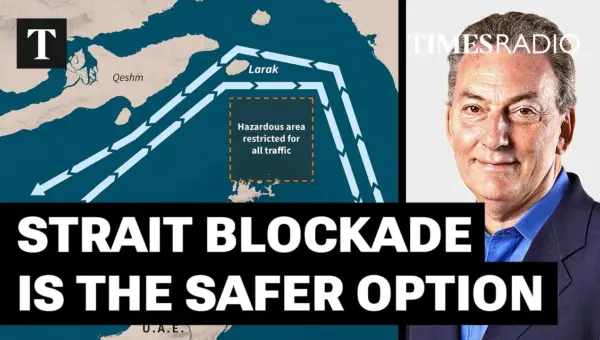
Hungary Votes Out Orban; US Navy Blockades Strait of Hormuz
Hungary has voted out long-serving Prime Minister Viktor Orban, signaling a potential shift in European Union dynamics. Meanwhile, the U.S. Navy has imposed a blockade in the Strait of Hormuz following failed nuclear talks with Iran, raising concerns about regional stability and potential escalation.