Iran Threatens Oil Supply Amid Escalating Global Tensions
Iran has issued a 48-hour ultimatum to reopen the Strait of Hormuz or face strikes on its infrastructure, sparking fears of escalating global conflict and economic disruption. Congressman Adam Smith warns that retaliatory actions could further destabilize oil markets and impact the global economy for months to come.


Iran Threatens Oil Supply Amid Escalating Global Tensions
Tensions are rising in the Middle East as Iran warns of severe consequences if its infrastructure is targeted. The country has given a 48-hour deadline to reopen the Strait of Hormuz or face attacks on its power plants. This move comes after threats from the U.S. and Israel, which Iran claims are the cause of the disruption to this vital oil passage. Iran believes these actions are aimed at threatening its very existence as a state.
Iran’s Response and Global Economic Impact
According to Congressman Adam Smith, the ranking member on the House Armed Services Committee, Iran’s reaction is predictable. He stated that if the U.S. carries out its threat and destroys Iran’s infrastructure, Iran will retaliate. This retaliation could lead to further disruption of the global economy, especially concerning oil and fertilizer supplies. The crisis around the Strait of Hormuz, a key route for global oil transport, is expected to continue and potentially worsen.
Iran has the capability to disrupt the Strait of Hormuz with just a few drones and missiles. Commercial ships are unlikely to risk sailing through the passage due to the potential danger. Congressman Smith believes that the current U.S. threats will not end the crisis. He points out that this situation is already affecting Americans, with stock markets falling and gas prices reaching their highest point since October 2023.
Long-Term Strategy and Past Lessons
Congressman Smith has been involved in discussions about Iran for many years, spending over a decade on the Armed Services Committee. He acknowledges that Iran is a leading state sponsor of terror, possesses a ballistic missile program, and continues to develop nuclear weapons. Iran also destabilizes surrounding countries. For years, the U.S. strategy has focused on containing this threat through deterrence.
However, containment and deterrence do not eliminate the problem. Military options to remove the threat have been explored, but the conclusion has consistently been that such actions would not lead to a better outcome. Iran has a large population of 93 million people, and its regime has military capabilities that can survive strikes. The U.S. would likely not be in a better position afterward.
Ignoring Past Advice and Consequences
Congressman Smith suggested that Donald Trump chose to ignore this advice. He believed military power could change the situation, overlooking the potential costs. The consequences have included the deaths of 13 U.S. service members and over 1,000 civilian casualties in Iran, including children. The global economy has also suffered significant disruption. Despite these actions, the Iranian regime remains in power. While its ballistic missile program may be less advanced than before, the threat has not been eliminated.
The congressman expressed doubt that the U.S. will be in a substantially better position regarding Iran once this conflict ends. The global economy and oil supply will likely remain disrupted for months, even after any conflict concludes. Currently, there is no clear end in sight, with the conflict possibly extending into August.
Domestic Political Developments
Beyond the international crisis, domestic political issues are also being addressed. The Senate is convening to consider Markwayne Mullin’s nomination for Secretary of Homeland Security. A key question is whether Democrats can prevent a government shutdown. Congressman Smith expressed frustration with the current political situation, particularly regarding funding debates. He noted that while funding for most government operations is on the table, some Republicans are blocking votes on measures that would fund everything except the Department of Homeland Security’s Immigration and Customs Enforcement (ICE) agency.
Senator Blackburn stated that many Republicans believe ICE has sufficient funds due to a reconciliation bill that added $190 billion. Congressman Smith questioned why Republicans would not allow a vote on the proposal to fund all government services except ICE, while continuing discussions on how to reform ICE properly.
Global Impact
The escalating tensions with Iran and the potential disruption of the Strait of Hormuz have significant global implications. This waterway is crucial for the global oil supply, and any blockage or conflict there can send oil prices soaring. This directly impacts consumers worldwide through higher gas prices and increased costs for goods transported by sea. The instability also affects fertilizer markets, which are essential for global food production. The conflict highlights the delicate balance of power in the Middle East and the far-reaching economic consequences of regional disputes. It also raises questions about the effectiveness of military action versus diplomatic solutions in addressing complex geopolitical challenges.
Source: Destroying Iran’s infrastructure will only ‘escalate’ conflict, Rep Smith says | NewsNation Live (YouTube)

Related Articles

Stocks Ignore War Risks, Focus on “Taco Moments”
Stock markets appear to be overlooking the severe supply chain risks stemming from the Iran conflict, focusing instead on potential diplomatic de-escalations. While the S&P 500 shows resilience, bond and commodity markets signal deep concern over disruptions to critical resources like LNG, helium, and fertilizers.

US Strikes Cripple Iran’s Military Might, CENTCOM Reports
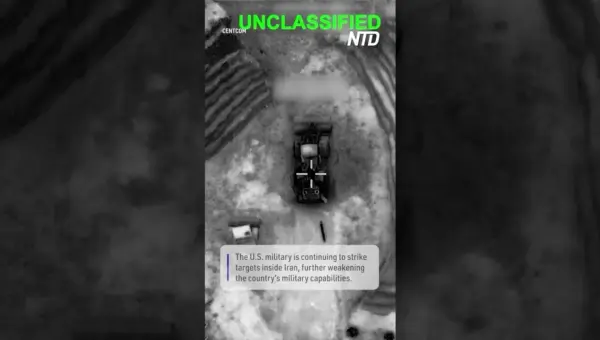
U.S. Central Command reports ongoing strikes inside Iran are significantly weakening its military power. This direct action aims to reshape regional security dynamics, but carries risks of escalation. The long-term impact depends on Iran's response and ability to adapt.

U.S. Iran Tensions Rise Amid Shifting Alliances
Rising tensions between the U.S. and Iran are creating a volatile geopolitical situation. With conflicting signals on de-escalation and potential shifts in alliances like NATO and U.S.-Israel relations, the path forward remains uncertain. The global economy and regional stability hang in the balance.