Iran Tensions Spark Global Energy Alarm: Experts Warn of Demand Crisis
Heightened tensions with Iran have placed global energy markets on alert, threatening critical oil supply routes through the Strait of Hormuz. Experts warn that while strategic reserves and alternative pipelines offer some buffer, international cooperation is essential to ensure stable energy flows and meet rising global demand.

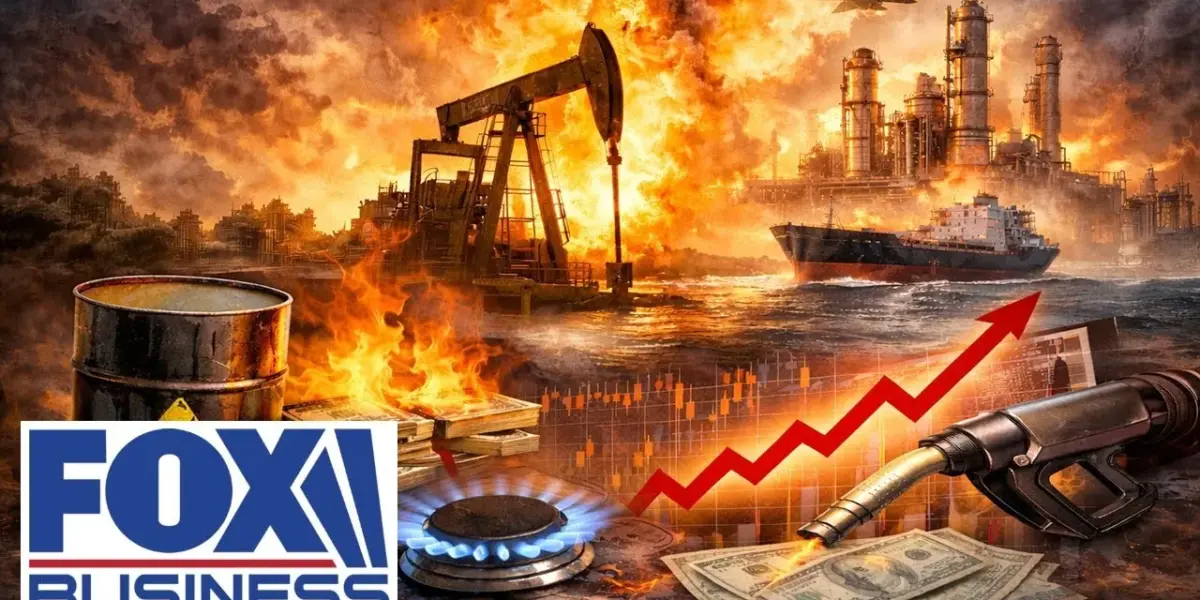
Global Energy Markets on Edge Amidst Iran Tensions
The global energy landscape is facing significant turbulence as heightened tensions with Iran threaten critical oil supply routes. President Trump has urged allies to send naval warships to the Strait of Hormuz, a vital chokepoint for global oil transit, in an effort to ensure the free flow of energy. The Strait of Hormuz accounts for approximately 20% of the world’s oil supply, making any disruption a matter of international concern.
Strategic Reserves and Alternative Routes: A Limited Solution
In response to the escalating situation, the United States is exploring policy measures, including the potential release of 400 million barrels of oil from the Strategic Petroleum Reserve. However, American Petroleum Institute President and CEO Mike Sommers emphasized that these measures, while helpful, are not a substitute for the open passage through the Strait of Hormuz. “There is no replacement for getting Strait of Hormuz back open again,” Sommers stated, highlighting its critical role in meeting global oil demand.
While alternative pipelines, such as the East-West Pipeline in Saudi Arabia, are operational and welcome, they cannot fully compensate for the volume of oil that transits through the Strait. The Saudi pipeline, for instance, has a maximum capacity of seven million barrels per day. Sommers explained, “The truth of the matter is that Saudi line going at maximum capacity can only do seven million barrels a day… But the Straits of Hormuz remain to be critical artery for world oil supplies.”
Call for International Coalition Amidst Shifting Alliances
President Trump’s call for an international coalition to escort tankers through the Strait underscores the urgency of the situation. However, the response from potential allies has been cautious. Japanese Prime Minister Shinzo Abe indicated that no decision has been made regarding sending ships, despite Japan being a nation affected by potential disruptions. This leaves the United States once again at the forefront of addressing the immediate threat.
“Once again U.S. out there on its own I would like to see which nation is going to be first to say we are also going to send ships to the region, because we understand this is the number one state sponsor of terrorism.”
Sommers reiterated that the United States and its allies have been instrumental in preventing Iran from acquiring nuclear weapons, a threat he described as the “biggest threat to the Strait of Hormuz.” He stressed the need for broader international cooperation to secure this vital energy artery.
Energy Security as National Security: The AI Connection
The current energy crisis also brings into sharp focus the interconnectedness of energy security and national security, a point echoed by Senator John Fetterman. “Energy security is national security,” Fetterman asserted, emphasizing the need for increased domestic energy production from various sources to insulate the nation from geopolitical shocks.
Beyond traditional energy concerns, the conversation extended to the burgeoning field of Artificial Intelligence (AI) and its reliance on robust energy infrastructure. Sommers warned that the race to develop and deploy AI technologies could be jeopardized without sufficient energy supply. “The AI race is energy security because if you don’t have energy to supply what we’re going to need in terms of the AI build-out that is going to put United States at a critical advantage,” he explained.
The United States’ increased domestic oil and natural gas production is seen as a crucial buffer, providing “geopolitical insurance.” The current administration’s energy policies, which aim to open up federal and private lands for development, are considered critical for both energy independence and the future build-up of AI capabilities.
Navigating the Ethical Landscape of AI and Autonomous Systems
The rapid advancement of AI also raises significant ethical questions, particularly concerning its application in warfare and surveillance. The potential for autonomous agents and AI-powered weapons systems necessitates careful consideration of guardrails and oversight. Experts like Hall, author of “Code Red,” advocate for essential safeguards such as kill switches and human override capabilities for autonomous systems to prevent unintended consequences and ensure the safety of soldiers.
“We have to make sure those guardrails are in place because we do not wanted unintended consequences I think particularly when you you took about agentic AI that is autonomous we have to make sure that systems have number ONE A KILL SWITCH IN PLACE FOR NOT JUST HUMAN IN LOOP BUT HUMAN OVERRIDE ESSENTIAL…”
The focus remains on balancing the pursuit of technological advantage with the imperative to protect privacy and maintain ethical standards in the development and deployment of AI.
Permitting Reform: A Bipartisan Push for Energy Independence
In a significant development, a bipartisan group of senators has resumed talks on federal permitting reforms aimed at accelerating domestic energy projects and reducing regulatory burdens. This initiative is viewed as crucial for meeting future energy demands, which are projected to increase by 50% in the next decade.
The American Petroleum Institute (API) has put forth a plan, accessible at PermittingReferralNow.org, advocating for streamlined processes to facilitate energy development within the United States. Sommers highlighted the importance of this bipartisan effort, stating, “This is great news for the American people. That Republicans, Democrats are finally back together, talking about critical permitting reform.” The goal is to achieve energy independence and security, with increased domestic production of oil and natural gas playing a pivotal role.
Looking Ahead: Securing Energy Flows and Navigating the AI Frontier
The coming weeks will be critical in observing how diplomatic efforts unfold to de-escalate tensions in the Strait of Hormuz and secure vital oil flows. Simultaneously, the push for permitting reform and the ongoing dialogue surrounding the ethical development of AI will shape the future of energy security and technological advancement. The world watches to see if international cooperation can be galvanized to address immediate energy threats and prepare for the complex challenges and opportunities presented by the AI revolution.
Source: OIL FLASHPOINT: Expert issues MAJOR warning over energy demand (YouTube)

Related Articles

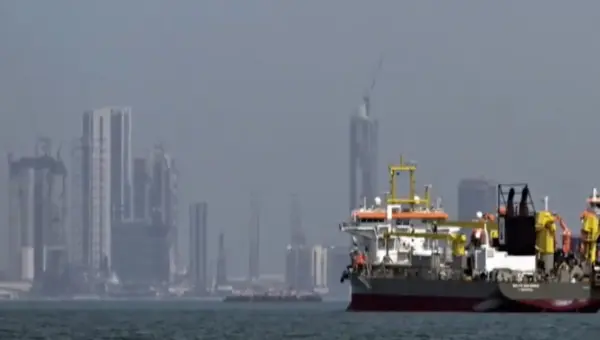
Iran Blocks China Ships, Exposing Beijing’s Weak Grip
Iran's recent decision to block Chinese ships at the Strait of Hormuz is exposing the limits of Beijing's influence in the Middle East. This action is causing delays and cancellations for Chinese manufacturers, turning a perceived geopolitical win into an economic strain.
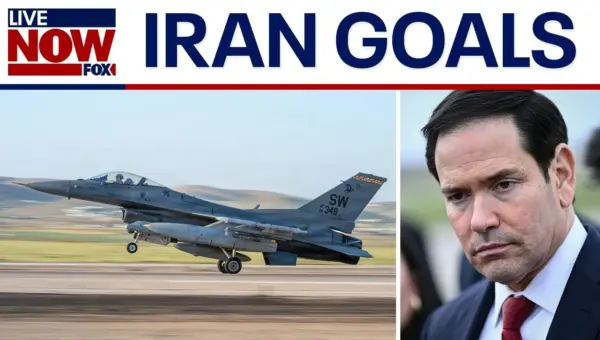
Rubio: US Can Achieve Iran War Goals Without Troops
Senator Marco Rubio outlined a strategy to counter Iran without deploying U.S. ground troops, focusing on weakening the regime and enhancing maritime security. He also criticized Cuba's economic system and expressed concerns about West Bank violence.


Israel Escalates Iran Strikes, Warns of Wider War
Israel has launched significant strikes inside Iran following continued missile fire, warning of further escalation. The conflict risks wider regional instability and economic disruption, especially concerning the Strait of Hormuz.