Iran Taps Khamenei’s Son as Leader, Signals Defiance
Iran's Assembly of Experts has appointed Mojtaba Khamenei, son of the late Ayatollah Ali Khamenei, as the next Supreme Leader, signaling defiance against international pressure. This controversial hardline choice, drawing parallels to dynastic succession, suggests Iran will not back down in its regional conflicts.

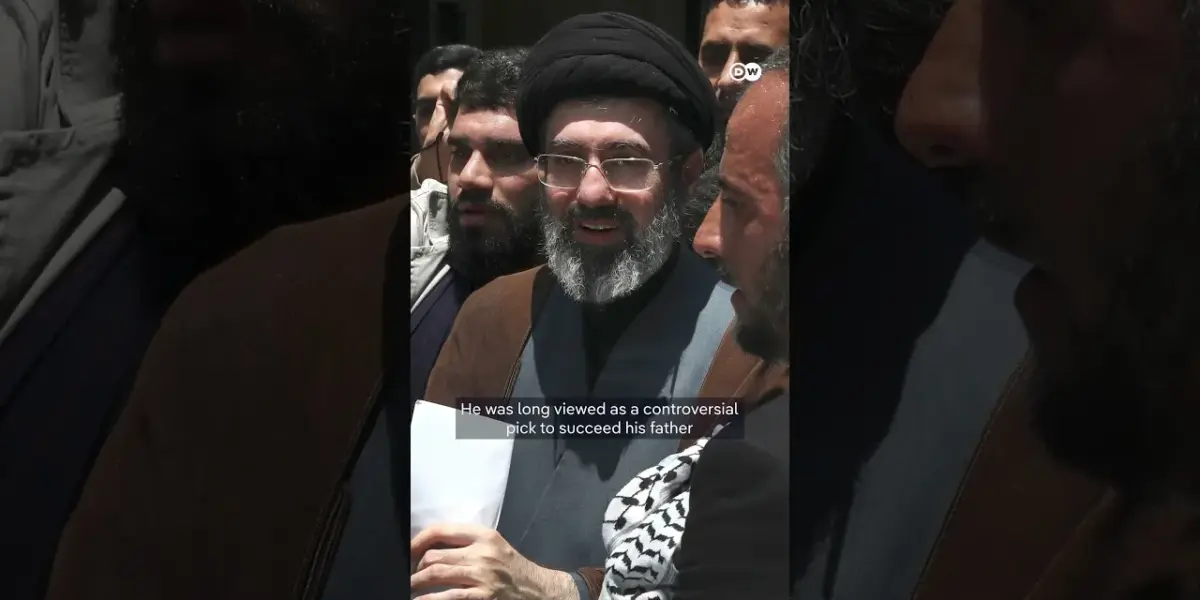
Iran Appoints Mojtaba Khamenei as Successor, Defying International Pressure
In a move that signals a hardening of its stance against international pressure, Iran’s Assembly of Experts has named Mojtaba Khamenei, the son of the late Supreme Leader Ayatollah Ali Khamenei, as his successor. The decision comes in the wake of Ayatollah Khamenei’s death in late February, reportedly due to US-Israeli strikes, and represents a significant development in the ongoing geopolitical tensions surrounding the Islamic Republic.
A Hardline Choice Amidst Controversy
Mojtaba Khamenei, a hardline Shiite cleric, has long been viewed as a potential successor, but his selection has been met with controversy. Critics point to the inherent contradiction with the Islamic Republic’s founding principles, which overthrew a hereditary monarchy in the 1979 revolution. By choosing the Supreme Leader’s son, the theocracy appears to be embracing a form of dynastic succession, a move that draws parallels to the very system it once rejected.
Despite these criticisms, the 88-member Assembly of Experts opted for Mojtaba Khamenei, a decision that political scientist and defense expert Ben Freriedman described as “a strong rebuke and an unsurprising one.” Freriedman elaborated on the underlying dynamics, stating, “Anyone who’s surprised that the Iranians have essentially uh said, you know, we’re not going to let you force us to pick someone moderate or more cooperative uh is delusional. I mean, it’s the normal state of affairs that when you bomb a country and make demands of it, it tends to drive support uh to the government to hardliners.”
Defiance Against Coercion
The appointment is seen as a direct response to external pressures, particularly from the United States and Israel, which had reportedly hoped for a more moderate or cooperative leader to emerge. The transcript suggests that prior to the recent escalation, Iran had made its displeasure clear regarding external attempts to dictate its leadership choices. “The Iranians were very clear before the attack began a week ago that they don’t like being told uh do this or else we’re going to bomb you,” Freriedman noted.
Former President Trump had explicitly stated that the Supreme Leader’s son would be an unacceptable replacement, indicating a desire for regime change or the installation of a more pliable leadership. However, the Iranian leadership appears to view such demands as unacceptable coercion. “The Iranians view it as uh that if they give into that kind of coercion, they’re going to be bullied and coerced forever. and uh that it’s unacceptable from a standpoint of pride and I would say domestic politics to be pushed around that way,” Freriedman explained. The sentiment conveyed is one of defiance, suggesting that Iran would rather face external aggression than submit to what it perceives as bullying tactics.
Implications for Regional Conflict
The selection of Mojtaba Khamenei signals a continuation, and likely escalation, of Iran’s current confrontational stance in regional conflicts. His close ties to the Islamic Revolutionary Guard Corps (IRGC), a powerful paramilitary force, further underscore this hardline trajectory. The uncertainty surrounding the future direction of the conflict under new leadership is palpable, but the choice itself sends a clear message: Iran is not prepared to back down in its disputes with the US and Israel.
Freriedman offered a sobering prediction regarding the conflict’s trajectory: “My prediction is that we’re going to go on with this for a while. It’s probably going to escalate further and it’s not going to resolve in a nice settled peaceful way.” However, he also posited a potential, albeit uncertain, de-escalation in the short term, suggesting that the current US administration might eventually disengage. “But I do think there’s a good chance that this president and this administration will sort of shrug and move on. And so, uh, we could get a kind of cold piece here within a couple months, if not weeks.” This outlook suggests a possible, though not guaranteed, period of détente driven by external weariness rather than a fundamental resolution of the underlying issues.
Looking Ahead
The appointment of Mojtaba Khamenei marks a pivotal moment for Iran and the wider Middle East. The coming weeks and months will be crucial in observing how this hardline leadership navigates its complex relationships with regional adversaries and international powers. The world will be watching to see if Iran’s defiant stance leads to further escalation or if a pragmatic, albeit tense, period of ‘cold peace’ takes hold.
Source: Iran: Why Mojtaba Khamenei was named the next supreme leader | DW News (YouTube)

Related Articles


Iran Appoints New Leader Amid Escalating Global Tensions
Iran has appointed Mojtaba Khamenei, son of the former leader, as its new Supreme Leader amidst escalating international conflict. The war has driven oil prices to record highs, impacting global markets and American consumers. Meanwhile, the U.S. military toll rises, and travel faces significant disruption due to the government shutdown.
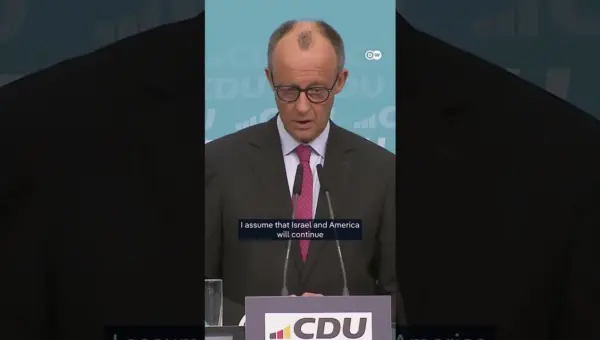
Merz: “Iran is the center of international terrorism, and must be shut down”
CDU leader Friedrich Merz has labeled Iran the "center of international terrorism" and called for the downfall of its current regime. Merz argued that regime change in Tehran is the quickest path to ending regional conflicts and that Iran's support for groups like Hamas and Hezbollah makes it a primary threat.
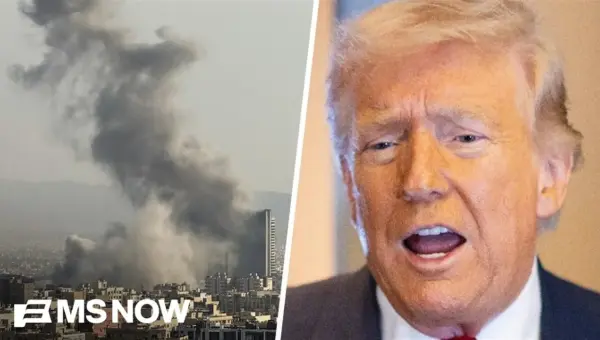
US Mulls Iran Ground Troops, Draft Amid Escalating Tensions
The White House is reportedly considering extreme military options against Iran, including the potential deployment of ground troops and even a military draft. Retired Colonel Jack Jacobs expressed skepticism about a draft but discussed limited scenarios for special forces raids.