Iran Taps Khamenei’s Son as Leader Amid Escalating Middle East Conflict
Iran has appointed Mojtaba Khamenei, son of the assassinated Ayatollah Ali Khamenei, as its new Supreme Leader amid escalating regional conflict. The appointment follows Israeli strikes on Iranian oil depots, causing significant environmental damage and driving oil prices above $100 a barrel. The move signals a potential hardening of Iran's stance on the international stage.


New Supreme Leader Appointed Amidst Regional Turmoil
NEW YORK CITY – In a significant development amidst a volatile Middle East, Iran has named Mojtaba Khamenei, the son of the recently assassinated Ayatollah Ali Khamenei, as its new Supreme Leader. The appointment comes as the region grapples with escalating conflict, including Israeli strikes on Iranian oil depots that have choked Tehran with toxic black smoke and sent oil prices soaring above $100 a barrel for the first time since 2022. The move signals a potential hardening of Iran’s stance, with the new leader reportedly a hardliner with close ties to the Islamic Revolutionary Guard Corps.
Escalating Conflict and Economic Impact
The conflict’s latest salvo saw Israel bomb several Iranian oil depots over the weekend, igniting massive fires and blanketing the capital, Tehran, in dense, toxic black fumes. Eyewitnesses described the scene as apocalyptic, with reports of rain soaked with gasoline and oil falling from the sky. These attacks have directly impacted global oil prices, pushing them past the $100 per barrel mark, a level not seen since 2022. President Trump, however, downplayed the surge, calling it a “very small price to pay” and showing no immediate willingness to de-escalate the war.
Iran’s Foreign Minister, in a statement echoing this sentiment, asserted that Iran is not looking to settle and views the current conflict as imposed by the United States and Israel. “We are not looking to settle. They’d like to settle. We’re not looking to settle,” the minister stated. He further elaborated, “What we are doing is, is an illegal act of self-defense.” This rhetoric underscores Iran’s position that any ceasefire is contingent on an explanation for the initial aggression, framing their actions as a response to unprovoked and illegal attacks.
Profile of the New Leader
Mojtaba Khamenei, 56, takes over the reins of power following the assassination of his father nine days prior. Unlike his father, who had a prominent public profile as president for eight years before assuming leadership, Mojtaba is described as more of a behind-the-scenes operator. He has been a political figure since at least 2005, known for his influence within the clerical establishment. However, his ascent is reportedly less about religious credentials and more about his strong connection to the Revolutionary Guard, the powerful military force leading Iran’s defense and internal crackdowns.
“He is the man of the Revolutionary Guards, a symbol of the power of the Revolutionary Guard. So he’s not going to call the shots. The Revolutionary Guard is going to call the shots. He’s going to be the symbolic figurehead that keeps this theocracy together.” – Alex Vatanka, Senior Fellow at the Middle East Institute
Experts suggest Mojtaba Khamenei is likely to continue his father’s hardline policies, potentially further straining relations with the West and solidifying Iran’s commitment to its nuclear program. His family, including his mother, father, and brother, were reportedly killed in the strike that led to his father’s assassination, leaving him as the sole surviving member of the immediate nuclear family. This personal tragedy, coupled with his hardline ideology, could fuel a more aggressive stance on the international stage.
Broader Regional Implications
The appointment and the ongoing conflict have significant implications for the wider Middle East. Israel has previously threatened to kill Mojtaba Khamenei and anyone involved in his appointment, adding another layer of tension. The United States, while not explicitly threatening the new leader, has also expressed disapproval of Iran’s actions.
Meanwhile, on the Lebanese border, Israel’s ground and air attacks have displaced over half a million people and resulted in hundreds of casualties. The Israeli military is expanding its operations, demanding that Lebanese civilians retreat beyond the Litani River. This ongoing offensive is seen as a direct consequence of the broader conflict between Israel, the U.S., and Iran.
Alex Vatanka of the Middle East Institute highlighted the strategic complexities, noting the differing long-term goals between the U.S. and Israel. “Israel wants to end of the Islamic Republic, United States, maybe not,” he observed, pointing to a potential divergence in allied objectives that could complicate the path to any lasting peace.
Looking Ahead
With a new, hardline leader at the helm and tensions at a fever pitch, the coming weeks will be critical in determining the trajectory of the Middle East conflict. International attention will focus on whether Mojtaba Khamenei maintains his father’s policies or charts a new, potentially more confrontational, course. The response from the U.S. and its allies, particularly regarding the escalating attacks on energy infrastructure and the humanitarian crisis in Lebanon, will also be closely watched.
Source: LIVE: NBC News NOW – March 9 (YouTube)

Related Articles


Iran Appoints New Leader Amid Escalating Global Tensions
Iran has appointed Mojtaba Khamenei, son of the former leader, as its new Supreme Leader amidst escalating international conflict. The war has driven oil prices to record highs, impacting global markets and American consumers. Meanwhile, the U.S. military toll rises, and travel faces significant disruption due to the government shutdown.
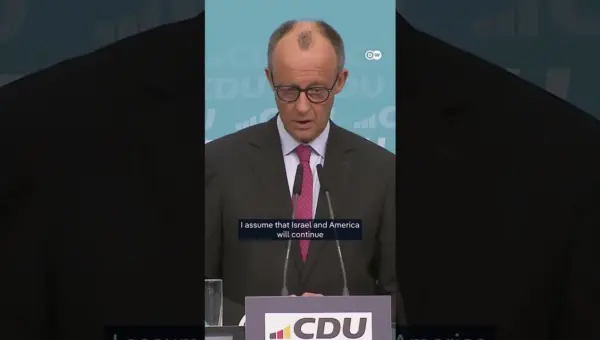
Merz: “Iran is the center of international terrorism, and must be shut down”
CDU leader Friedrich Merz has labeled Iran the "center of international terrorism" and called for the downfall of its current regime. Merz argued that regime change in Tehran is the quickest path to ending regional conflicts and that Iran's support for groups like Hamas and Hezbollah makes it a primary threat.
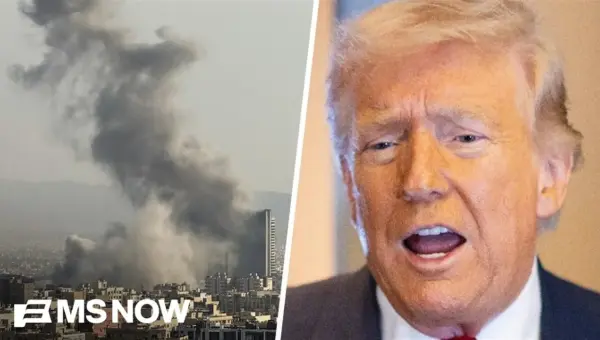
US Mulls Iran Ground Troops, Draft Amid Escalating Tensions
The White House is reportedly considering extreme military options against Iran, including the potential deployment of ground troops and even a military draft. Retired Colonel Jack Jacobs expressed skepticism about a draft but discussed limited scenarios for special forces raids.