Iran Talks Breakdown ‘Predictable,’ Says Ex-Diplomat Ashton
Baroness Cathy Ashton, a former lead negotiator with Iran, called the recent breakdown of talks "predictable," attributing the failure to an unworkable "big hit" strategy. She emphasized the need for patient, step-by-step diplomacy and confidence-building measures to overcome deep distrust and achieve a resolution crucial for regional and global stability.

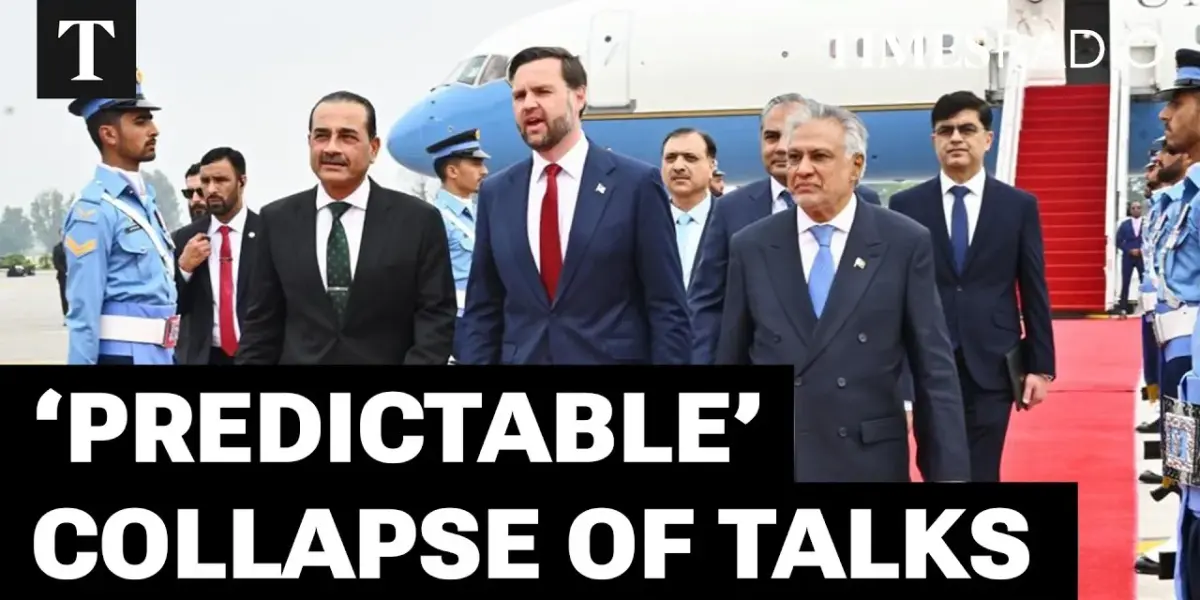
Ashton Calls Iran Talks Failure ‘Predictable,’ Urges Patient Diplomacy
The recent breakdown of talks between an American delegation and Iran in Islamabad was highly predictable, according to Baroness Cathy Ashton, a former EU High Representative for Foreign Affairs. Ashton, who previously led negotiations with Iran over sanctions and its nuclear program, stated that the approach of seeking a single, decisive resolution was fundamentally flawed. Instead, she advocates for a gradual, step-by-step process built on mutual understanding.
A Flawed Strategy: The ‘Big Hit’ Approach
Baroness Ashton explained that the strategy of presenting a final offer in one go was unlikely to succeed. “Doing this big hit, final offer stuff was never going to work,” she stated. She emphasized the importance of starting with clear objectives and understanding the other side’s position. “You have to start from a very basic principle of deciding what it is you’re trying to do and stick to that,” Ashton advised. The goal, she believes, should be to gradually move towards common ground, even if a full agreement isn’t immediately reached. This approach contrasts sharply with the “victory with a capital V” claimed by the Americans, suggesting a potential imbalance in the desire for a deal.
The Need for a Deal: Regional and Global Stakes
Ashton stressed that a resolution to the Iran talks is crucial not only for the involved parties but also for the wider region and the global economy. “Well, they both need a deal and more importantly, so does the region and so do we,” she said. The implications for energy markets and the world economy are significant, making a resolution essential. She firmly believes that the only way forward is through direct negotiation. “Eventually, the only way to resolve it is a group of people have to sit around a table,” Ashton added.
Miscommunication and the Trust Deficit
A key issue highlighted by Ashton was miscommunication, partly stemming from different understandings of what was discussed and agreed upon. “There seems to be a lot of miscommunication which I gather in part is because people went away with different understandings of what was being discussed never mind agreed,” she observed. Having negotiated with Iran for four and a half years across two different administrations, Ashton noted that the core individuals involved remain the same. “So, there’s a lot of experience and dare I say expertise around who really do understand how to get these talks moving and what is likely to be in the minds of the same people,” she said. This experience, she argued, should be utilized to move the process forward for the benefit of the region and the global economy.
Nuclear Ambitions: Civil Use vs. Weaponization
Regarding Iran’s nuclear program, Ashton clarified the distinction between civil use and weaponization, referencing the Joint Comprehensive Plan of Action (JCPOA). “In the deal that we did, the JCPOA, the Joint Comprehensive Plan of Action, Iran agreed to give up any prospect of getting a nuclear weapon, which was the issue,” she explained. She pointed out that under the Non-Proliferation Treaty, countries are allowed to pursue civil nuclear programs for energy or medical purposes. The Iranians, she stated, have consistently maintained their right to such programs. The challenge, Ashton noted, lies in differing perspectives, such as Israel’s view that Iran should have no nuclear capabilities at all. She also mentioned the low level of trust, where Iran might be skeptical of receiving functional or timely nuclear technology from the U.S., suggesting that trust-building measures are paramount.
Building Trust: Confidence-Building Measures
Ashton acknowledged the deep-seated distrust between Iran and the West, particularly the United States, stemming from historical events. “It always begins with Iran going back all those years when I negotiated with them from a position that they really do not trust what they would call the West, but it’s largely the United States,” she said. To overcome this, she proposed starting with small, clear, achievable steps, known as confidence-building measures (CBMs). “So, there’s already a massive level of distrust built into the system. And so you have to just accept that that means you’ve got to start with some very small very clear things that you can do and they can do,” Ashton advised. She also suggested that regional players like Turkey and Saudi Arabia could play a role in facilitating these talks, similar to Pakistan hosting the recent discussions.
Diplomacy with Adversaries: The Nature of Negotiation
Addressing the concern about negotiating with a repressive regime, Ashton argued that diplomacy inherently involves engaging with adversaries. “You don’t negotiate with your friends. You don’t need to do that. Hopefully, you negotiate with your enemies,” she stated. She described diplomacy as the art of talking to those you might not otherwise agree with, or even those you might wish to see jailed. “It’s what diplomacy is about. It’s about international negotiations are about,” she added. Ashton reiterated that the JCPOA was not intended as a comprehensive solution to all issues with Iran, but rather as a crucial step to prevent nuclear weapon development. “It was meant to be removing the boulder from the doorway as I would say stopping them getting a nuclear weapon and then moving on,” she explained. Addressing other concerns, such as human rights and regional activities, should follow once the immediate nuclear threat is managed.
Regional Players and Future Steps
Baroness Ashton emphasized the importance of including key regional stakeholders, even if they don’t directly participate in negotiations. While Israel and Iran are unlikely to sit together, keeping Israel informed and secure regarding any agreement is vital, as it was during her tenure. She also suggested that other countries could act as facilitators. “Now, there’s no way Israel and Iran are going to sit down together. But just as we kept Israel informed all the way through the talks with Iran before because they were fundamental and important to the region and important to all of us that they needed to feel secure in the agreement that was made,” Ashton said. She believes that while a bilateral agreement between the U.S. and Iran might be understandable, broader engagement with potential partners can ease the situation.
Rhetoric vs. Reality: The Path Forward
Regarding the possibility of renewed conflict, Ashton acknowledged that actions like resuming attacks are possible tactics to bring Iran back to the negotiating table. However, she cautioned against getting caught up in the rhetoric. “It’s possible that the United States will decide that the way to get Iran back to the table in the terms that it wants is to show that it’s prepared to keep going,” she noted. She stressed that despite escalating tensions and potential military actions, the ultimate solution lies in dialogue. “In the end, Adam, the only way this is going to get sorted out is people sitting around a table,” Ashton concluded. She urged focusing on practical steps for a sensible, safe, and secure future for ordinary people, who often bear the brunt of such conflicts.
Source: The Breakdown Of Iran Talks Was ‘Really Predictable’ | Baroness Cathy Ashton (YouTube)

Related Articles

Ukraine Pushes for Easter Ceasefire, Offers Reciprocity
Ukraine has proposed an Easter ceasefire, contingent on Russia's reciprocal de-escalation. Kyiv emphasizes its commitment to prisoner exchanges and diplomatic efforts for security guarantees. The nation also prioritizes domestic energy security.


Trump Threatens Hormuz Blockade Amid Nuclear Talks Failure
President Trump has ordered an immediate U.S. naval blockade of the Strait of Hormuz following the failure of nuclear talks with Iran. Key disagreements over uranium enrichment and frozen assets, coupled with the ongoing conflict in Lebanon, have stalled diplomatic progress. Congressman Gregory Meeks criticized the move as "nonsensical" and called for renewed diplomatic efforts.


Trump’s Health Woes Overshadow Failed Ceasefire Talks
Concerns are mounting over Donald Trump's physical and cognitive health following the failure of critical ceasefire negotiations. Reports and footage suggest a decline, impacting his ability to engage in vital diplomatic efforts and leading to questionable public statements.